
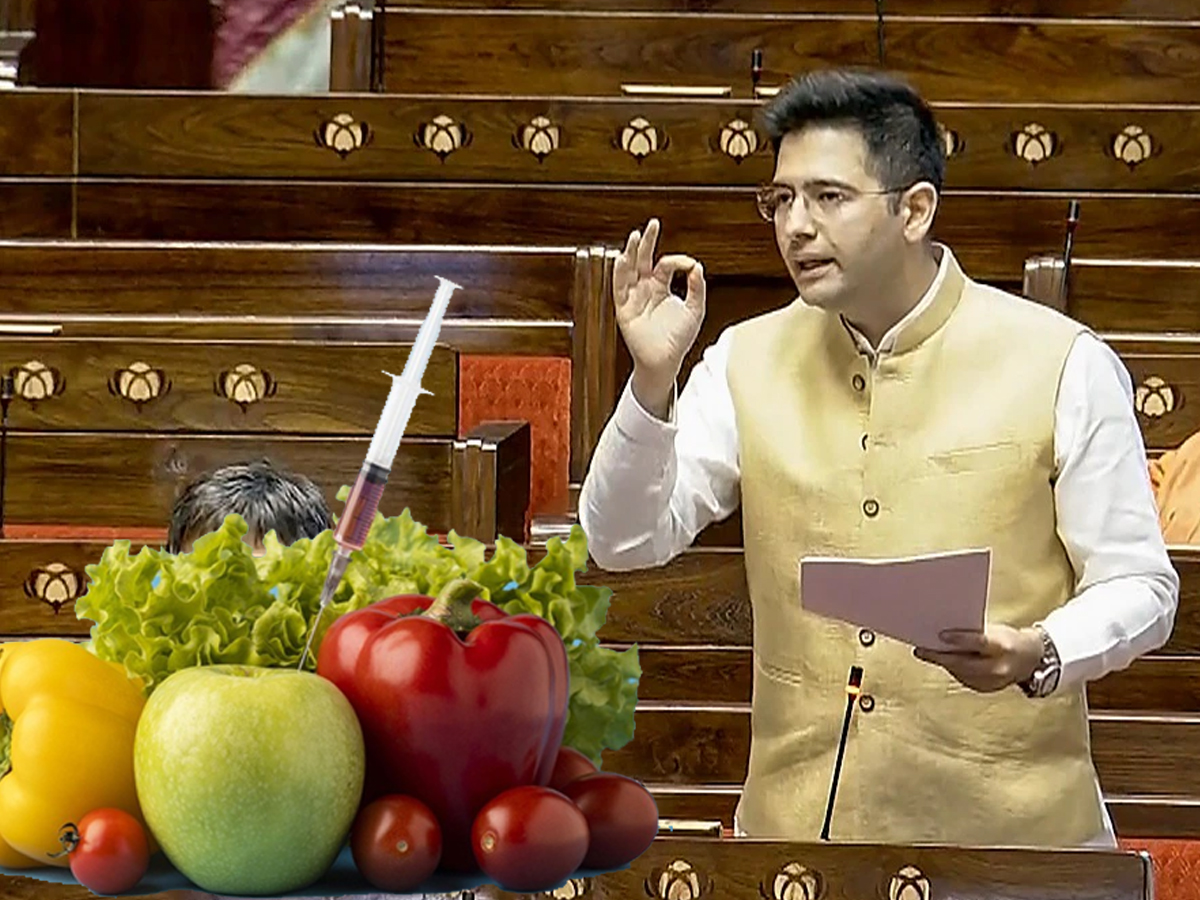
India’s Parliament witnessed a strong warning on Wednesday after Aam Aadmi Party leader Raghav Chadha raised serious concerns in the Rajya Sabha over the growing problem of food adulteration across the country.
Speaking during Zero Hour, Chadha urged the government to strengthen the Food Safety and Standards Authority of India (FSSAI), expand testing infrastructure, and impose stricter penalties on offenders.
He described the issue as a nationwide health emergency affecting millions of people every day.
Raghav Chadha Raises Food Adulteration Concerns in Rajya Sabha
Chadha said adulterated food products are widely available in markets and pose a direct threat to public health. He told the Upper House that food adulteration has become “a raging health crisis”, posing a threat to children, elderly people, and pregnant women.
He gave several examples of commonly consumed items allegedly being tampered with. He said ‘garam masala’ was being adulterated with brick powder and wood powder, tea with synthetic colour, chicken and poultry with anabolic steroids, honey with sugar syrup and yellow dye, and sweets with vegetable oil instead of desi ghee.
“When a mother gives her child a glass of milk thinking it has calcium and protein, she has no idea she is giving a dangerous mix of milk and detergent,” he alleged.
He added that research shows 71 per cent of milk samples contain urea and 64 per cent have neutralisers like sodium bicarbonate, while vegetables were reportedly injected with harmful chemicals.
What Is Food Adulteration?
Food adulteration refers to the practice of lowering food quality by adding harmful substances, mixing inferior materials, or removing essential nutrients. This practice aims to increase profit margins but puts consumers at serious risk.
Experts say adulteration can occur during production, processing, packaging, or distribution. Common examples include adding synthetic dyes to spices, mixing sugar syrups into honey, or using chemicals to artificially ripen vegetables.
In India, authorities test thousands of food samples each year, and a significant percentage reportedly fail safety standards.
How Does Food Adulteration Affect Health
Health experts warn that adulterated food can cause long-term and short-term illnesses. Chadha said vegetables were being injected with oxytocin, a harmful chemical causing dizziness, headaches, heart failure, infertility, and cancer.
He also stated that “From 2014-15 to 2025-26, 25 per cent of all samples tested were neutralised. God knows how many got sick, went to the hospital, or lost their lives,” Chadha said.
Food Adulteration: Are There Any Rules to Stop This?
India already has food safety regulations under the FSSAI Act. Authorities conduct inspections, collect samples, and prosecute offenders. However, Chadha argued that enforcement remains weak due to insufficient manpower, a lack of testing laboratories, and low penalties that fail to deter violations.
Chadha urged the government to strengthen FSSAI with more staff, modern laboratories, and stronger regulatory powers. He also recommended a public recall system that would name companies selling unsafe products and immediately remove those items from the market.
He further claimed that products made in India by two of the country’s largest ‘garam masala’ manufacturers had been banned in the US, UK, and Europe for containing cancer-causing pesticides but were still sold domestically.
“Food items not even fed to pets in other countries are being sold in India,” he said.




