
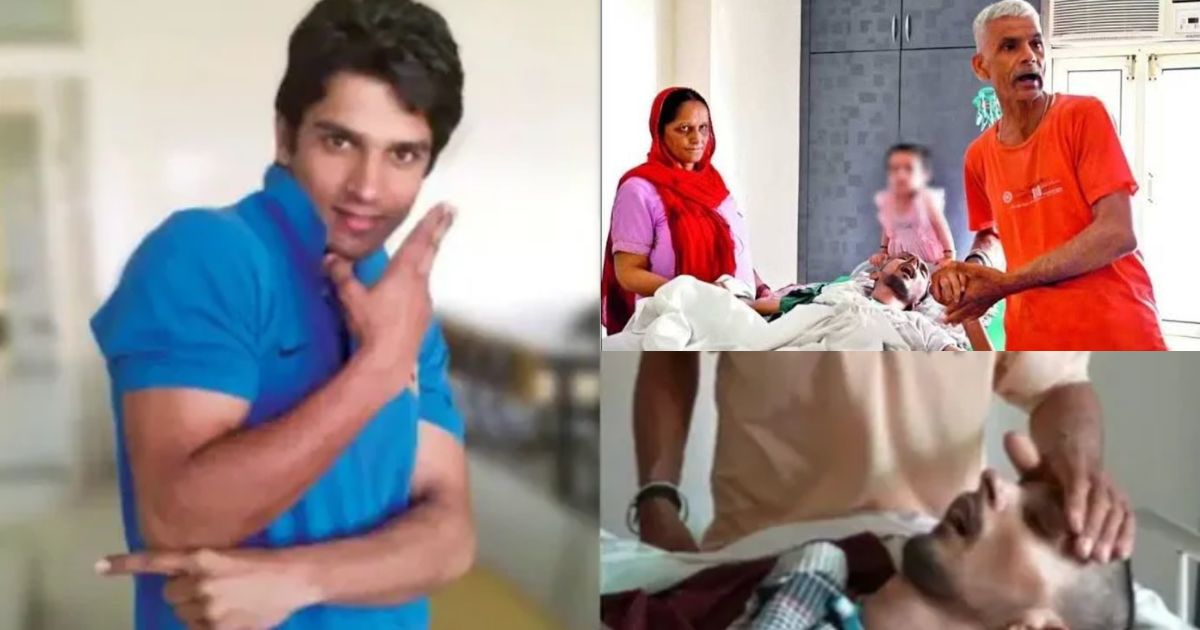
A 31-year-old man who has spent more than a decade in a permanent vegetative state following a devastating accident will soon be taken off life support after the Supreme Court of India permitted passive euthanasia.
The decision comes after years of medical treatment, emotional struggle and financial hardship faced by his family, who had petitioned the court to allow withdrawal of life-sustaining treatment.
Harish Rana Case: The Accident That Changed His Life
Harish Rana was a BTech student in 2013 when he reportedly fell from the fourth floor of his paying guest accommodation, according to multiple media reports.
The fall caused a severe traumatic brain injury that left him 100% disabled and in a permanent vegetative state. Since the accident, Rana has required round-the-clock medical care and has been fed through a PEG (percutaneous endoscopic gastrostomy) tube.
Doctors treating him over the years repeatedly said the chances of recovery were almost nonexistent.
A Family’s Long and Painful Struggle
For more than 13 years, Rana’s parents continued caring for him despite mounting emotional and financial pressure.
Reports suggest the family spent significant resources on medical care, including repeated hospitalisations. At one stage, they even sold their house to sustain the costs of treatment.
With no improvement in his condition over the years, Rana’s father eventually approached the Supreme Court seeking permission for passive euthanasia — a legal process that involves withdrawing life-sustaining treatment and allowing natural death.
Harish Rana Euthanasia Case: What the Medical Board Concluded?
A primary medical board set up to assess Rana’s condition concluded that the possibility of recovery was negligible.
Doctors noted that his neurological condition was irreversible and that he remained in a persistent vegetative state with no meaningful prospects of regaining consciousness.
Harish Rana Euthanasia Case: What the Supreme Court Said?
While hearing the case, the Supreme Court observed that the right to live with dignity also includes the right to refuse artificial life-prolonging treatment when recovery is impossible.
In its observations on December 11, the court noted that according to the medical board’s findings, Rana was in a “pathetic condition,” reinforcing the medical assessment that recovery was unlikely.
How Passive Euthanasia Works in India?
Passive euthanasia is legally permitted in India but follows a strict process to prevent misuse.
Under guidelines issued by the Supreme Court in 2023, two separate medical boards must review the patient’s condition before life support can be withdrawn.
First, a primary medical board comprising three doctors examines the patient and determines whether the condition is irreversible. If it recommends withdrawal of treatment, the case is then evaluated by a secondary medical board for an independent opinion.
Only after both boards agree — and with judicial oversight where required — can life-sustaining treatment be withdrawn, ensuring transparency and ethical compliance.




