Thanya Nathan, a 24-year-old visually challenged lawyer from Kerala, becomes the state’s first woman judge with disability after topping the civil judge exam merit list.
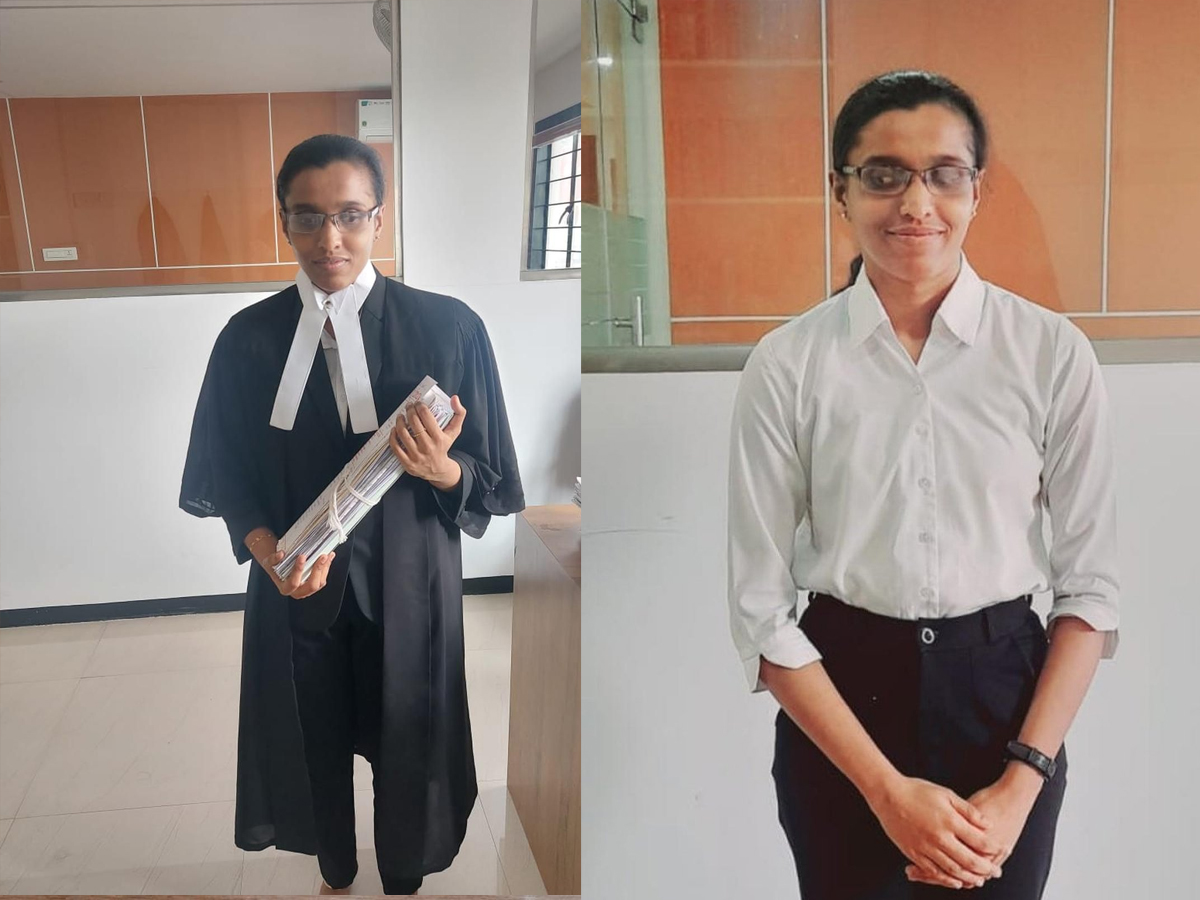
Kerala’s legal system is preparing for a historic milestone as a young lawyer with visual impairment moves closer to joining the judiciary. Her achievement highlights a growing push for inclusion and equal opportunities within India’s justice system. At just 24 years old, Thanya Nathan has emerged as a powerful example of determination, proving that disability does not limit ambition or capability in public service.
Thanya Nathan C, a lawyer from Kannur district, secured the top rank among candidates with benchmark disabilities in the Kerala High Court Civil Judge (Junior Division) examination. Her success has drawn widespread attention across the legal community and beyond.
Born blind, she grew up in Mangad and studied in specialised institutions before moving to mainstream schools for higher education. Her consistent academic excellence laid the foundation for her remarkable legal career.
Nathan decided to pursue law during her higher secondary education and later topped her LLB programme at Kannur University as the only visually impaired student in her batch. After graduation, she worked as a junior lawyer in Taliparamba, where she prepared case notes in Braille and relied on screen-reading software to handle daily work. She followed a self-driven study routine for the judicial exam, using Braille notes and receiving interview guidance from a senior lawyer in Thiruvananthapuram.
“I know it will be a challenging career. But technology has advanced to a stage where most judicial work can be handled using assistive tools such as screen readers and dictation software,” Nathan told PTI.
Nathan highlighted that many court systems still lack proper accessibility features for people with disabilities. She expressed hope that authorities will improve the infrastructure so professionals with special needs can work without barriers.
“Our systems are not fully accessible yet. I hope the government will take appropriate steps so that I can work comfortably,” she told PTI.
A landmark Supreme Court judgment in 2025 played a key role in opening doors for visually impaired candidates in judicial services. The ruling declared that disability alone cannot be a reason to deny someone a chance to serve as a judge.
“No candidate can be denied such opportunity solely on account of disability,” the court stated, encouraging states to adopt more inclusive recruitment policies.
The Kerala High Court has forwarded her selection list to the state government for final appointment orders. Legal experts have praised her success as a major step toward a more diverse and inclusive judiciary.
As she prepares to take on the responsibilities of the bench, her journey from Braille textbooks to courtroom authority continues to inspire aspiring lawyers across the country.
