
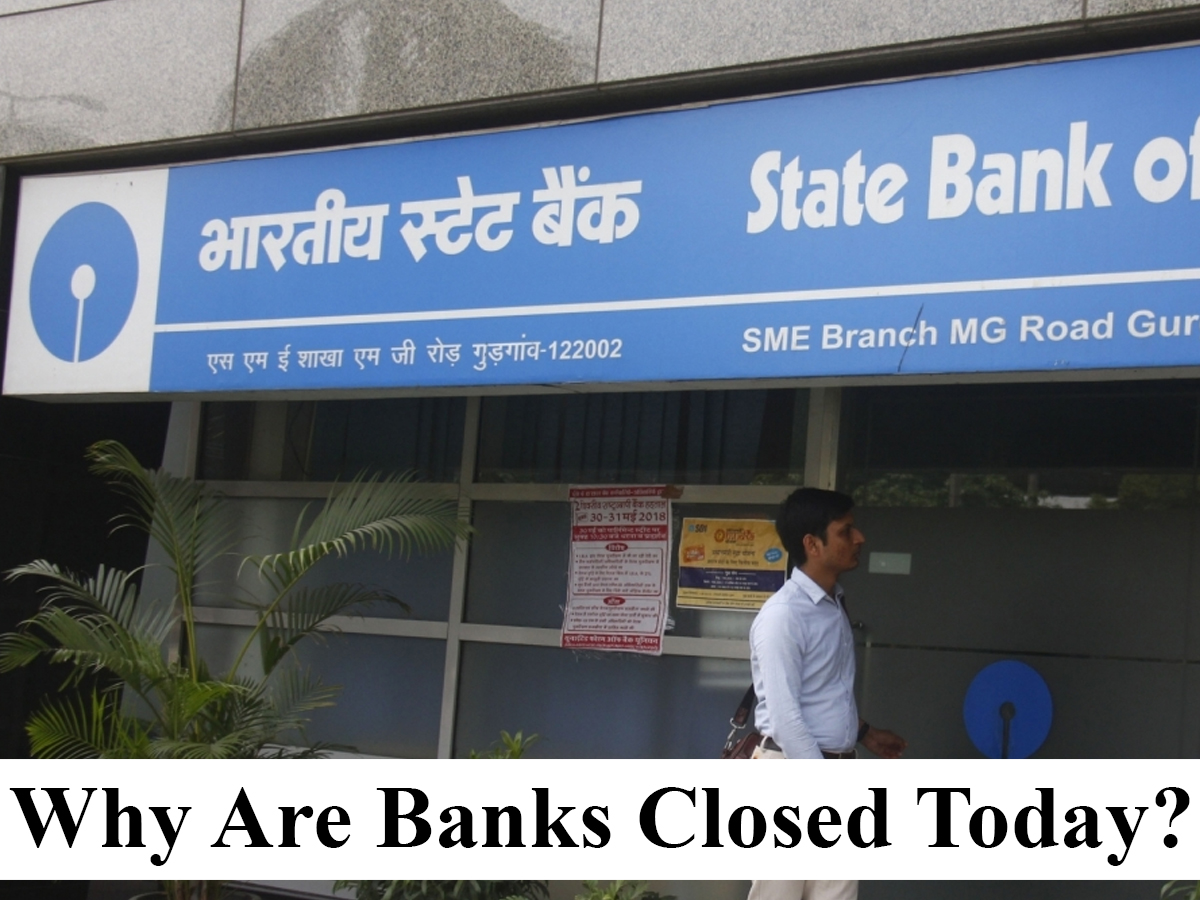
If banks felt unusually silent today, it wasn’t a technical glitch or a routine holiday hangover. Across India, shutters stayed down, counters remained unmanned, and customers were left checking apps instead of passbooks. What looks like a regular bank closure on the surface is actually the result of a simmering standoff between bank employees and authorities, one that has been building for months and finally spilled onto the streets today.
Why Banks Are Closed Today in India?
At the heart of the disruption is a nationwide strike by public sector bank unions, turning an already long holiday stretch into a three-day pause for branch-level banking. From cash withdrawals to cheque clearances, everyday services have taken a hit, forcing millions to rely on digital alternatives.
But why did bank employees choose this moment to strike, and what exactly are they demanding?
Bank Strike on 27 January: What Is the Reason Behind the Bank Strike?
The strike stems from a long-pending demand for a five-day workweek in banks. The United Forum of Bank Unions (UFBU), which represents officers and employees from nine major banking unions, has called the strike after talks with authorities failed to produce results.
During wage revision discussions in March 2024, the Indian Banks’ Association (IBA) and UFBU had agreed to make all Saturdays bank holidays. However, the agreement remains unimplemented, triggering frustration among employees and prompting unions to escalate their protest.
At present, banks operate on the first, third, and fifth Saturdays, while remaining closed on the second and fourth Saturdays and Sundays. Unions argue this system keeps employees on a six-day work schedule for most of the year.
Bank Strike on 27 January: What Are Bank Unions Demanding?
Bank unions insist that shifting to a five-day workweek will not reduce productivity. Employees have already agreed to work an additional 40 minutes each weekday to compensate for Saturdays.
“It is unfortunate that the government is not responding to our genuine demand. There would be no loss of man-hours as we have agreed to work an extra 40 minutes daily from Monday to Friday,” All India Bank Officers’ Confederation (AIBOC) General Secretary Rupam Roy told the Economic Times.
Union leaders stress that the strike is meant to improve efficiency and employee well-being, not inconvenience customers.
“This movement is not against customers, but for a sustainable, humane, and efficient banking system. A rested banker serves the nation better. A balanced workforce strengthens financial stability. Five-day banking is not a luxury; it is an economic and human necessity,” L Chandrasekhar, General Secretary of the National Confederation of Bank Employees (NCBE), told the Times of India.
Bank Closed on 27 January 2026: Which Banks Will Be Closed?
The nationwide strike is expected to affect public sector banks and some old-generation private banks where union members are active. Institutions likely to be impacted include major lenders such as:
- State Bank of India (SBI)
- Punjab National Bank (PNB)
- Bank of Baroda
- Bank of India
These banks have already informed customers about possible disruptions to branch services if the strike happens.
However, large private sector banks such as HDFC Bank, ICICI Bank, Axis Bank, and Kotak Mahindra Bank are not expected to be significantly affected since their employees are not part of the UFBU unions calling the strike.
Bank Strike on 27 January: Why Did Talks Fail to Prevent the Strike?
After unions served a formal strike notice under the Industrial Disputes Act, 1947, the Chief Labour Commissioner held conciliation meetings on January 21 and 22. However, unions said the discussions ended without any concrete assurance.
“Despite detailed discussions during the conciliation proceedings, there was no assurance on our demand. Hence, we have been compelled to proceed with the strike action,” C H Venkatachalam, General Secretary of the All India Bank Employees Association (AIBEA), told PTI.
The UFBU also reiterated its stance on social media, stating:
“Bank employees power India’s financial stability, inclusion, and growth, often at the cost of their own well-being. A 5-day work week is not a concession; it’s a long-pending reform. The commitment is on record. It must be implemented.”
Bank Strike on 27 January: Which Banks Are Affected by the Strike?
The strike has impacted major public sector banks, including State Bank of India (SBI), Punjab National Bank (PNB), Bank of Baroda (BoB), and other government-owned lenders. Branch services at these banks remain suspended for the day.
However, private banks such as HDFC Bank, ICICI Bank, and Kotak Mahindra Bank are expected to function normally.
Bank Strike on 27 January: Which Bank Services Are Still Available?
While branch operations face disruption, several digital services remain active. Customers can still use:
- ATMs and ADWMs for cash transactions
- UPI platforms
- Mobile and internet banking apps
Services such as cheque clearance, KYC updates, cash deposits, and routine branch work are likely to face delays at public sector banks.
ALSO READ: Bank Closed on 27 January 2026: Check Which Banks Are Affected, What Services Will Work & What Won’t




