
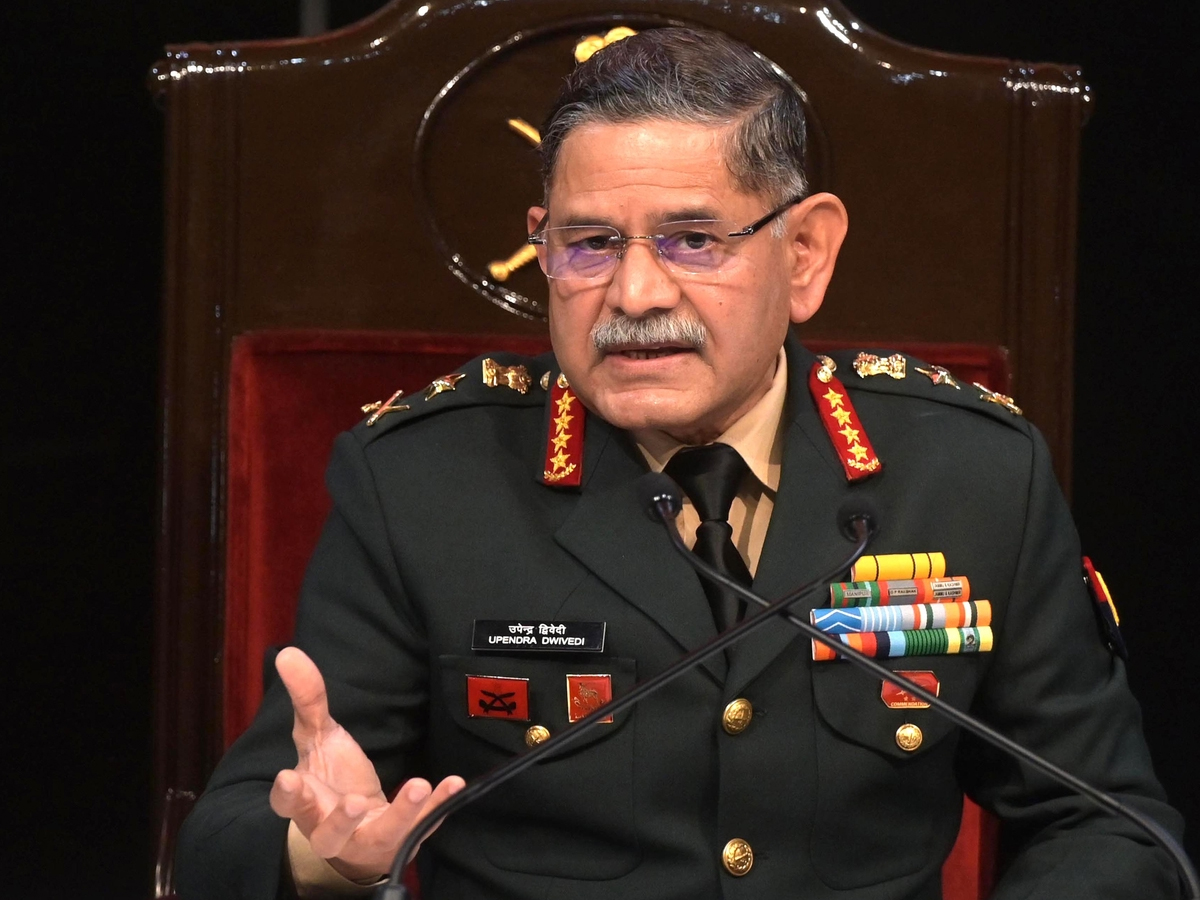
India’s brief but decisive military operation against terror camps across the border last year left Pakistan with little room to respond. For the first time, Chief of Army Staff General Upendra Dwivedi has clearly explained how Operation Sindoor unfolded and why Pakistan agreed to a ceasefire soon after.
Speaking at the annual Army press conference in New Delhi, General Dwivedi said India achieved its objectives swiftly and deliberately avoided a longer conflict. He credited India’s success to two critical turning points, one public and one deliberately kept confidential.
According to the Army chief, the operation showed how political clarity, military freedom, and coordination between the Army, Navy, and Air Force can change the course of a conflict in minutes.
Op Sindoor: How the 22-Minute Strike Shook Pakistan
The Army chief said the Indian strikes created confusion and panic across the border. Pakistan struggled to assess the situation and failed to mount a coordinated response.
“It took time for them to understand the situation. After that, they started attacking with whatever they had: some started attacking with stones, some with a drone or missiles. It was a chaotic situation, and they didn’t know what was happening.”
India, however, chose restraint after achieving its goals.
“And the mismanagement that was happening on the other side, we gave a calibrated response. We didn’t want to take the fighting further because our politico-military aims were achieved,” he said.
The Second Turning Point India Has Not Made Public
General Dwivedi revealed that the second turning point came on May 10, but refused to disclose its details.
“The second turning point was something which I cannot say in public. But on the morning of May 10, there were certain orders which were given to all three forces in case the fighting escalates.”
He said the message was clearly understood by those who needed to understand it.
Why Pakistan Chose to Stop Fighting
According to the Army chief, Pakistan closely monitored India’s military movements through satellite imagery. “When they connected the dots, they said that it was the right time to stop the fighting there itself and profitable for them.”
Pakistan reportedly observed Indian naval deployments and air force positioning and realised that escalation would put it at a serious disadvantage. General Dwivedi described Operation Sindoor as a model example of tri-service coordination under strong political leadership.
He said the Army, Navy, and Air Force operated with clear directives and complete alignment, ensuring speed and precision. He added that the Armed Forces remain satisfied with the progress made in 2025, particularly in areas of jointness, Atmanirbharta, and innovation.
What Was Operation Sindoor?
Operation Sindoor was launched in the early hours of May 7, when Indian forces carried out precision strikes on nine terror camps inside Pakistan and Pakistan-occupied Kashmir (PoK).
The operation lasted just 22 minutes but caused heavy damage to terrorist infrastructure and resulted in the killing of several terrorists. Prime Minister Narendra Modi has repeatedly highlighted the short duration of the strike, stating that Pakistan “surrendered within 22 minutes.”
General Dwivedi confirmed that the Armed Forces had full operational freedom during the mission.
“I think we can understand the turning point at two stages. The first turning point was the 22-minute strike that we conducted on terror targets. During that 22 minutes, the decision-making cycle of the opposite side was completely bewildered,” Upendra Dwivedi told the press briefing.




