
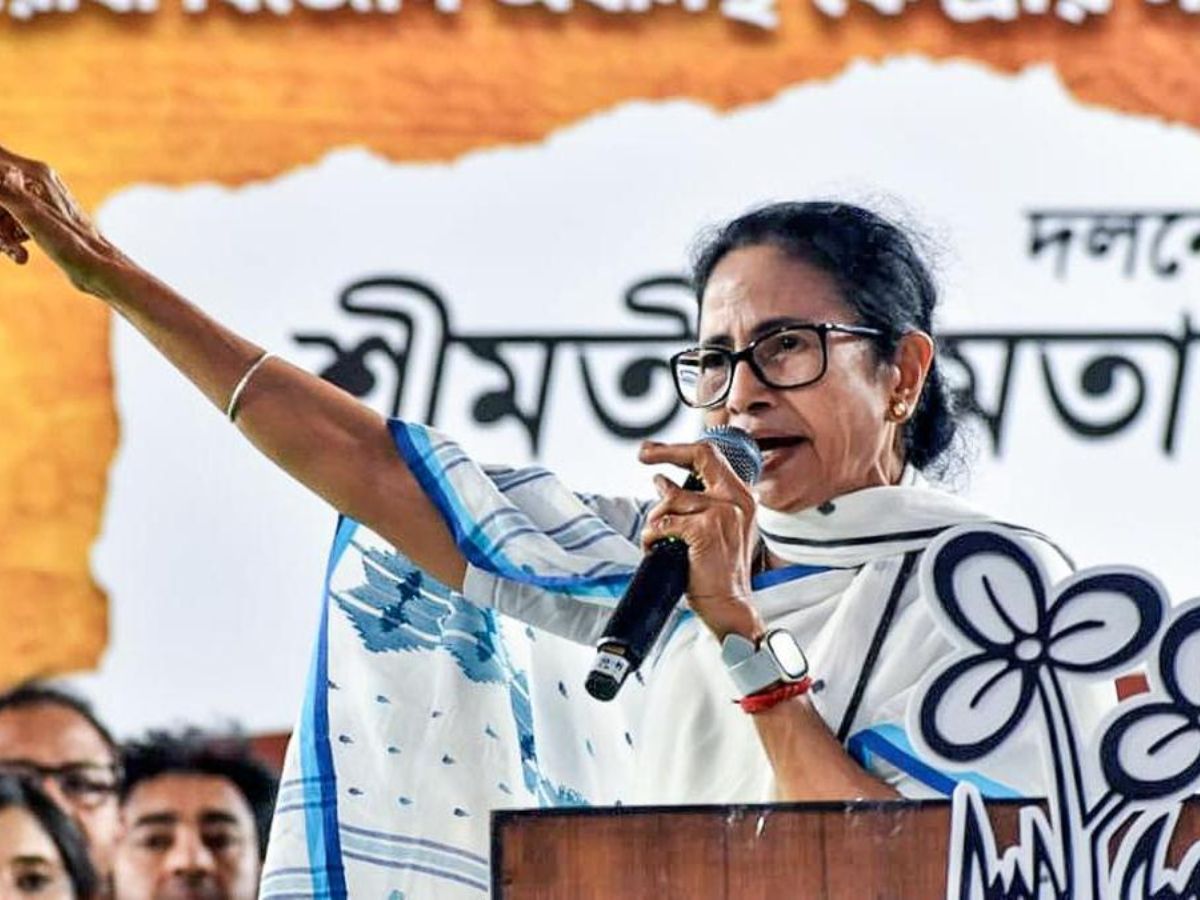
On Wednesday, West Bengal Chief Minister Mamata Banerjee appeared in person at the Supreme Court to challenge the legality of the Special Intensive Revision (SIR) of voter rolls in the state. Her case was heard by a three-judge bench consisting of Chief Justice of India (CJI) Surya Kant, Justice Joymalya Bagchi and Justice V M Pancholi.
What Is SIR & Why Does Mamata Banerjee Oppose It?
The Special Intensive Revision (SIR) of voter rolls is an exercise undertaken by the Election Commission of India (ECI) to ensure that all eligible Indian citizens are included and ineligible voters are excluded in the electoral rolls. The official reasons for undertaking SIR are “rapid urbanization, frequent migration, young citizens becoming eligible to vote, non-reporting of deaths and inclusion of the names of foreign illegal immigrants”. In this process, Booth Level Officers (BLOs) conduct house-to-house surveys for verification..
Observers have raised concerns about the accuracy of these rolls, pointing to suspiciously high numbers of young people listed as deceased, potential gender imbalances in deletions, and certain communities being disproportionately affected. Previously, West Bengal CM Mamata Banerjee had even alleged that people had died due to the pressure of the exercise, including a Booth Level Officer. She claimed that the ECI was deliberately singling out her state, evidenced by the appointment of “micro observers”. On January 28, according to LiveLaw, Banerjee filed a writ petition, stating that the ongoing SIR process will result in “large-scale disenfranchisement” caused by “the opaque, hasty, unconstitutional and illegal actions of the ECI.”
Mamata Banerjee Flags “Extra Scrutiny” in West Bengal SIR
Banerjee filed an interlocutory application to appear and argue her case in person before the Supreme Court, citing what she sees as extraordinary oversight. She pointed out that micro-observers have been assigned only in West Bengal to supervise the SIR, a level of monitoring not seen in other states where the SIR is underway. She contended that this uneven application of scrutiny could disproportionately affect voters in the state, raising questions about fairness and transparency in the electoral process. She sought an urgent direction to halt deletion of voters, particularly those under the “Logical Discrepancy” category, from the electoral rolls.
She also claimed that the micro-observers had effectively overridden the authority of Electoral Registration Officers (EROs), removing names from the rolls without proper checks. Banerjee further argued that voters were not allowed to submit Form 6, which led to the deletion of millions of names. According to her, many living individuals have been incorrectly marked as deceased.
Why Is Mamata Banerjee Court Appearance Significant?
This marks the first time a sitting Chief Minister of an Indian state has personally appeared before the Supreme Court to make oral submissions in an electoral matter, setting a rare precedent. By stepping into the courtroom herself, Banerjee has blurred the lines and transformed a legal procedure into a public debate.
Beyond legal strategy, this move is a powerful political signal. By personally arguing her case, Banerjee has framed herself as a protector of voters’ rights, drawing national attention to the issue and ensuring extensive media coverage. This unprecedented step also raises some important questions: will the courts now accommodate other political leaders who choose to personally argue sensitive cases? How will this shift the intersection of politics, media, and law in India?




