
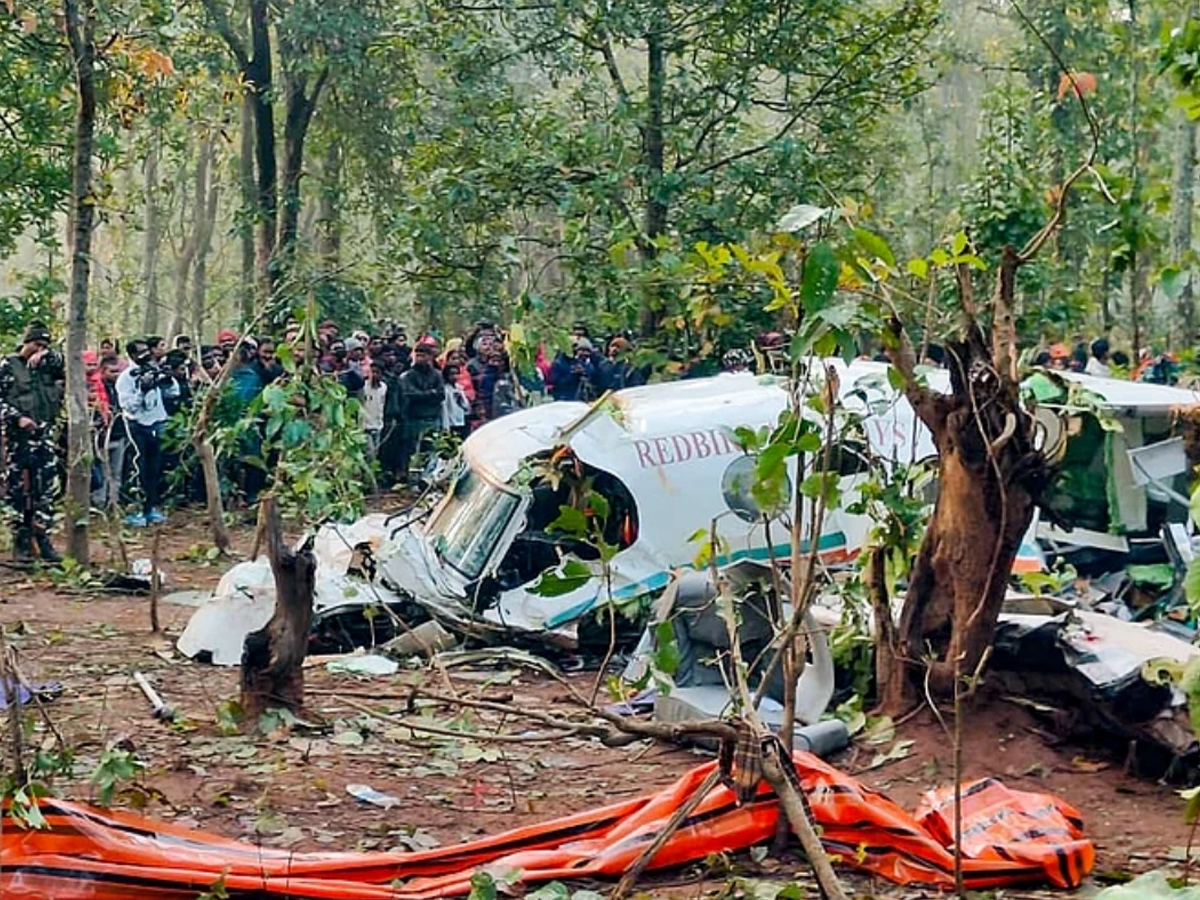
The tragic crash of an air ambulance in Jharkhand’s Chatra district has raised a troubling question, that why did the aircraft not have a black box, a device widely seen as crucial in aviation accident investigations?
The Beechcraft C90 King Air aircraft, operated by Redbird Airways Pvt Ltd, went down shortly after taking off from Ranchi on its way to Delhi. All seven people on board, five members of a family and two crew members, lost their lives. As investigators piece together what went wrong, the absence of a cockpit voice recorder (CVR) and flight data recorder (FDR), commonly referred to as black boxes, has added complexity to the probe.
Ranchi Air Ambulance Crashed: Why the Aircraft Was Not Required to Have a Black Box?
Under India’s civil aviation regulations, not all aircraft are mandated to carry black boxes. The rule hinges primarily on aircraft weight and certification dates.
The crashed Beechcraft C90 King Air had a maximum takeoff weight of 4,583 kilograms, well below the 5,700-kilogram threshold that triggers mandatory installation of CVRs and FDRs. Because of this, the aircraft was legally operated without these recording devices.
Air Ambulance crash in Jharkhand | According to civil aviation rules, cockpit voice recorders (CVR) or flight data recorders (FDR) are not mandated for aircraft with a maximum takeoff weight below 5,700 kg. The Redbird Airways Pvt Ltd Beechcraft C90 aircraft VT-AJV, which was…
— ANI (@ANI) February 25, 2026
Additionally, the aircraft’s first Certificate of Airworthiness was issued in 1987. Current regulations require CVRs and FDRs only for aircraft certified after specific cutoff dates, January 1, 1990, for FDRs and later dates for CVRs. Since the aircraft predated both requirements, it was exempt under existing rules.
What a Black Box Normally Reveals in Crash Investigations?
A black box typically consists of two separate systems. The CVR records cockpit conversations, radio communications with air traffic control, and ambient sounds that help investigators understand pilot actions and decision-making in the moments before a crash.
The FDR, on the other hand, captures technical data such as altitude, speed, engine performance, control inputs, and deviations from standard flight parameters. Together, these devices allow investigators to reconstruct the final moments of a flight with precision.
In many past aviation accidents, black box data has proven decisive in identifying mechanical failures, human error, or environmental factors.
Air Ambulance Crash Ranchi Jharkhand: How Investigators Will Probe the Crash Without a Black Box?
In the absence of recorded flight data, investigators are relying on alternative sources of evidence. These include air traffic control communications, physical examination of the wreckage, flight maintenance records, and eyewitness accounts from the crash site in Chatra.
One key focus area is whether a technical malfunction, possibly linked to the aircraft’s onboard weather radar, caused the plane to veer off its intended flight path shortly after takeoff. Investigators are also examining weather conditions at the time of departure and any signs of engine or control system failure.
Do Current Rules Need a Rethink?
The crash has reignited debate over whether smaller aircraft, especially those used for medical emergencies, should be required to carry black boxes despite weight exemptions. Air ambulances often operate under challenging conditions, including night operations and adverse weather, increasing operational risk.
While regulators currently follow international standards, aviation safety experts argue that advancements in lightweight recording technology could make mandatory data recording feasible even for smaller aircraft.
The Bigger Safety Question
Although the aircraft complied with existing rules, the tragedy highlights a gap between legal compliance and investigative preparedness. Without a black box, determining the exact cause of the crash becomes slower and less conclusive, prolonging uncertainty for victims’ families and regulators alike.
As India’s aviation sector expands into regional and emergency services, this crash may serve as a turning point in how safety requirements for smaller aircraft are reassessed.




