
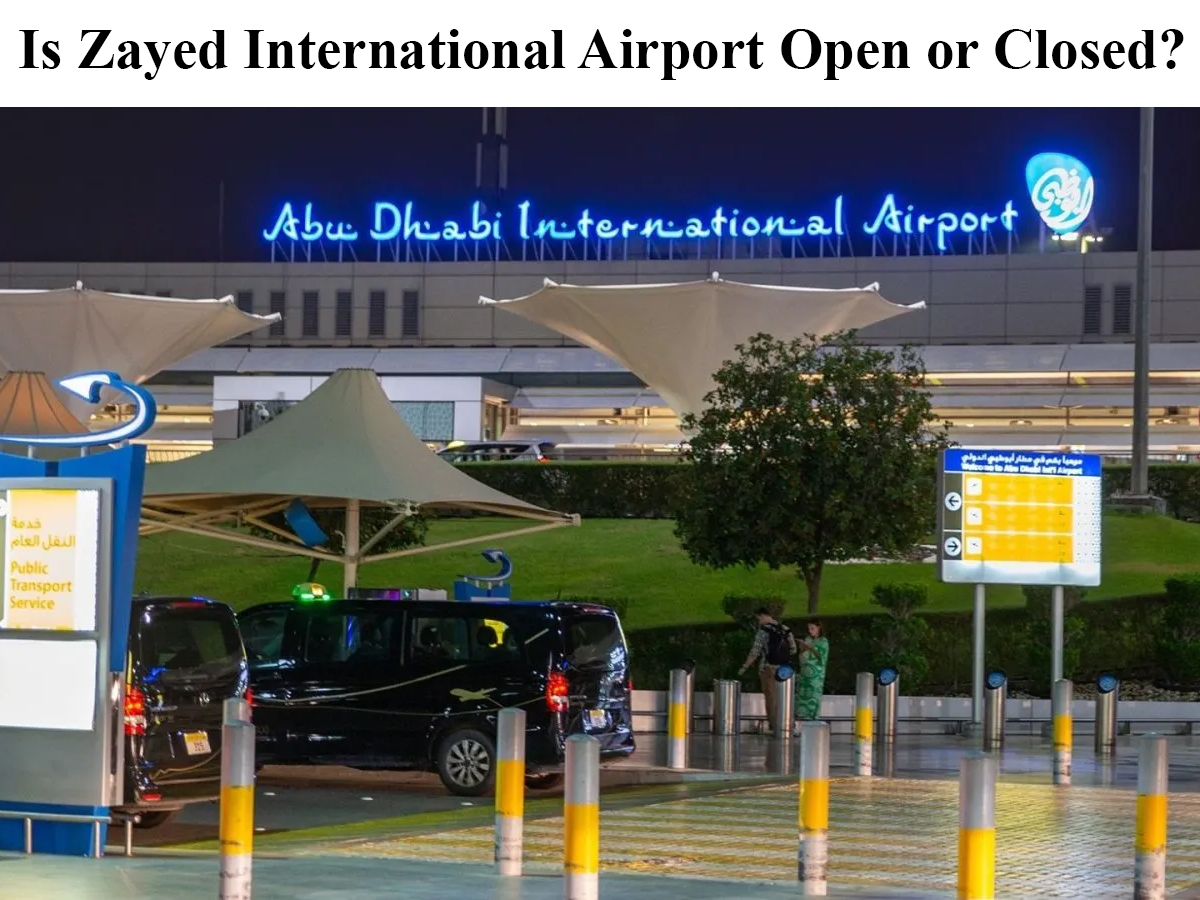
Zayed International Airport, Abu Dhabi’s main aviation gateway, remains closed to all passenger flights, leaving travelers uncertain as regional tensions continue to disrupt air travel across the Middle East. Authorities have suspended operations at the airport due to escalating security risks linked to the ongoing conflict involving the United States, Israel, and Iran.
The airport, officially named Zayed International Airport, has seen no arrivals or departures since the weekend. Aviation officials say the closure will remain in place until further notice, with passenger safety cited as the top priority.
Is Zayed International Airport Open Today?
As of Monday, flight operations at Zayed International Airport remain fully suspended till 3rd of March. Abu Dhabi Airports and national aviation regulators have not announced a reopening timeline, stressing that decisions will depend on security assessments and airspace conditions across the Gulf.
Regional Airspace Disruption – Operational Update
Regional airspace closures continue to impact Etihad’s operations, and all flights to and from Abu Dhabi are suspended until 14:00 UAE time on Tuesday 3 March.
Guests due to travel are advised to:
-Check their flight status at…
— Etihad Airways (@etihad) March 2, 2026
The shutdown follows a temporary closure of UAE airspace ordered by the General Civil Aviation Authority after missile and drone activity was reported in the region.
National carrier Etihad Airways has extended the suspension of all inbound and outbound flights from Abu Dhabi. The airline advised passengers not to travel to the airport and to check official channels for updates on rebooking and refunds.
Etihad said it has diverted or returned several flights to departure points outside the conflict zone, emphasizing that crew and passenger safety remains its highest priority.
Zayed International Airport Open or Close: Why Are Flights Suspended in Abu Dhabi?
The flight halt stems from the rapid escalation of military activity in the Middle East. After joint US-Israeli strikes on Iranian targets, Iran launched retaliatory missile and drone attacks against several countries in the region. UAE authorities confirmed intercepting aerial threats, prompting heightened alerts and precautionary closures.
Officials said debris from interceptions caused casualties near critical infrastructure, reinforcing the decision to keep airports closed until conditions stabilize.
The disruption extends beyond Abu Dhabi. Dubai International Airport and several regional hubs across Qatar, Bahrain, and Kuwait have also reported flight suspensions or major delays.
Major airlines, including Emirates, flydubai, and Wizz Air, have canceled or rerouted services, leaving tens of thousands of travelers stranded.
Zayed Airport Attack: How Many Passengers Were Affected?
Industry estimates suggest that more than 20,000 travelers have been impacted within the UAE alone since the weekend. Abu Dhabi and Dubai typically handle some of the world’s highest volumes of international transit passengers, connecting Europe, Asia, Africa, and the Americas.
Travelers reported long waits, repeated cancellations, and uncertainty over rebooking as airlines scramble to adjust schedules.
The aviation shutdown coincides with disruptions in shipping through the Strait of Hormuz, amplifying concerns about global trade, energy supplies, and tourism. Experts warn that prolonged airspace closures could raise ticket prices, reduce cargo capacity, and strain tourism-dependent economies.
Zayed International Airport Drone Attack: Airline Contacts for Travelers
Passengers can contact airlines directly for updates or assistance:
- Emirates: +971600555555
- Etihad Airways: +971600555666
- FlyDubai: +971600544445
- Air Arabia: +971600508001
Zayed International Airport Latest Update: When Will Zayed International Airport Reopen?
There is no confirmed reopening date for Zayed International Airport. Authorities say operations will resume only after airspace restrictions are lifted and security conditions improve.
For now, passengers with upcoming travel plans through Abu Dhabi are advised to postpone non-essential journeys and rely solely on airline and airport updates.
As the conflict continues, the closure of one of the Middle East’s key aviation hubs highlights how quickly geopolitical crises can disrupt global travel networks.




