
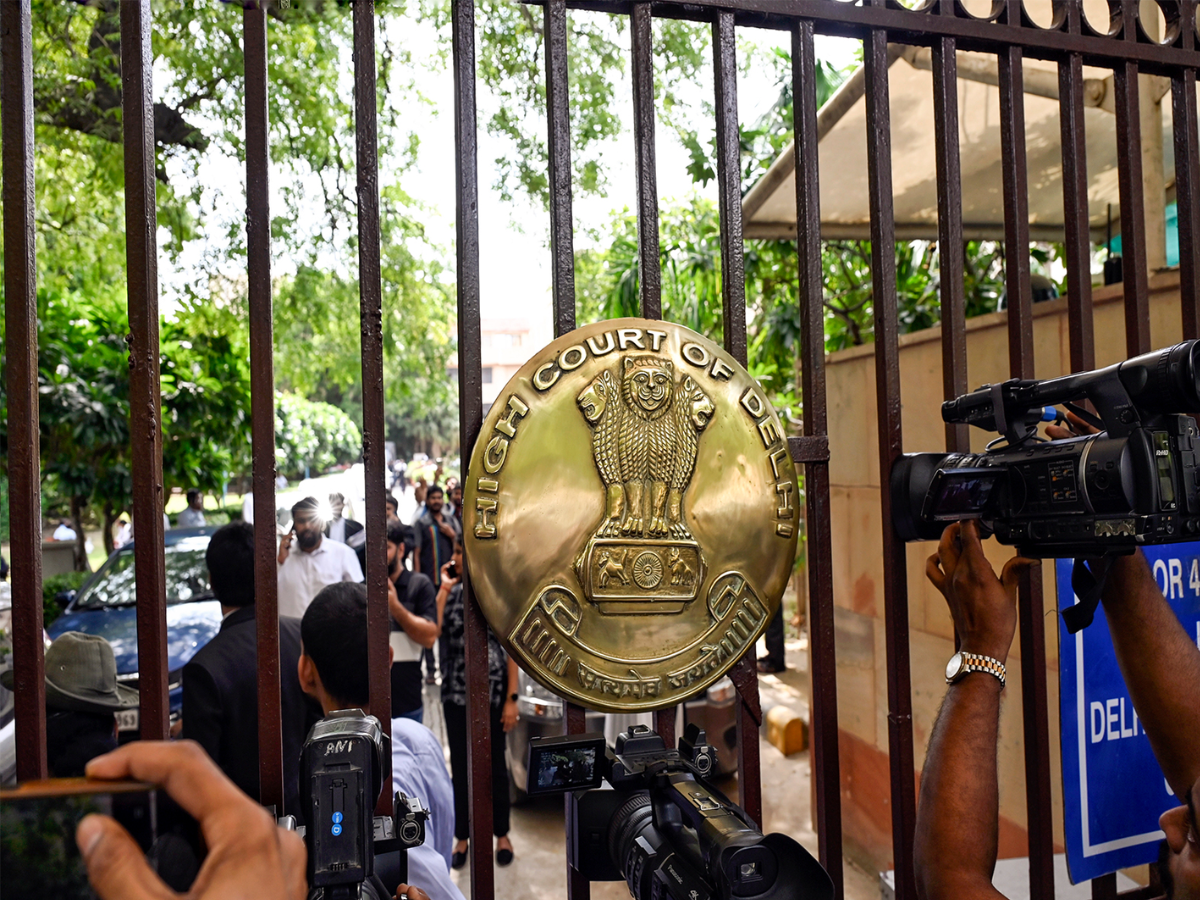
NEW DELHI: In a significant ruling delineating the contours of contempt jurisdiction, the High Court of Delhi has set aside contempt proceedings initiated by the Central Administrative Tribunal (CAT) against the Secretary (Revenue), Ministry of Finance, and the Chairman, Central Board of Indirect Taxes and Customs (CBIC).
A Division Bench comprising Justice Anil Kshetarpal and Justice Amit Mahajan held that contempt powers cannot be invoked to adjudicate disputes on merits or monetary claims once an order has been passed in compliance with judicial directions. The Court categorically observed that “contempt jurisdiction lies in enforcement of authority and not in the re-litigation of disputes over compliance”, cautioning that it cannot be used as a substitute for substantive adjudication.
Appearing for the Union of India, Standing Counsel Ashish Dixit submitted that the Tribunal exceeded its jurisdiction by travelling beyond the scope of the original order under the guise of contempt proceedings. He argued that contempt jurisdiction cannot be used as a short-cut to re-agitate issues that give rise to a fresh cause of action, particularly when an administrative order has already been passed in purported compliance with judicial directions.
The case arose from service-related claims of Hari Narayan Meena, an Indian Revenue Service officer of the 2004 batch. After disciplinary proceedings arising from his tenure at the Government Opium & Alkaloid Works were concluded, Meena approached the Tribunal seeking promotion and consequential benefits.
In January 2025, the CAT directed the Government to “consider his case for promotion and consequential benefits. In accordance with the authorities decision, he was granted a notional promotion to the post of Commissioner, effective as of September 2022. However, applying the settled principle of “No Work, No Pay,” the Government denied payment of arrears for the period during which Meena had not actually discharged the functions of the promotional post.
Aggrieved by the denial of back wages, Meena initiated contempt proceedings before the Tribunal. Treating the denial of arrears as non-compliance, the CAT passed orders dated August 6 and December 2, 2025, holding the authorities in contempt and even directing the personal appearance of the CBIC Chairperson.
Setting aside the contempt orders, the High Court held that once an order is passed purporting to comply with the Tribunal’s directions, whether right or wrong, the remedy of the aggrieved party lies in challenging that order through appropriate legal proceedings, not through contempt.




