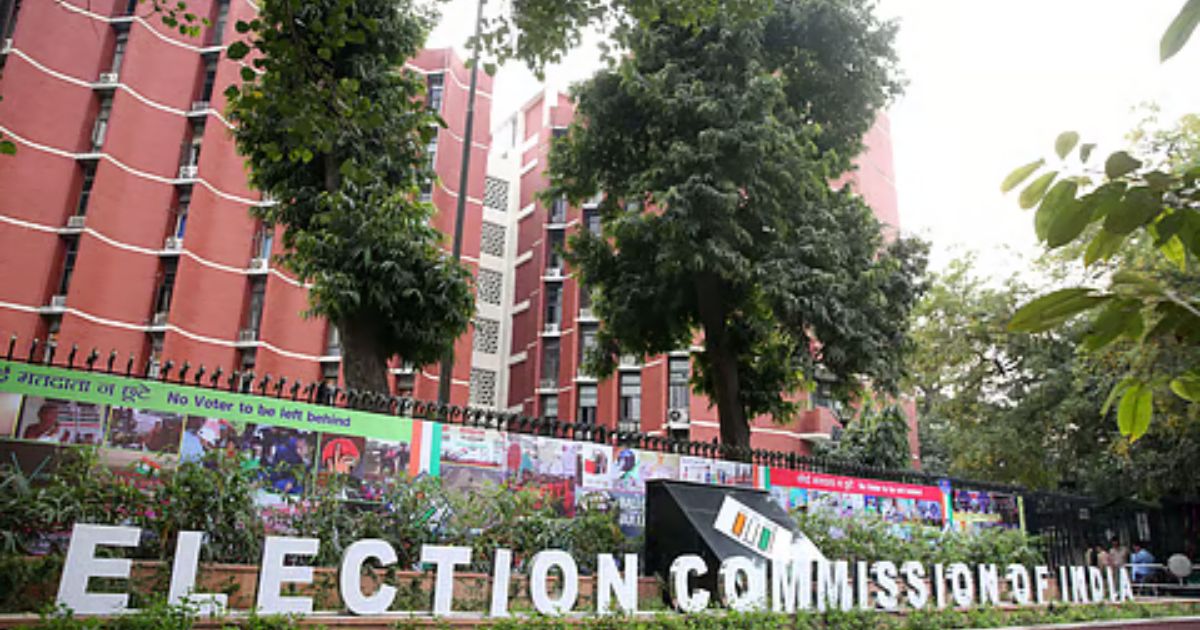
New Delhi: The Election Commission of India has informed the Supreme Court that compelling it to conduct special intensive revisions of electoral rolls at regular intervals across the country would amount to an “encroachment” on its exclusive constitutional authority.
In a counter-affidavit filed in response to a petition by advocate Ashwini Kumar Upadhyay, the EC asserted it has “complete discretion” over both the timing and nature of electoral roll revisions. Upadhyay’s petition had urged the court to direct the EC to conduct regular nationwide SIRs, particularly before elections, to ensure that only Indian citizens participate in shaping the nation’s political future.
The EC, however, pushed back, stating, “Any direction to conduct a ‘SIR’ at regular intervals throughout the country would encroach upon the exclusive jurisdiction of the ECI.”
The EC emphasized that its powers are rooted in Article 324 of the Constitution, which grants it the superintendence, direction, and control over elections and electoral rolls. This provision, the affidavit stated, forms the “bedrock” of the Commission’s authority—even in areas where laws may be silent or inadequate.
The Commission also cited Section 21 of the Representation of the People Act, 1950, which requires electoral roll revisions before general, assembly, or by-elections.
However, it does not prescribe a fixed timeline for such revisions. Rule 25 of the Registration of Electors Rules, 1960, further grants the EC discretion to choose between summary or intensive revisions.
Highlighting its proactive role, the EC mentioned that it had already instructed Chief Electoral Officers (CEOs) across all states and Union Territories—except Bihar—to begin pre-revision work for a fresh SIR, with January 1, 2026, set as the qualifying date.
