
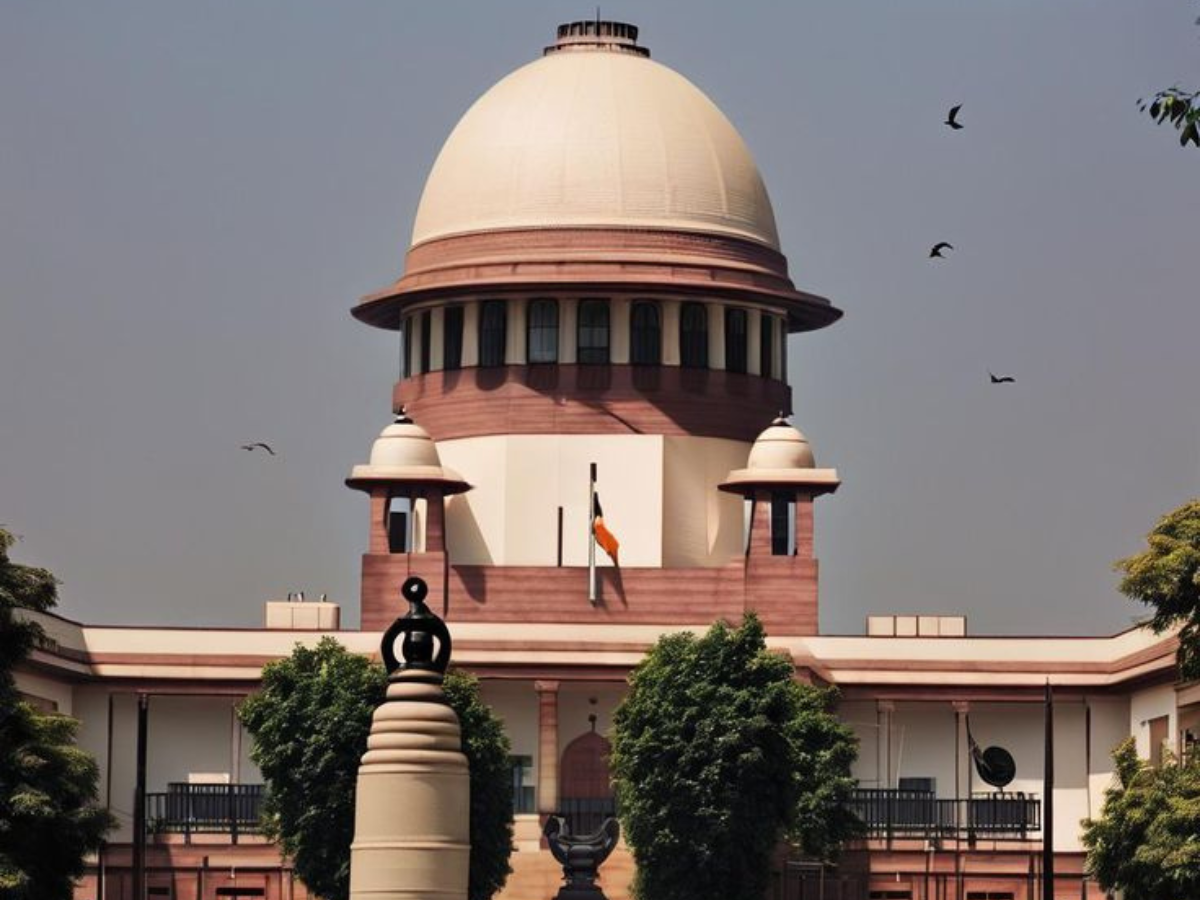
New Delhi: The Supreme Court on Friday approved the draft constitution of the All-India Football Federation (AIFF), prepared by former apex court judge L. Nageswara Rao, with minor modifications.
The football body has now been directed to adopt it within 4 weeks through a general body meeting.
A bench of Justices P.S. Narasimha and Joymalya Bagchi upheld the election of the current AIFF executive committee, led by president Kalyan Chaubey. The court ruled out fresh elections, noting, “there is no point in holding a fresh poll, as only one year tenure is left.” The verdict brings clarity to the federation’s leadership after months of uncertainty over the finalisation of its governing framework.
On April 30, the Supreme Court had reserved its verdict on the AIFF’s draft constitution prepared under Justice Rao’s supervision. During the hearings, the bench considered inputs from senior advocates Ranjit Kumar, Rahul Mehra, and amicus curiae Gopal Sankaranarayanan.
Over several days, the court examined clause-by clause objections and suggestions raised by state football associations and former players. These deliberations paved the way for the final modifications approved on Friday. Justice Rao’s draft intro duces sweeping changes to bring transparency, account ability, and professionalism into AIFF’s functioning.
Office bearers can hold posts for a maximum of 12 years in their lifetime, with not more than two successive terms of four years each. After serving eight consecutive years, a mandatory cooling-off period of four years is required. No member can continue in the federation once they cross the age of 70. Executive Committee Structure The executive committee will consist of 14 members bound by tenure and age restrictions: One President Two Vice Presidents (one male, one female) One Treasurer Ten other members, of which five must be eminent players, including two women.
Removal Of Office Bearers A major addition is the provision for removing office bearers—including the president—through a no confidence motion, a feature missing in AIFF’s existing constitution. Court’s approval of the draft marks a significant step towards reforming football governance in India. By mandating representation of players, introducing strict age and tenure limits, and allowing accountability mechanisms, the new framework aims to balance professionalism with democratic functioning.




