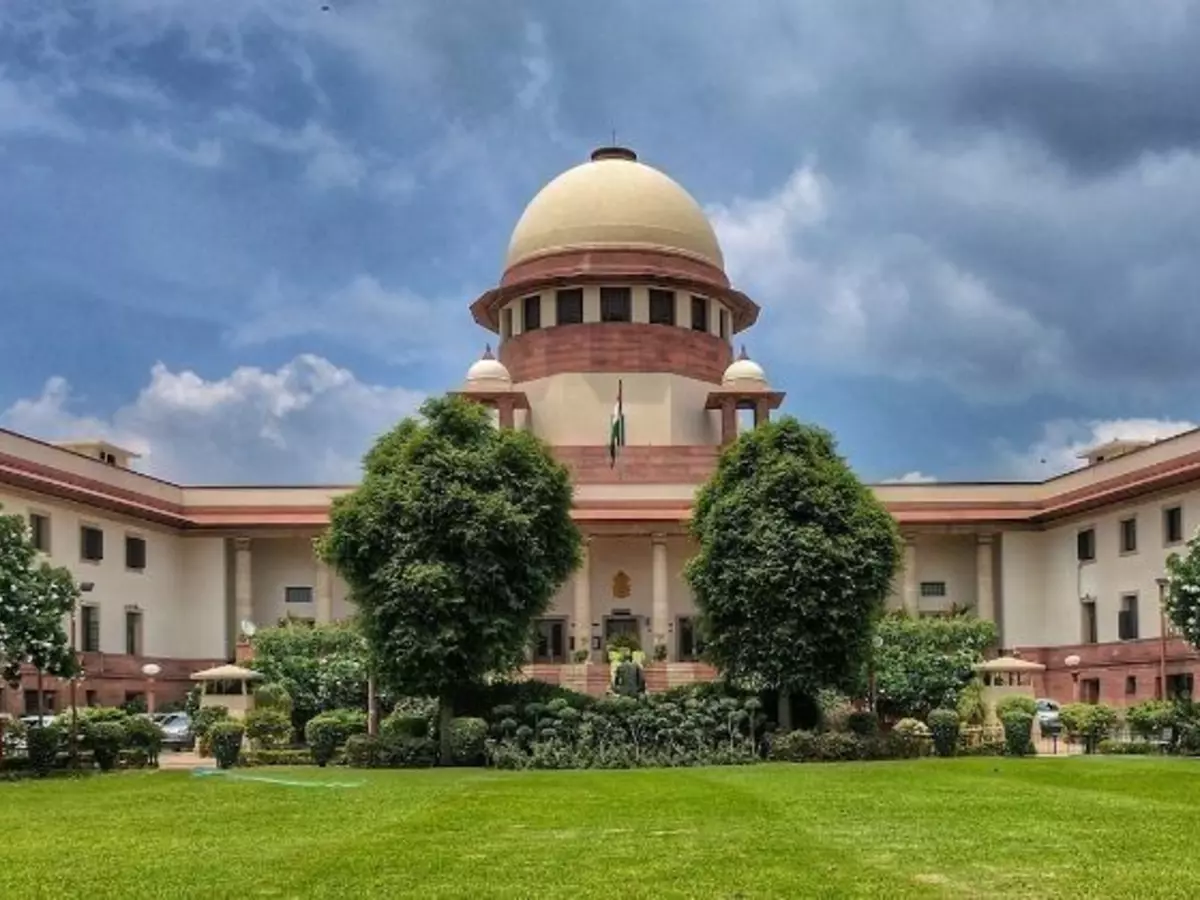
Supreme Court
NEW DELHI: In an extraordinary move to remove impediments in the Election Commission’s Special Intensive Revision (SIR) of electoral rolls in West Bengal, the Supreme Court on Friday ordered the deputation of district judges to resolve pending voter claims of people categorised in the Commission’s “logical discrepancy” list.
Invoking the apex court’s powers under Article 142 (special power to do complete justice) of the Constitution, a bench of Chief Justice of India (CJI) Surya Kant, Justices Jeymalya Bagchi and Vipul M Pancholi observed that it had no option left but to request the Chief Justice of the Calcutta High Court to intervene on the issue by deputing district judges to resolve pending voter claims chiefly with respect to the ones “who have been included in the logical discrepancy list by the ECI. It noted that the SIR process in the State had stalled at the stage of deciding claims and objections under the “logical discrepancy/unmapped category”.
“To ensure fairness in the adjudication of the genuineness of the documents relied upon and the consequential determination for inclusion or exclusion from the voter list... we are left with hardly any other option but to request Hon’ble the Chief Justice of the High Court at Calcutta to spare some serving judicial officers, along with some former judicial officers of impeccable integrity in the rank of District Judges/Additional District Judges, who can then, in each district, be requested to revisit and dispose of the pending claims under the category of ‘logical discrepancy/unmapped category’,” the court noted.
Each such judicial officer will be assisted by micro-observers from the Election Commission of India (ECI) and officers deputed by the State, it added.
The court further made it clear that any direction issued by the Chief Justice of the High Court in this regard would be deemed to be a direction of the Supreme Court, binding on the State administration.
The court said the SIR process had stalled because of a breakdown in coordination between the State government and the Election Commission, particularly at the stage of deciding claims and objections of voters placed in the “logical discrepancy/unmapped category.”
It noted that while most affected persons had submitted documents seeking inclusion in the rolls, their cases were yet to be adjudicated through the required quasi-judicial process by properly ranked officers.
