
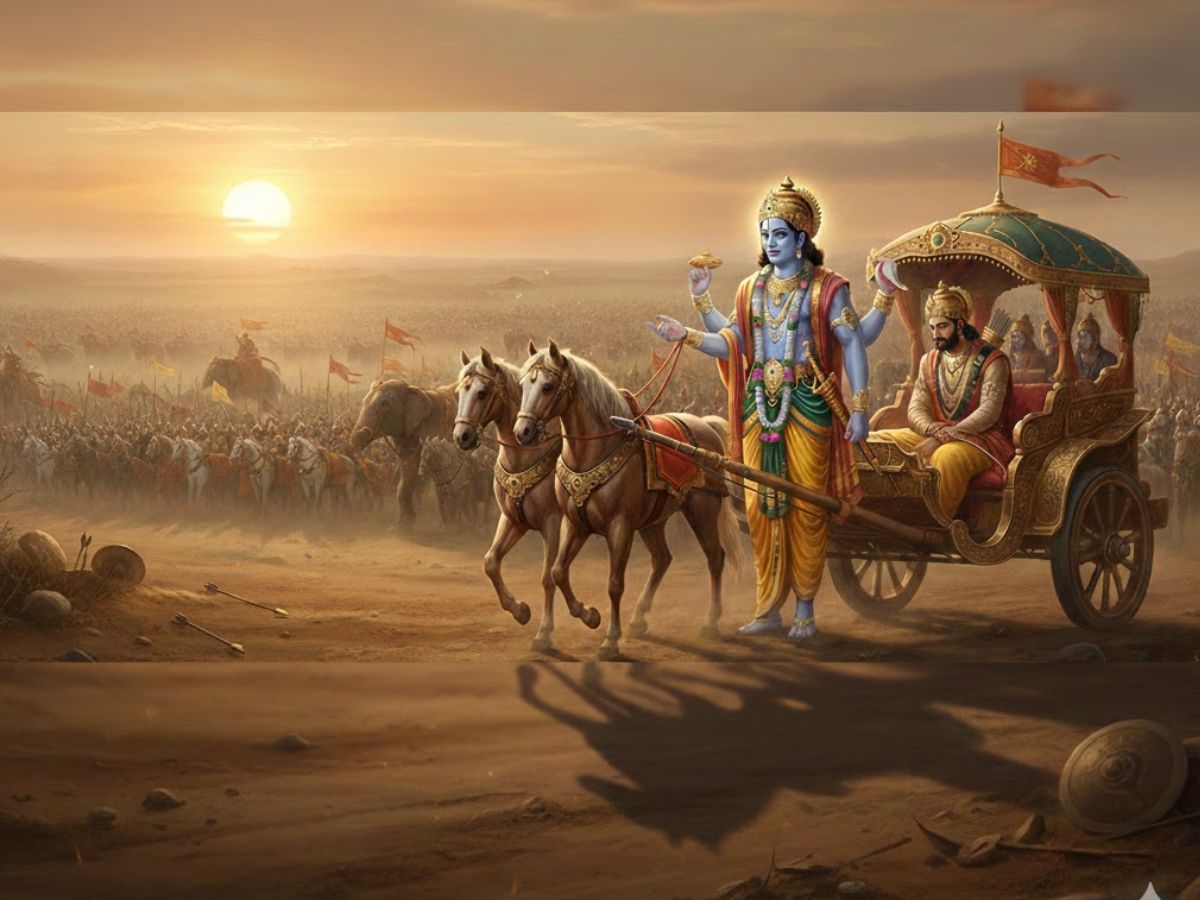
Bhagavad Gita Shlokas: The Bhagavad Gita is an eternal spiritual book that has the ability to inspire millions of people across the globe. This spiritual book consists of 700 verses and is divided into 18 chapters. These verses are known as ‘shlokas’ and are not only spiritual teachings from the past but also act as a guide for living life in today’s world. Although the Bhagavad Gita is a part of the Mahabharata, its teachings are independent and can be used as a guide for living a spiritual life. There are certain shlokas in the Bhagavad Gita that have special spiritual significance. Some of the most powerful shlokas and their explanations are as follows:
1. Courage and Duty
Shloka:
नैनं छिद्रन्ति शस्त्राणि, नैनं दहति पावकः।
न चैनं क्लेदयन्त्यापो, न शोषयति मारुतः॥
Explanation:
This verse clearly states that the soul is immortal and unbreakable. No weapon can pierce the soul, no fire can burn it, no water can wet it, and no wind can dry it. In this context, it teaches us that our real self is not affected by any problems in our life. It inspires us to be fearless and encourages us to perform our duties.
2. Focus on Duty, Not Outcome
Shloka:
हतो वा प्राप्यसि स्वर्गम्, जित्वा वा भोक्ष्यसे महिम्।
तस्मात् उत्तिष्ठ कौन्तेय युद्धाय कृतनिश्चय:॥
Explanation:
Krishna says to Arjuna that whether he wins or loses, gets glory, or even meets death, the soul is not affected. So, he should get up and do his duty with determination. The moral of the story is to do things with determination and dedication and not be attached to success or failure.
3. Act Without Attachment to Results
Shloka:
कर्मण्येवाधिकारस्ते मा फलेषु कदाचन।
मा कर्मफलहेतुर्भूर्मा ते संगोऽस्त्वकर्मणि॥
Explanation:
This shloka is an instruction in Karma Yoga, the yoga of selfless action. Krishna says that we have every right to act, but we have no right to the fruits of our actions. Do not be motivated by the desire for results in your actions, nor should you be attached to inaction. This will help you reduce stress, improve concentration, and advance in spirituality.
4. The Cycle of Desire and Anger
Shloka:
ध्यानात् विसयं पुंसः सङ्गस्तेषूपजायते।
सङ्गात् संजायते कामः कामात् क्रोधोऽभिजायते।।
Explanation:
This verse goes on to explain how attachment gives rise to desire, and desire gives rise to anger. This is a vicious cycle of negative emotions. When we develop attachments to worldly things, people, or outcomes, it can give rise to longing and frustration, which can easily manifest as anger.
5. Destruction Through Anger and Confusion
Shloka:
क्रोधाद्भवति संमोह: संमोहात्स्मृतिविभ्रम:।
स्मृतिभ्रंशाद्बुद्धिनाशो बुद्धिनाशात्प्रणश्यति॥
Explanation:
This shloka further extends the previous one by depicting the effects of anger. Anger gives rise to delusion, which results in an obscured memory and intellect, ultimately leading to the destruction of wisdom and intelligence. By adopting self-control, awareness, and detachment, we can overcome this cycle and preserve clarity, calmness, and rational thinking in our lives.
In short, The Bhagavad Gita’s shlokas are more than spiritual philosophies; they are instruments that can be applied in our modern world today. The shlokas teach us to:
- Be fearless in the face of challenges
- Perform our duties with dedication
- Act selflessly without attachment to results
- Control our desires and anger
- Cultivate clarity and wisdom
Through these shlokas, we can attain emotional balance, spiritual development, and harmony in living, even in today’s fast-paced world.




