Learn how to make a comforting Bengali red chicken curry with very few and simple ingredients. Enjoy with boiled rice or luchi. Easy recipe with expert tips inside.
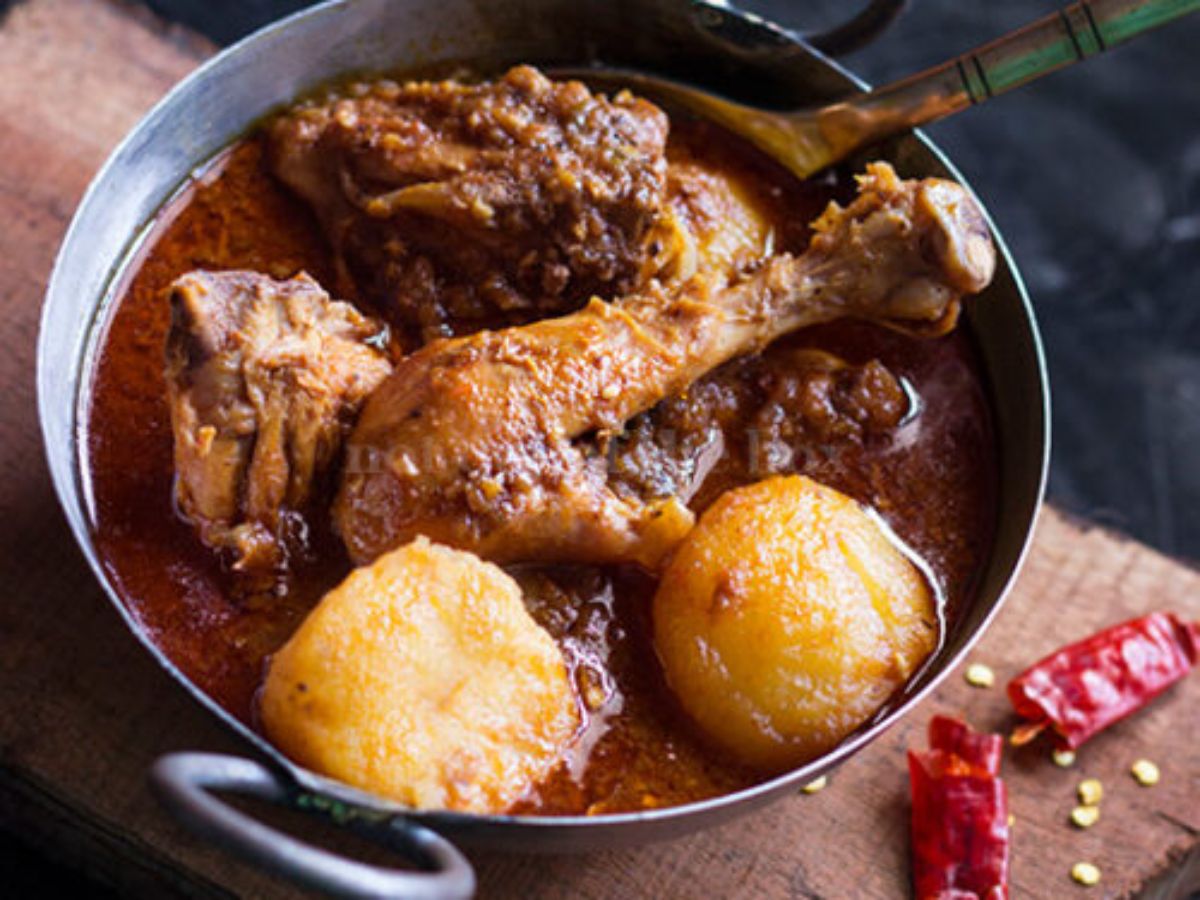
Bengali Red Chicken is proof that deeply comforting food does not require complicated techniques or long ingredient lists. (Photo: Social Media)
Bengali Red Chicken Curry, also known as Murgi’r Laal Jhol, is a popular and comforting dish from West Bengal. It is made with very few ingredients, most likely available in your kitchen already. When made with fresh chicken and freshly ground spices, it can be both bold and comforting. If you’re searching for a simple dish to amaze your family, this is the perfect one.
500g chicken (bone-in preferred)
2 potatoes, peeled and divided in 2
2 onions (thinly sliced)
50g yoghurt, whisked well
25g fresh ginger-garlic paste
20g garlic
3 bay leaves
10 dry red chillies (mix of Degi Mirch and Teekhi Mirch)
1 tsp Garam masala (Cardamom, cloves, cinnamon)
Salt to taste
50g mustard oil
Heat mustard oil in a heavy kadhai till it smokes.
Meanwhile, soak your chillies in hot water for 20 minutes. Degi Mirch adds the deep red hue to Bengali Red Chicken, and Teekhi Mirch adds the spice. Use a mix of both for this recipe, but the ratio will depend upon your spice tolerance..
After the mustard oil cools slightly, add bay leaves and sliced onions. Fry until golden brown. This step can easily take 10 minutes.
Grind together the ginger garlic paste, fresh garlic, and soaked red chillies to form a thick red paste. Doing this with a pestle and mortar will yield the best results, but a mixer-grinder works just as well
Add the red paste to the kadhai and fry it until the oil separates.
Slowly, add a tablespoon of yoghurt at a time to the kadhai. Braise it on low heat to avoid splitting the yoghurt.
After the base is ready, add the chicken and potatoes to the kadhai. Add half litre of hot water and bring to a boil.
Reduce the heat to low, and cover the kadhai. Cook slowly for at least 30 minutes.
Grind one teaspoon of the whole spices, or garam masala, including only green cardamom, cloves, and cinnamon, to a powder. You can also use pre-made Bengali Garam Masala.
After the chicken and potatoes are tender, add the freshly-ground garam masala powder on top. If you are a true Bengali, drizzle a little raw mustard oil at the end.
If you want ultimate comfort, ditch the boiled rice and have Bengali Red Chicken with puffy fried luchis.
Bone-in chicken gives richer flavour. You can also use dark meat, that is chicken thighs and drumsticks, exclusively, for a tender texture.
Don’t overcook the potatoes. If you have large pieces of chicken, then add the potatoes later. If the potatoes overcook, they disintegrate into the sauce.
Fry the onions well, but don’t burn them to dark brown. This can make the gravy bitter.
If you don’t have whole Degi Mirch and Teekhi Mirch, then you can use Degi Mirch powder and normal red chilli powder as substitutes.
Rich in high-quality protein from chicken, which supports muscle repair and satiety
Bone-in cooking can add trace minerals and natural depth to the gravy
Mustard oil provides flavour along with beneficial fats
Whole spices like cloves, cinnamon, and cardamom offer mild digestive benefits
No cream or processed sauces, making it closer to simple home-style cooking
Can be a balanced meal when paired with plain rice and eaten in moderation
Bengali Red Chicken is proof that deeply comforting food does not require complicated techniques or long ingredient lists. With just a handful of pantry staples, slow cooking, and the unmistakable punch of mustard oil and red chillies, this dish delivers bold flavour and homely warmth in every bite. Whether paired with simple boiled rice for an everyday meal or indulgent luchis for a festive touch, Bengali Red Chicken captures the essence of Bengali comfort cooking.
Disclaimer: This is for informational and educational purposes only. This recipe contains yoghurt, mustard oil, and whole spices, which may trigger allergies in some individuals. Please adjust ingredients based on personal sensitivities.
