
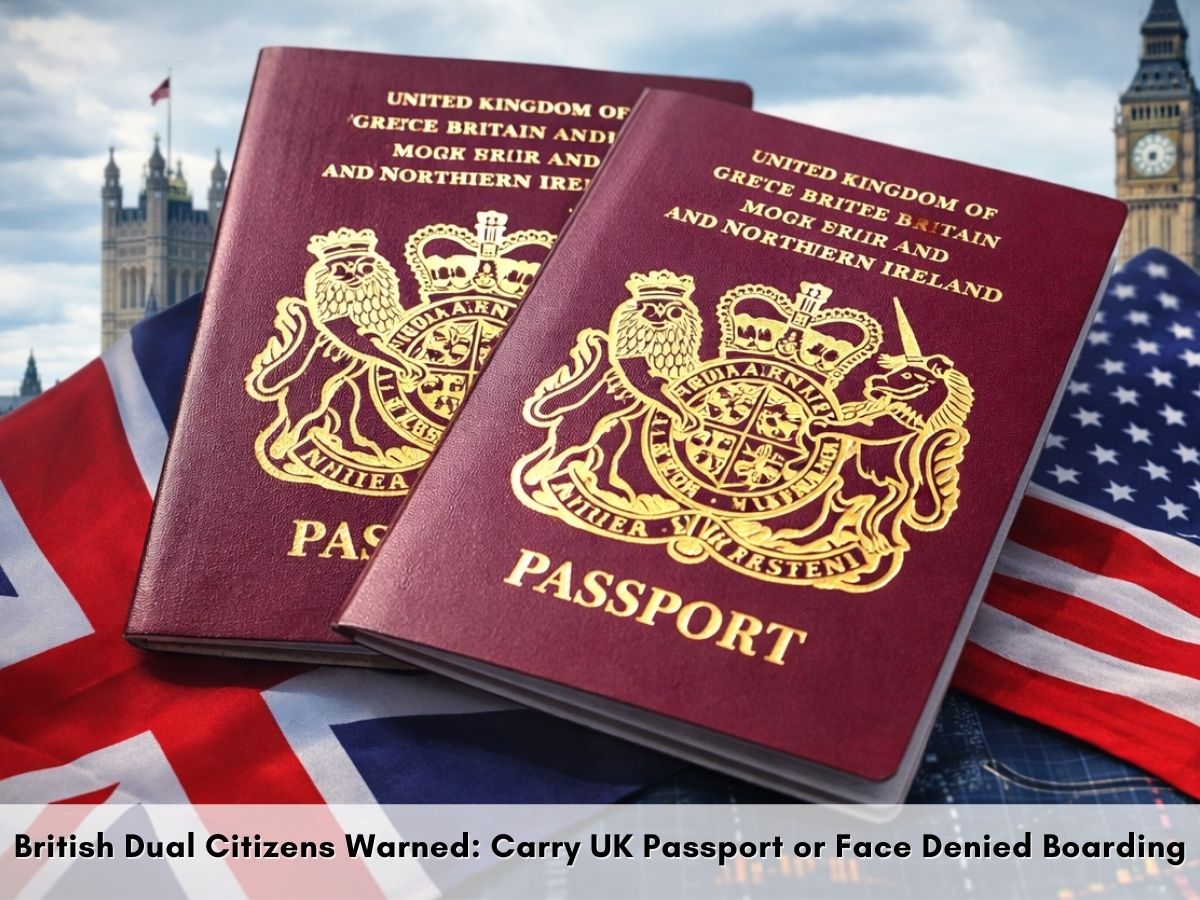
British dual citizens will be denied entry to the UK from 25 February 2026 if they attempt to arrive using only a non-British passport, under new Home Office rules tied to the Electronic Travel Authorisation scheme. The changes require all British nationals abroad to present a valid UK passport or a certificate of entitlement proving their right of abode upon arrival, ending previous flexibility that allowed other documents.
What are the new rules taking effect on 25 February?
From February 25, 2026, British dual citizens traveling to the UK must provide either a valid British passport or a foreign passport with a Certificate of Entitlement to the Right of Abode. The changes coincide with full enforcement of the Home Office’s Electronic Travel Authorisation (ETA) scheme, which requires carriers to verify passenger documentation before departure. British and Irish citizens remain exempt from needing an ETA, but dual nationals cannot use an ETA obtained with a foreign passport. Travellers arriving on or before 24 February can still use a valid non-British passport without additional documentation.
“You Can’t Serve Two Masters” | Ben Habib’s Radical Plan to Restore Britain
In this uncompromising interview at the Advance UK Conference, Ben Habib lays out his case for a full constitutional reset repealing decades of legislation, terminating the Withdrawal Agreement, ending… pic.twitter.com/rGTWnlX7gQ
— Tommy Robinson 🇬🇧 (@TRobinsonNewEra) February 12, 2026
Who is impacted by these changes?
All British dual citizens living or travelling overseas are affected, including those in EU countries, Australia, Canada, and the United States. Children born abroad to British parents are also covered—if a child holds British citizenship by descent, they must obtain a British passport or certificate of entitlement before travelling after 25 February. The rules apply regardless of whether the individual has ever held a British passport or formally interacted with UK authorities, as British citizenship operates automatically by law.
How much will compliance cost?
| Document | Cost (Standard) | Notes |
|---|---|---|
| British adult passport | £94.50 | Online application; overseas applications slightly higher |
| Irish passport | €75 (~£62) | For Irish dual citizens |
| Certificate of Entitlement | £589 | Document placed in foreign passport proving right of abode |
| Child passport | £61.50 | Valid for 5 years |
A Certificate of Entitlement is a document placed in a foreign passport proving the holder can live and work in the UK without immigration restrictions. The £589 fee is substantially higher than a passport, and applications require supporting documents proving citizenship. Processing takes approximately three weeks for overseas applications.
Why are these changes being made?
A Home Office spokesperson said: “From 25 February 2026, all dual British citizens will need to present either a valid British passport or certificate of entitlement to avoid delays at the border. Digitising the immigration system using ETAs ensures millions of people enjoy a more seamless travel experience to the UK. ETAs also give us greater power to stop those who pose a threat from setting foot in the country and gives us a fuller picture of immigration.”
A House of Commons briefing noted that while there is no legal requirement for British citizens to travel on a British passport, pre-departure checks make it difficult to travel without one. The Home Office had been advising dual nationals to travel on a British passport for many months but hadn’t been strictly enforcing the requirement to allow time to adjust. Documents like expired British passports or certificates of naturalisation aren’t listed in carrier guidance, and transport providers face penalties for bringing inadequately documented passengers.
What should affected travellers do immediately?
- Check your citizenship status using the UK government’s online service.
- Apply for passport or certificate of entitlement well in advance
- Do not book travel until documents are received
- Ensure names match across all passports when applying
- Carry both passports when travelling through other countries with similar rules
FAQs
Q: Can British citizens enter the UK with an Australian or another foreign passport?
A: Yes, but only if that passport contains a valid Certificate of Entitlement to the Right of Abode. A foreign passport alone is insufficient from 25 February.
Q: I have an ETA that expires after 25 February. Can I use it?
A: No. If you are a British citizen, you are ineligible for an ETA and cannot use it to enter the UK, regardless of its validity duration.
Q: My children were born abroad and have never had British passports. What should I do?
A: If they are British citizens by descent, they must get British passports or documents of entitlement before traveling after February 25th.
Q: What documents prove British citizenship for a certificate of entitlement application?
A: Acceptable documents include full birth certificates, certificates of naturalisation or registration, or British passport details from the time of application.
Q: How long does a certificate of entitlement remain valid?
A: The certificate remains valid indefinitely as long as it remains in a valid passport. When renewing the foreign passport, a new certificate must be obtained.
Disclaimer: This information is for informational purpose only and is based on inputs from news agency reports. TSG does not independently confirm the information provided by the relevant sources.




