
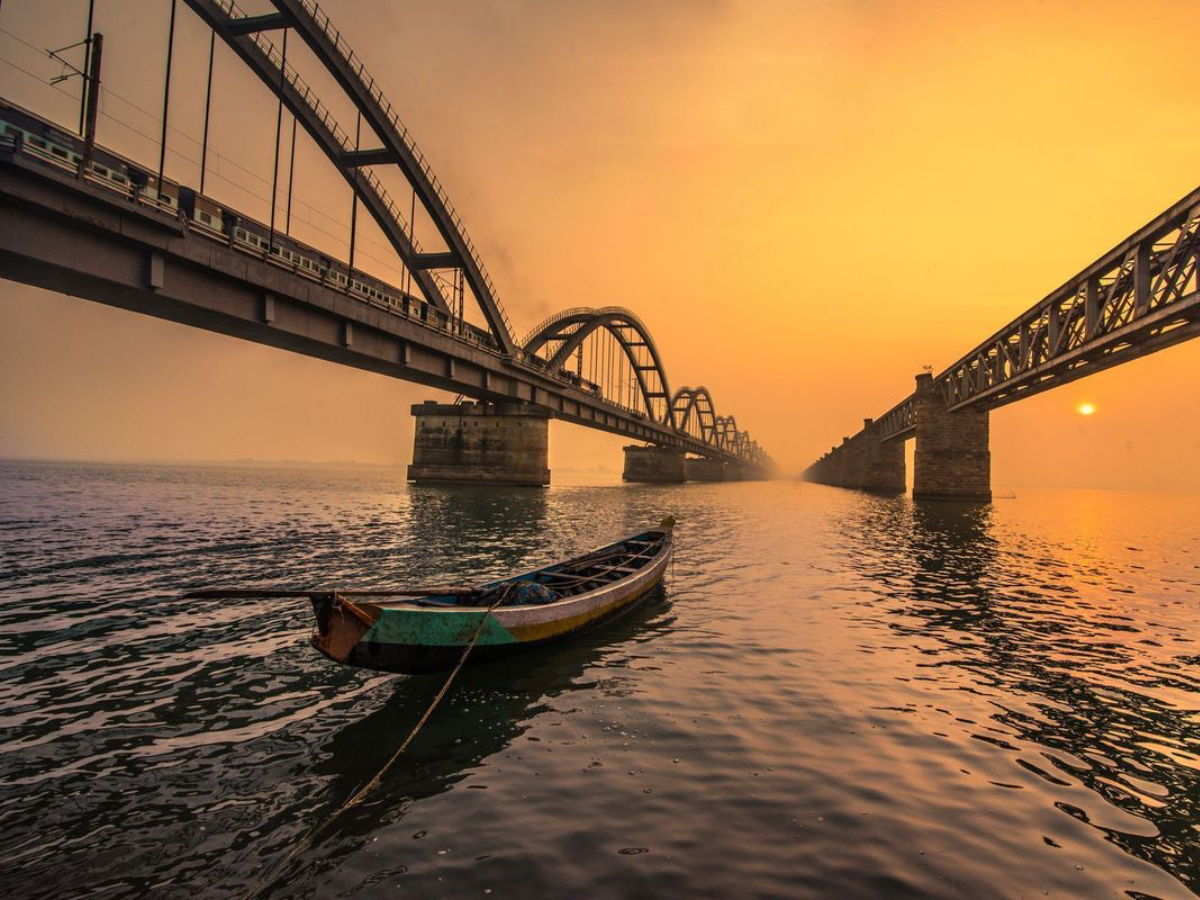
India’s vast river systems waterways command the same blend of reverence and reliance as the Godavari is flowing through the heart of peninsular India more than a geographical feature. It is a source of livelihood with a witness to history and sacred presence in everyday life. For centuries, communities along its bank have regarded it as a life giving force earning it the enduring title of Dakshin Ganga.
Which River is Known as the Dakshin Ganga?
The Godavari river is honored as Dakshin Ganga or the Ganga of the South. Like the Ganga in Northern India, Godavari holds deep spiritual value and supports millions through agriculture, trade and settlement. It is vast basin and cultural footprint make it the most significant river system in peninsular India.
How Godavari River is Originated
The Godavari begins its long journey in the Western Ghats near Trimbakeshwar and close to Nashik in Maharashtra. From a modest origin in the Brahmagiri hills, it travels eastward across the Deccan Plateau. Over a distance of about 1,465 kilometres, it crosses multiple states before finally merging with the Bay of Bengal, shaping landscapes and livelihoods along the way.
Seven Mouths of Godavari River
As the river approaches the sea, it divides into several channels traditionally known as the Sapta Godavari or seven mouths. Each branch carries a name associated with ancient sages reflecting the river’s mythological roots. These distributaries spread across coastal Andhra Pradesh is forming a wide delta before meeting the Bay of Bengal. Bathing at these mouths is considered spiritually significant by devotees.
Godavari River Religious Significance
In Hindu tradition, the Godavari is worshipped as a mother goddess. The sacred towns and temples line its banks and rituals performed in its waters are believed to cleanse sins. Events like the Pushkaram festival draw millions of pilgrims every twelve years. Legends connect the river’s origin to sage Gautama and Lord Shiva reinforcing its place in spiritual lore and collective memory.
Facts About the Godavari River
- The Godavari is the longest river in peninsular India and the second-longest river in the country after the Ganga.
- It originates from the Brahmagiri Hills near Trimbakeshwar in Nashik district of Maharashtra.
- The river flows eastward for about 1,465 kilometres before draining into the Bay of Bengal.
- Godavari is often called the Dakshin Ganga or Ganga of the South due to its religious importance.
- It passes through Maharashtra, Telangana, Andhra Pradesh and also influences parts of Chhattisgarh and Odisha.
- The Godavari basin is the third-largest river basin in India covering nearly 10% of the country’s land area.
- Major tributaries include the Pranhita, Indravati, Sabari, Purna, Manjira and Pravara rivers.
- Near Rajahmundry, the river splits into multiple branches, forming a vast and fertile delta.
- The Godavari delta is one of India’s most productive agricultural regions known for rice cultivation.
- Several major dams and barrages including the Jayakwadi and Polavaram projects are built along its course.
- The river plays a vital role in irrigation, drinking water supply and hydroelectric power generation.
- The Pushkaram festival is celebrated once every twelve years along its banks, drawing millions of pilgrims.
- In Hindu tradition, bathing in the Godavari is believed to purify the soul and wash away sins.
- The river supports rich biodiversity, including mangroves, fish species and migratory birds near its delta.
- Historically, the Godavari basin supported ancient kingdoms and trade routes across the Deccan region.




