
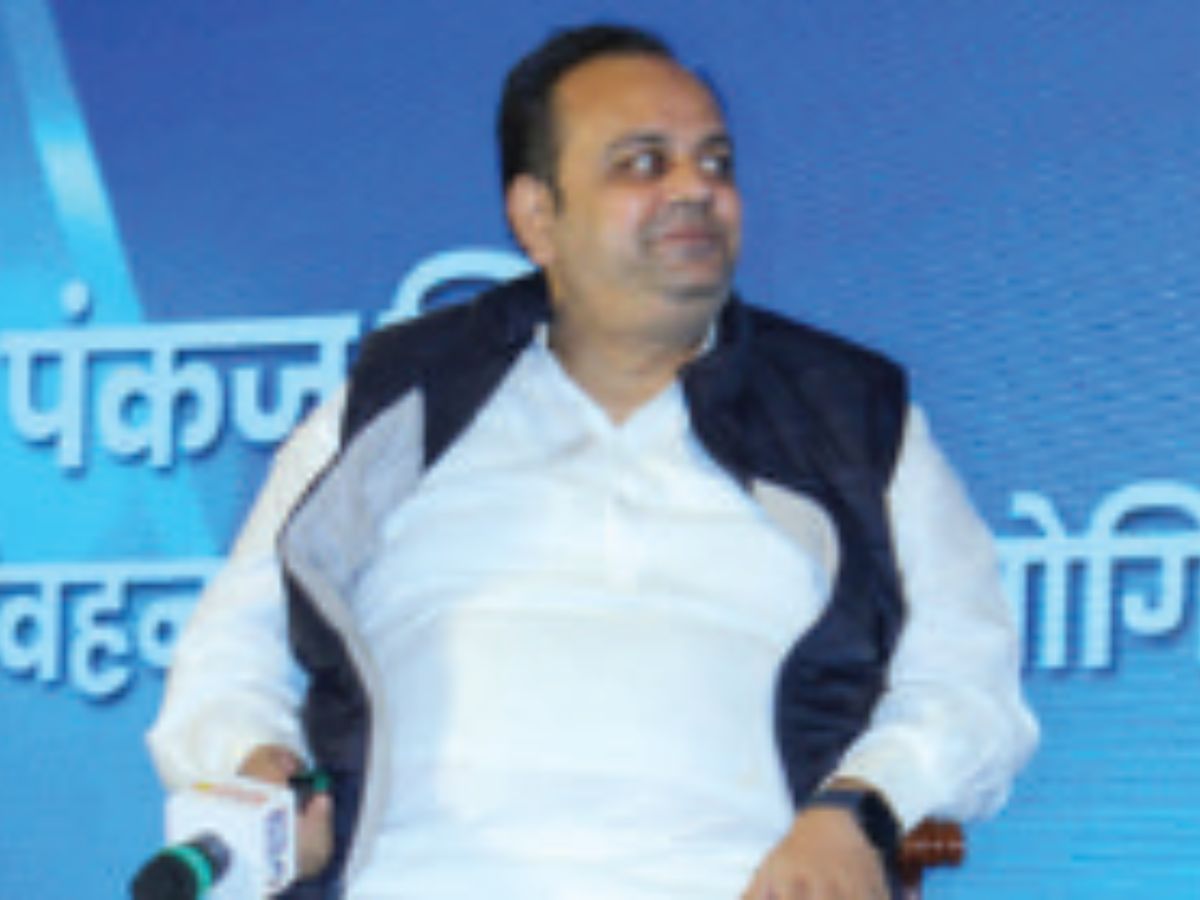
New Delhi: Speaking at the India News Manch, Delhi Health and Transport Minister Pankaj Singh said the city’s healthcare system has seen a significant turnaround under the current government, asserting that medicine shortages have been addressed and staff vacancies reduced sharply. “The health system had no medicines, staff shortage was 25 per cent, now down to 3 per cent,” the minister said. He said that when the present government took charge, hospitals across the capital were facing an acute crisis. “There were no medicines, there was a severe shortage of doctors, and staff vacancies ranged between 21 and 25 per cent. Mohalla Clinics existed largely only in name,” Singh added.
According to the minister, the situation has improved substantially over the past 10 months. He said around 1,300 nurses have been onboarded, doctors have joined government hospitals, and medical superintendents have been appointed to strengthen hospital administration. He said the reduction in staff shortage to about 3 per cent reflects focused efforts to stabilise the healthcare system. Singh said the government needs more time to deliver long-term reforms, asserting that Delhi had been left in a “very poor condition” by previous administrations and could not be fixed through short-term measures. He said the government is committed to delivering a clean, healthy and better Delhi, in line with assurances given by the Prime Minister to the people.
Rejecting what he described as “symbolic actions” such as odd-even schemes or switching off vehicle engines at red lights, the minister said the focus is on sustainable and long-term solutions. He said the public had given an overwhelming mandate and would witness a transformation matching the vision and expectations of Delhi’s residents, even though the scale of deterioration meant that visible change would take time. On healthcare procurement, Singh said the government ended local medicine procurement practices that relied on blacklisted companies by introducing a centralised procurement system. He said this move stopped corruption, ensured better-quality medicines and guaranteed uninterrupted supply. He added that 12 MRI machines are being installed and 34 CT scan machines will be added from next month. Under the Prime Minister’s vision, he said 238 Ayushman Jan Arogya Mandirs have already been opened, with 200 more planned shortly.
Criticising the earlier Mohalla Clinics, the minister described them as rented tin-box structures designed to mislead people. He rejected claims that the current facilities are merely renamed clinics, saying Ayushman Jan Arogya Mandirs are fully equipped, in-house centres offering more than 90 diagnostic tests along with doctors, nurses and pharmacists under one roof. He also said Ayushman cards are now active, around Rs 24 crore has already been paid to hospitals, and the number of beneficiaries is increasing daily.
On transport-related issues, Singh acknowledged complaints that buses sometimes fail to stop for women passengers, calling it a genuine concern. He said 70–80 per cent of such problems have already been resolved and assured that complaints shared with bus numbers and timings would be acted upon within 24 hours. He said the induction of electric buses has revived several long-closed routes, including services to Delhi University and interstate routes, while end-of-life buses are being phased out. Claiming a turnaround in the transport department, the minister said Delhi Transport, which had been running in losses for years, is now moving into profit and is expected to remain profitable in the current and next financial years. He said the key challenge is last-mile connectivity rather than a shortage of buses and promised immediate checks on routes with poor frequency, including Kashmere Gate to Bhajanpura. He also announced the launch of 100 additional electric buses.
Outlining future plans, Singh said he has set 100-day targets and claimed that around 90 per cent of the health department’s work has already been completed. He said MRI and CT scan services will be operational by January, while 75,000 tuberculosis tests have already been conducted, alongside initiatives addressing anaemia and tuberculosis. He also announced major cervical cancer screening initiatives, citing rising cases and late detection. The minister listed five key health priorities ahead: installation of MRI machines, cervical cancer prevention and screening, centralised procurement to eliminate blacklisted medicines, zero tolerance for duplicate medicines, and ensuring that every senior citizen has an Ayushman card to access treatment independently and live a worry-free old age.




