The Uri attack of 2016 marked a turning point, transforming India’s counter-terror response from restraint to decisive surgical strikes that redefined its security doctrine.
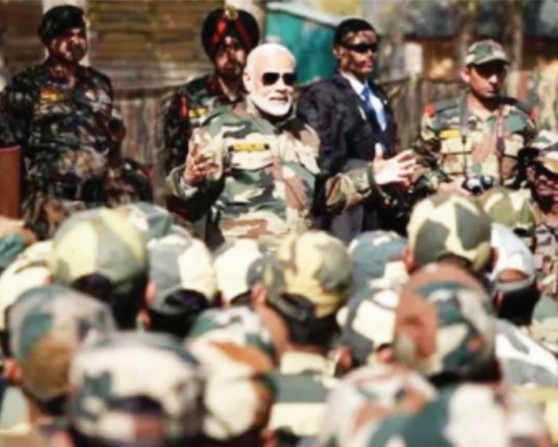
In the early hours of 18 September 2016, heavily armed militants slipped across the Line of Control (LoC) and attacked an Indian Army camp at Uri in Jammu and Kashmir. The attackers hurled grenades and sprayed automatic fire into tents where soldiers still slept. By the time the flames were doused and the last gunman neutralised, nineteen Indian soldiers lay dead. It was one of the bloodiest assaults in decades of militancy and an open wound on the nation’s conscience.
India had suffered mass-casualty terrorist attacks before—in 2001, in 2008 and, in January 2016, at Pathankot. Each provocation had been answered with diplomatic démarches and measured restraint, but not with overt military retaliation across borders. Uri felt different. The sheer scale of the losses, the brazenness of Pakistan-based militants striking so deep into a fortified base and the mounting anger across the country demanded a response unlike any that had come before. The question was no longer whether India should reply, but how.
In the days following the attack, Prime Minister Narendra Modi convened repeated meetings of the Cabinet Committee on Security (CCS). Intelligence agencies traced the strike back to launchpads across the LoC in Pakistan-occupied Kashmir, where groups like Lashkar-e-Taiba (LeT) and Jaish-e-Mohammed (JeM) regularly staged infiltrations. The Army’s Northern Command, led by Lieutenant General D. S. Hooda (Retd), drew up plans for a targeted operation. Special Forces units were tasked with surveillance and rehearsals. Secrecy was paramount; the window for surprise was narrow.
The government’s intent was clear: retaliate without triggering full-scale war. The model was an operation sharp enough to punish, limited enough to control. For the political leadership, this required unusual resolve. For the military, it demanded precision, stealth and speed. Eleven days after Uri, in the stillness of another night, India crossed the Rubicon.
In the predawn hours of 29 September, Indian Special Forces infiltrated across the LoC at several points. Moving silently through ravines and wooded ridges, they closed in on terrorist launchpads identified through satellite imagery and human intelligence. Just before dawn, they struck. Grenades, small-arms fire and explosives destroyed bunkers and shelters. Dozens of militants and their handlers were killed. By first light, the raiding parties had crossed back into Indian territory without incurring any losses.
Later that morning, Lt Gen Ranbir Singh, the Director General of Military Operations (DGMO), addressed the press in an extraordinary briefing. He confirmed that “based on very credible and specific information… terrorist teams had positioned themselves at launchpads along the Line of Control to carry out infiltration and terrorist strikes,” and that the Army had conducted surgical strikes the previous night to neutralise them. He emphasised that the operations had ended and India had no further plans to escalate. For the first time, India had not only conducted cross-LoC raids—something quietly done before—but publicly acknowledged them as deliberate, punitive action. It was a doctrinal leap.
The gamble was significant. Pakistan could have chosen to escalate. Yet Islamabad denied that any such strikes had taken place, dismissing them as routine firing. That denial paradoxically gave both sides a way out: India had demonstrated resolve to its public and to the world, and Pakistan avoided admitting it had been caught off-guard.
Within India, the announcement electrified the nation. The sense of helplessness that often followed terror attacks was replaced with pride that the armed forces, backed by political will, had struck back. The government was careful in tone. Ministers framed the strikes as defensive and limited, aimed at imminent terrorist threats rather than Pakistan’s army. By combining firmness in action with moderation in rhetoric, escalation was managed.
The significance of the 2016 surgical strikes lay not only in the tactical destruction of launchpads but in the doctrinal message they conveyed. India’s strategic restraint of the past, often criticised as passivity, gave way to a new principle: deterrence by punishment. Any terror strike of sufficient gravity could trigger a calibrated, overt military response.
The transparency was as important as the action. By briefing foreign envoys, India underscored that its strikes were acts of self-defence against non-state actors, not aggression against a sovereign state. Many capitals quietly acknowledged the legitimacy of this position. China, Pakistan’s closest partner, limited its reaction to calls for restraint. The United States and European powers noted India’s right to defend itself. Internationally, Pakistan found itself further isolated. Domestically, 29 September was enshrined as “Surgical Strikes Day.” Months later, the Army released video footage of the raids, silencing sceptics and reinforcing the message of precision. The symbolism mattered as much as the military results: India would no longer tolerate cross-border terrorism with words alone.
The shift was confirmed three years later. In February 2019, after the Pulwama suicide bombing killed forty Central Reserve Police Force (CRPF) personnel, the government authorised the Indian Air Force (IAF) to strike deep inside Pakistan at a JeM training camp in Balakot—an overt airstrike across the international boundary. The precedent of 2016 had expanded the spectrum of response. Once again, the combination was resolve and restraint. India struck hard but signalled limits, leaving space for de-escalation.
The pattern continued in 2025 after the Pahalgam terror attack. Operation Sindoor saw the armed forces respond swiftly with targeted raids and heightened deployments, signalling readiness without inviting uncontrolled escalation. Balakot and Sindoor together reaffirm that India’s doctrine has evolved: firm, calibrated action is now the norm in defending the nation.
Eight years on, the legacy of Uri and the surgical strikes is clear. They redefined the rules of engagement with Pakistan, raising the cost of cross-border terrorism. They boosted morale within the armed forces by demonstrating that political leadership would back bold operations. They reassured the Indian public that its government would not be paralysed by fear of escalation. And they enhanced India’s diplomatic standing by showing it could calibrate force with responsibility.
For the military, the doctrine of proactive retaliation has meant greater integration of intelligence, surveillance and Special Forces capability. Launchpads are monitored continuously, strike options kept ready and coordination between the Army and Air Force rehearsed. For the political class, the strikes have become a reference point—proof that a democratic India can act decisively without sliding into uncontrolled war.
The Uri attack was a tragedy that claimed nineteen soldiers, but it also became a turning point. In authorising and publicising surgical strikes across the Line of Control, the Modi government rewrote India’s counter-terror playbook. Terrorism, it signalled, would invite costs at source, not just words of condemnation. This was not bravado but calibrated doctrine: limited force, overt communication, international outreach and domestic assurance. It has since shaped India’s responses—from Balakot to the heightened alertness of the present day. Uri and its aftermath stand as the moment when India shed an old skin of restraint without losing the prudence of control. The new normal is clear: aggression will be met with strength, and strength will be exercised with responsibility.
Ashish Singh is an award-winning senior journalist with over 18 years of experience in defence and strategic affairs.
