What truly marks PM Narendra Modi’s greatness is the way he has expanded the very meaning of leadership in a democracy. He does not merely govern; he inspires participation.
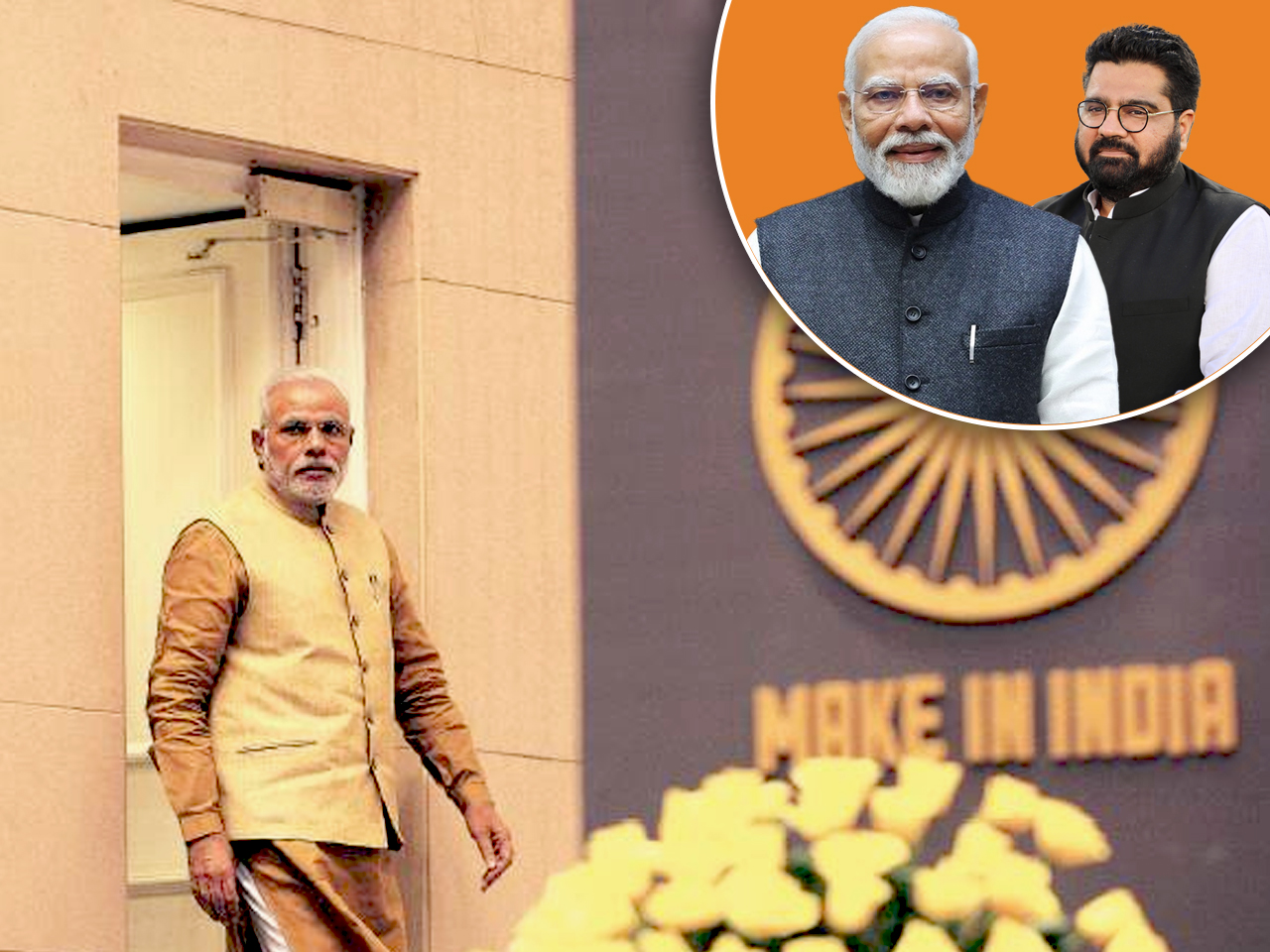
Today, 17th September, marks the birthday of Hon’ble Prime Minister Shri Narendra Modi. It is more than the anniversary of a leader’s life; it is the celebration of a defining chapter in India’s democracy. His leadership has not only changed the trajectory of our nation but also redefined what political stewardship means in an era of global uncertainty. Over the past decade, the international order has been shaped by wars, shifting alliances, and region specific conflicts whose tremors have reached India’s borders. From safeguarding India’s strategic interests in a volatile neighbourhood to asserting its place in the global order, Prime Minister Modi has consistently advanced an uncompromising “India First” policy. His leadership has demonstrated that strategic autonomy and principled diplomacy can go hand in hand, enabling India to navigate regional conflicts and great-power rivalries without compromising national interest. By strength- ening partnerships across the Indo-Pacific, deepening ties with traditional allies, and expanding India’s role in multilateral forums like the G20, BRICS, and SCO, he has positioned India not as a passive participant but as a shaping force in world affairs. In this respect, his tenure will be remembered as the period when India’s voice gained unprecedented weight in global governance.
Equally transformative has been his domestic agenda, where structural reforms have coincided with ambitious institution building. Financial inclusion initiatives brought millions into the formal economy, redefining the relationship between citizen and state. Major banking sector reforms restored stability to an over-leveraged system, while initiatives such as GST created a unified national market. The infrastructure push from expressways to high-speed rail, from power generation to renewable energy has not only addressed a historic deficit but also unlocked new drivers of growth. Together, these measures reflect a clear recognition: that India’s rise in the in- ternational system must be anchored in economic strength, institutional credibility, and the empowerment of its citizens.
This era has also been transformative for the BJP. Under his leadership, the party has broken out of its earlier social and geographic confines to emerge as a truly national force. Victories in the Northeast, Odisha, Haryana, and Maharashtra reflect this expansion, while Gujarat remains a stronghold of continuity and growth. Modi-ji became not just a leader within the party but its architect of change, giv- ing the BJP both a wider so- cial base and an imprint on global politics. What was once a cadre-based move- ment with a limited foot- print is today the principal pole of Indian democracy.
As we mark this day, therefore, it is not only about extending wishes to the Prime Minister on his birthday. It is about reflect- ing on the values, experi- ences, and convictions that shaped his journey and the lasting legacy he continues to build as India’s Pradhan Sevak.
This spirit of service and moral clarity, so central to his public life, finds its deepest roots in the quiet strength and values impart- ed by his mother, Heeraben. Widowed early in life and having carried the responsibilities of her family with quiet courage, she stood as a pillar of strength and integrity. Her life was defined not by circumstances but by the dignity with which she faced them, instilling in her children the virtues of honesty, resilience, and simplicity. When Modi ji first became Chief Minister, her words were not of pride but of principle: “I don’t understand your work in government, but never take a bribe.” That simple counsel became his moral compass. It was her habit of serving selflessly, her insistence on living within one’s means, and her unwavering commitment to fair- ness that shaped Modi-ji’s lifelong belief in the value of seva. Even his later re- forms carried her imprint: the smoke filled kitchens of her time inspired the Ujjwala Yojana, while her emphasis on dignity for every individual became the foundation of garib kalyan policies. She did not just raise a son; she nurtured a true sevak of Maa Bharati.
If the family gave him values, the Sangh gave him discipline. In 1972, Modi ji became a full-time RSS pracharak under the guidance of Lakshmanrao Inamdar, affectionately known as “Vakil Saheb.” For the young man who had stepped away from his family to dedicate himself fully to public life, Inamdar became a mentor, guide, and father figure. He immediately recognized in young Narendra Modi an uncommon determination and took a personal interest in shaping his growth. Inamdar encouraged him to continue his learning and provided guidance and resources to deepen his understanding of governance and public affairs. More importantly, he imparted to Modi-ji the conviction that organizational work was not merely about numbers or mobilization, but about character formation and nation-building. Under his tutelage, Modi-ji learned the subtle balance between humility and authority, between strict discipline and empathetic connection with people. His emphasis on service before self and national unity before personal ambition left a lasting im- print. So profound was Mo- di-ji’s reverence that years later, as Chief Minister of Gujarat, he co-authored Setubandh, a biography in Inamdar’s memory, por- traying him as the bridge- builder who gave direction and shape to his life. From Inamdar, Modi-ji absorbed the discipline to work tire- lessly without expectation, the foresight to mobilize large communities toward common goals, and the in- ner conviction that leader- ship must rest upon char- acter above all else. These were the very qualities that would later enable him to conceptualize and execute national campaigns of un- precedented scale with precision and purpose.
The third pillar of influ- ence came from Modi ji’s deep study of Swami Vivekananda and his abiding reverence for Sardar Vallabhbhai Patel. Vivekanan- da’s teaching that service to humanity is the highest form of devotion shaped Modi ji’s decision to call himself Pradhan Sevak rather than merely Prime Minister. The Swami’s message that societies progress when equality is ensured inspired Modi-ji’s wel- fare architecture schemes like Jan Dhan, Ayushman Bharat, and Garib Kalyan Yojana, all of which bring basic dignity to the poor. Patel’s uncompromising commitment to national unity remains a guiding force in Modi ji’s statesmanship, reflected in both symbolic acts—such as dedicating the abrogation of Article 370 to Patel’s visionand monumental initiatives like constructing the world’s tallest statue in his honour.
These thread maternal values, organizational discipline, and philosophical conviction came together in a leadership that has transformed India in the last decade. The JAM Trinity revolutionized welfare delivery, transferring benefits directly to citizens and eliminating leakages. Swachh Bharat Abhiyan improved sanitation and public health across the country, while Digital India connected the remotest corners to opportunity. Initiatives like Make in India and the renewable energy push have redefined India’s global economic pres- ence, reflecting his vision for industrial growth and sustainable development. Programs supporting skill development and rural in- frastructure demonstrate his commitment to inclusive growth across all sectors. His governance has also placed a special em- phasis on women’s empowerment through flagship initiatives like Beti Bachao Beti Padhao and the historic legislation providing one-third reservation for women in Parliament and state assemblies, ensuring that the rise of New India is anchored in gender justice and equal opportunity. Environmental stewardship has also been central to his vision, exemplified by the LiFE Mission, promotion of renewable energy, afforestation drives, and conservation initiatives that link ecological sustainability with citizens’ well-being. Forward-looking initia- tives planned for 2025, in- cluding the Swasth Nari Sashakt Parivar Abhiyaan with 75,000 health camps, as well as the inaugura tion of new hospitals and Ayushman Arogya Mandirs, further demonstrate a comprehensive approach to empowering citizens, strengthening health infra- structure, and fostering social equity. Together, these programs showcase how his leadership integrates strategic foresight with a commitment to holistic na- tional development.
I do not see these initia- tives as isolated schemes, but as the unfolding of a vision shaped by a life of service, simplicity, and sac- rifice. What Prime Minister Modi has lived, he now gives back not just to India, but to the world. The values learned from his mother, the discipline of the Sangh, and the inspiration of Vivekananda and Sardar Patel converge in a leader- ship that sees governance as a means to uplift, not to rule.
In this spirit, his birthday is not a celebration but an offering. Seva Parv turns personal milestones into national service. From the Sardar Patel Zoological Park (2019) to two crore vaccinations in a day (2021), from PM Vishwakarma (2023) to 26 lakh homes and the Subhadra Yojana (2024), each act is ground- ed in experience, not just intent. And now, on his 75th birthday, 75,000 health camps and new Ayushman Arogya Mandirs mark the next step. These are not policy announcements they are the return of a life shaped by struggle, offered in service to Bharat Mata.
What truly marks Shri Narendra Modi’s greatness is the way he has expanded the very meaning of lead- ership in a democracy. He does not merely govern; he inspires participation. By addressing citizens directly through Mann Ki Baat, he has built an unprecedented conversation between the leader of the nation and the last household, trans- forming governance into a shared national experience. By signing himself as Prad- han Sevak, he has redefined the Prime Minister’s Office not as a seat of authority but as a pledge of service. Even the manner in which he ob- serves his birthday dedicating it to acts of service rather than personal festivity sets him apart from other leaders and reinforces his belief that leadership is ultimately about giving, not receiving. His reforms are not just administrative decisions but acts of nation- building, carried out with a clarity of purpose and a discipline of execution rarely witnessed in public life. Whether in welfare, economic transformation, or foreign policy, his imprint has been consistent decisive, people-centred, and visionary. In turning policies into people’s movements and ideals into action, he has embodied not power for its own sake but service as the highest ideal.
As the Prime Minister turns 75, the nation does not merely mark the birthday of its leader it honours a life of ceaseless dedication to Bharat Mata. His journey is not only an inspiration for today but a guiding light for the future, reminding all of us, especially those of us in public service, that true leadership is in service, sacrifice, and unwavering commitment to the people. On this day, as India celebrates Seva Parv, we extend our heartfelt wishes to Shri Narendra Modi ji. May he be blessed with a long life, good health, and continued strength to lead India towards even greater heights of prosperity, dignity, and global respect. May his vision of a self-reliant, inclusive, and spiritually confident nation find fuller expression in the years ahead, bringing progress and pride to every citizen of our great land.
