From crisis to confidence, ‘Modinomics’ has transformed India into a global growth engine, blending reforms, innovation, and inclusive prosperity on the road to Viksit Bharat 2047.
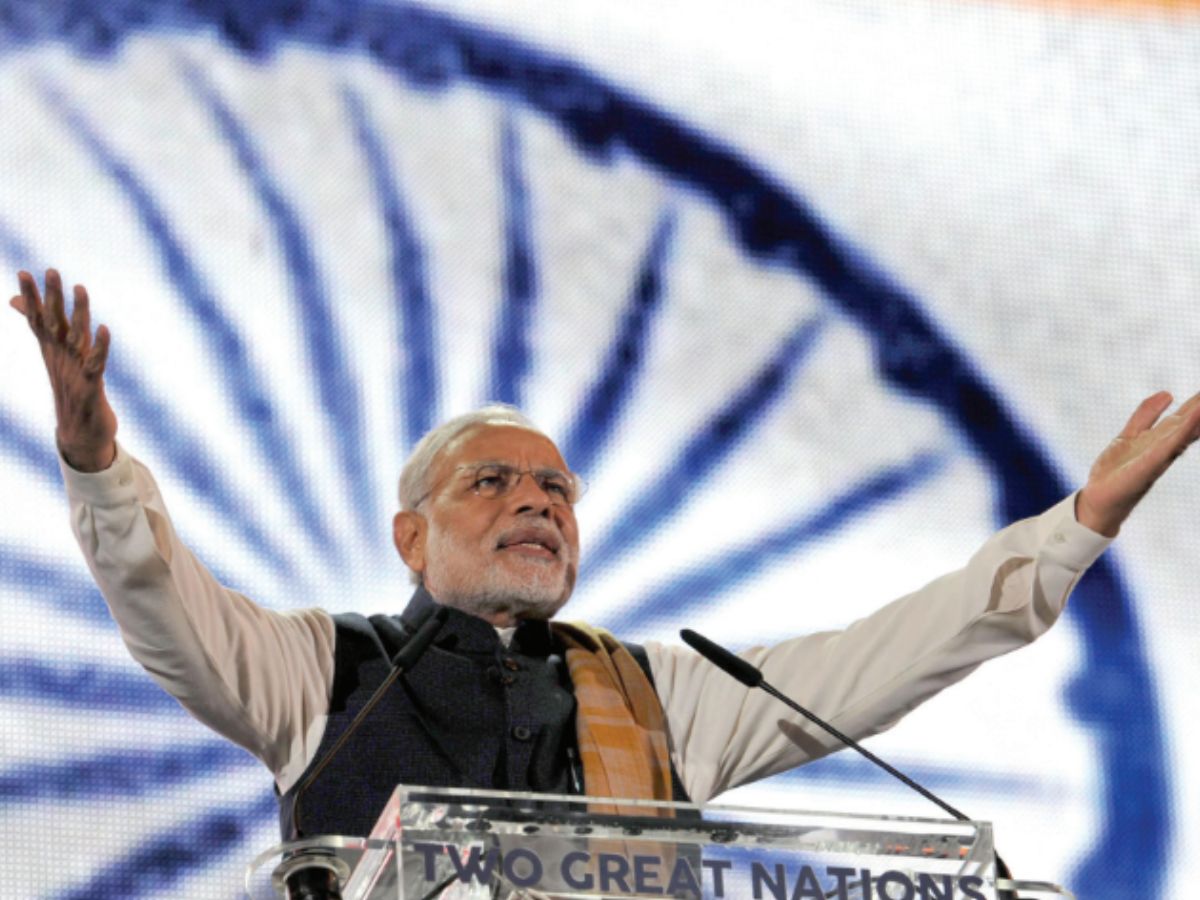
India’s economic evolution under Prime Minister Narendra Modi—widely branded as “Modinomics”—has been nothing shortTSG Editor of spectacular, positioning the nation on an unprecedented growth trajectory. From languishing on the list of vulnerable “Fragile Five” economies a little over a decade ago, India has emerged as the world’s fourth-largest economy in 2025, with an accelerating path to becoming the third-largest by 2028, according to multiple projections including those from Morgan Stanley.
This remarkable transition is not merely about scale but about the quality and sustainability of growth. India is now among a very select group of large economies that manage to consistently maintain high GDP growth rates exceeding 6.5-7 percent annually while keeping inflation at a moderate and stable rate around 4 percent. In an era when many advanced economies struggle with stagflation or sluggishness, India’s macroeconomic management has provided a unique advantage, drawing sustained foreign direct investments, boosting domestic consumption, and strengthening its global trade footprint.
At the heart of this transformation lie numerous interconnected reforms and flagship initiatives that have reshaped the economic, social, and institutional fabric. One of the most visible achievements has been the deepening of financial inclusion through the Pradhan Mantri Jan Dhan Yojana, which has opened over 56 crore bank accounts by August 2025, bringing millions of previously unbanked citizens into the formal financial system. The cumulative deposits in these accounts reached approximately Rs 2.68 lakh crore, with an average balance of Rs 4,768, underscoring a broad-based increase in savings and financial access.
Parallel to this has been the rapid expansion of entrepreneurship powered by the Pradhan Mantri Mudra Yojana, which has disbursed over 52 crore loans totaling Rs 33 lakh crore. The infusion of capital to small businesses and micro-entrepreneurs has stimulated economic activity and contributed significantly to India’s burgeoning startup ecosystem, with over 100 unicorns. This blend of grassroots financial empowerment and high-tech innovation epitomises the dual thrust of “Modinomics” towards inclusive growth supported by the incubation of future industries.
Tax reforms have been another pillar supporting sustainable growth. The Goods and Services Tax (GST), launched in 2017, was a bold and complex overhaul creating one of the world’s largest unified tax regimes. In 2025, GST 2.0 further rationalized tax slabs to simplify compliance and enhance affordability by applying predominantly 5% and 18% rates, with heavier taxes on luxury goods. This restructuring reduced the tax burden on essential commodities like packaged foods, toiletries, and home utilities, effectively lowering prices for millions and helping control inflation. Supplementing GST reform has been the increase in the income tax exemption to Rs 12 lakh, a move that substantially boosted discretionary incomes across India’s expanding middle class. As per SBI research, with GST 2.0 combined with concurrent income tax reforms, the total additional demand could touch Rs 5.31 lakh crore, adding about 1.6% of GDP.
The digital economy’s rapid ascent, exemplified by the phenomenal success of the Unified Payments Interface (UPI), has transformed India’s payments ecosystem. In August 2025 alone, UPI processed transactions valued at over Rs 90,000 crore daily with volumes exceeding 20 billion per month. This digital infrastructure for payments has woven itself into everyday life across urban and rural India, enabling financial transactions ranging from small merchants’ sales to large-scale bill payments without friction.
India’s stock markets have mirrored the broader economic optimism, with the BSE Sensex nearly tripling from around 24,000 points in 2014 to over 81,000 in 2025. Retail participation has surged as well, evidenced by more than 192 million demat accounts in FY25, with young investors under 30 playing an increasingly prominent role in this expansion. This democratization of investing is expanding wealth creation across demographics and bolstering domestic capital markets.
Financial sector reforms have mitigated one of India’s longstanding vulnerabilities—non-performing assets (NPAs). Gross NPA ratios have dropped remarkably from 9.11% in 2021 to a historic low of 2.58% in 2025. The Insolvency and Bankruptcy Code (IBC) has played a decisive role, resolving over 1,190 distressed companies and recovering nearly Rs 3.9 lakh crore for creditors, restoring confidence and enabling banks to channel credit into productive sectors more effectively.
The government’s deregulation drive has further streamlined business operations by scrapping approximately 1,600 obsolete laws and identifying over 1,800 more for repeal. This aggressive cleaning-up initiative, combined with improvements in infrastructure and regulatory frameworks, propelled India’s jump in the Ease of Doing Business rankings from 142nd place in 2014 to 63rd by 2019, a testament to enhanced entrepreneurial ease and government efficiency.
Beyond the macroeconomic and structural reforms, Modinomics has tangibly uplifted millions from poverty and generated massive employment. Between 2011 and 2023, roughly 171 million Indians were lifted out of extreme poverty, slashing the poverty rate from 16.2% to barely over 2%. This outcome reflects the effective translation of economic growth into shared prosperity through targeted social programs and inclusive policies.
Employment creation has been equally impressive. Nearly 179 million new jobs were generated between 2014 and 2024, reversing decades of sluggish labor market growth. The government’s PM Viksit Bharat Rozgar Yojana, launched in 2025, targets the creation of over 3.5 crore new jobs by 2027. This ambitious scheme incentivizes employers to hire first-time job seekers by providing financial support to both employees and employers, fostering formalization and social security coverage. EPFO data reflects this trend, with over 1.13 crore new subscribers added in FY25 alone, signaling a significant expansion of formal employment and better protections for workers.
Sectoral advancements under Modinomics include infrastructure development, renewable energy expansion, agricultural modernization, and digital services growth. Public investments have been balanced with fiscal discipline, maintaining manageable deficit levels while ensuring capital expenditures support long-term growth.
India’s unique position as one of the few large economies combining rapid growth with low inflation creates a resilient macroeconomic environment. This stability, coupled with demographic dividends, urbanization, rising consumption, and expanding innovation ecosystems, propels India as a global growth engine and an investment magnet.
Integral to this vision of India’s future is the “Viksit Bharat 2047” initiative, a bold roadmap aimed at transforming India into a developed nation by the centenary of its independence. The government aspires to build a $30 trillion economy with a per capita income rising to $26,000 by 2047 through inclusive growth, innovation, good governance, and environmental sustainability. The initiative actively involves youth via the “Viksit Bharat @2047: Voice of Youth” program, which fosters nationwide dialogue to harness the creativity and aspirations of India’s young population.
The vision is underpinned by four key pillars: empowering youth, supporting the poor, uplifting women, and strengthening farmers, to ensure holistic and equitable development.
As India marches towards becoming the world’s third-largest economy by 2028, driven by an intricate mosaic of reforms, economic dynamism, and social progress, the narrative of Modinomics is a testament to sustained innovation, robust governance, and inclusive prosperity. The collective effort captured in this journey underscores the promise of a truly Viksit Bharat—a developed India poised for global leadership in the century ahead.
Prof Gourav Vallabh is a PT Member—EAC PM & Professor of Finance.
