
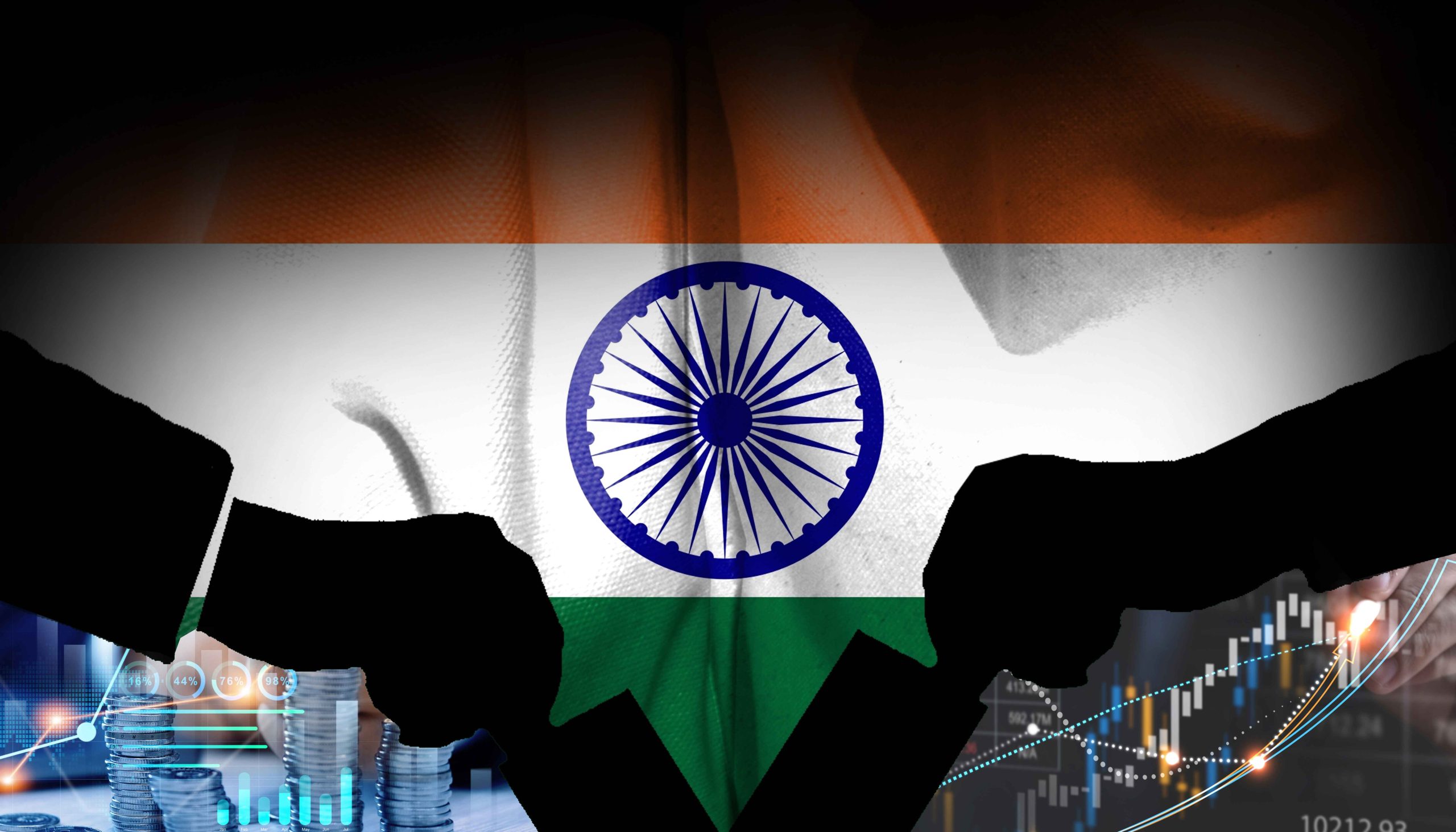
NEW DELHI: Generally, people review the past year—the one that is passing—and learn lessons from it. But I have always believed that attention should be focused on the road ahead, on challenges and capacities, “Biti taahi bisaar de, aage ki sudh le”—forget what has passed and think about what lies ahead. Seen through this principle, the New Year must be evaluated. India today stands at a decisive crossroads. By 2026, it will become clear whether India has been able to link its rapid economic growth with social balance, political stability and internal security.
If development, democracy and security complement one another, India will not only build a better future for its citizens, but will also emerge as a decisive power in the global order of the 21st century. Today, India is not merely a developing country, but an active participant in global policymaking. Through platforms such as the G20, Quad and BRICS, India’s role as the voice of the Global South has expanded.
The battle for internal security is not merely a battle of weapons—it is also a mission of social, political and economic reconstruction. Whether it is Left wing extremism or terrorism in Kashmir, success will be measured not only by control of violence, but by stability, development and better social inclusion. This is the foundation on which India will evaluate its goals for 2026 and beyond. Over the past decade, India’s economy has expanded significantly. India is now among the world’s top five economies, and the government aims to make it the third largest in the coming years.
Infrastructure, the digital economy, the start-up culture and domestic manufacturing under Make in India have been the key pillars of this growth. Roads, expressways, railway modernisation, ports and airports have strengthened internal connectivity and investment appeal. Digital payments, the Aadhaar-Jan Dhan-Mobile trinity and digitisation of government services have given India’s development story a distinctive character. Prime Minister Narendra Modi remains unwavering in his goal of a Developed India.
In the third decade of the 21st century, India is passing through a phase where development, politics and national security are deeply intertwined. Today’s India is not only the world’s most populous country, but also an emerging global power, a rapidly growing economy and a politically active democracy. The year 2026 is important because it will test many of the government’s long-term policies, internal security goals and political strategies. A tough stance against terrorism, a reputation as a reliable supply chain partner and a model of digital public infrastructure have strengthened India’s global standing.
Control over Naxalism and Kashmir-related terrorism makes India a stable investment destination and a credible power. A country’s strength on the global stage is determined not just by its military or economy, but also by its internal cohesion and governance capacity. Between April 2025 and December 2025, the fight against Naxalism and terrorism in Kashmir became one of the most important components of India’s internal security agenda. Home Minister Amit Shah has repeatedly stated that the country will be completely free of Naxalism by 31 March 2026, and that eliminating terrorism in Kashmir is also a top priority.
These two major challenges affect not only national security but also elections, state politics and India’s international reputation; Shah has said that Naxalism must be eliminated so that no citizen loses their life because of it. This is not an ad hoc declaration but part of the Modi government’s internal security strategy that combines strong security operations, dialogue with local communities and development programmes. Naxalism has long been India’s biggest internal security challenge. But in recent years, the number of Naxal-affected districts has declined sharply.
The government claims the problem is now in its final phase and could be decisively resolved by 2026. The problem has existed for decades, especially in sensitive forest and tribal regions of eastern, central and southern India, but incidents have fallen significantly. According to Amit Shah, the number of affected districts has dropped from about 126 to around six. In some areas, development has weakened Naxal activity, and many cadres have surrendered, been arrested or killed. In strongholds such as Chhattisgarh and Malkangiri in Odisha, security forces have carried out effective operations, eliminating several top commanders.
More than 85 percent of Naxal cadres have already been neutralised and final stage operations are underway. This has reduced violence and eroded local support. Many former militants have surrendered and joined local security structures, bringing stability. Alongside firm action, roads, schools, health centres and employment schemes have strengthened the state’s presence where it was once nearly absent. The change is not only military, but also administrative and social.
In Jammu and Kashmir, the situation has changed compared to the previous decade. Large-scale stone pelting, shutdowns and open separatist movements have weakened. Tourism, investment and infrastructure have improved. After the removal of Article 370 on 5 August 2019, the government claims terrorism is nearing its end. Operation Sindoor has almost stopped cross-border infiltration. Joint operations by the Army and Jammu and Kashmir Police have broken terror networks and eliminated militants, though agencies remain alert.
The goal is to reduce terrorism to minimal levels by 2026 so that tourism, the economy and daily life can function normally. India’s progress is not merely a list of achievements; it is a convergence of possibilities and challenges. Making economic growth inclusive, converting security into lasting peace, moving politics from confrontation to solutions, and strengthening democracy—these will be the measures of India’s success. Overcoming Naxalism and Kashmir-related terrorism will deeply enhance India’s global standing as a secure, stable and investment-friendly nation.
The year 2026 is also an important election year. Assembly elections will be held in Assam, West Bengal, Kerala, Tamil Nadu and Puducherry. In Assam, Chief Minister Himanta Biswa Sarma is seeking to retain power, while Congress, with leaders like Gaurav Gogoi, is planning a challenge. The BJP aims to win more than 100 of 126 seats. Employment, development, refugee and citizenship debates, identity and social equations will be key issues. West Bengal remains a high-intensity battleground. While the TMC won decisively last time, the BJP is trying to deepen its roots.
Illegal migration, corruption, development versus identity politics and governance will be major themes. Kerala traditionally sees a tough contest between the Left Front and the Congress-led alliance. The Left aims for a third term, while Congress under Rahul and Priyanka Gandhi faces a crucial test. The BJP is entering with greater force and ambition. In Tamil Nadu, the DMK alliance under M.K. Stalin will try to retain power, while the AIADMK under Edappadi K. Palaniswami, along with the BJP, will strengthen the NDA strategy through seat-sharing. The BJP’s national strategy is especially focused on expanding its footprint in Bengal, Kerala and Tamil Nadu, which party leaders see as test grounds for nationwide influence.




