In the lap of Himalayas, the territory of Jammu and Kashmir, divided by the Line of Control (LoC), with one part occupied by Pakistan, presents a study in contrast that is too obvious for the world to ignore any longer.
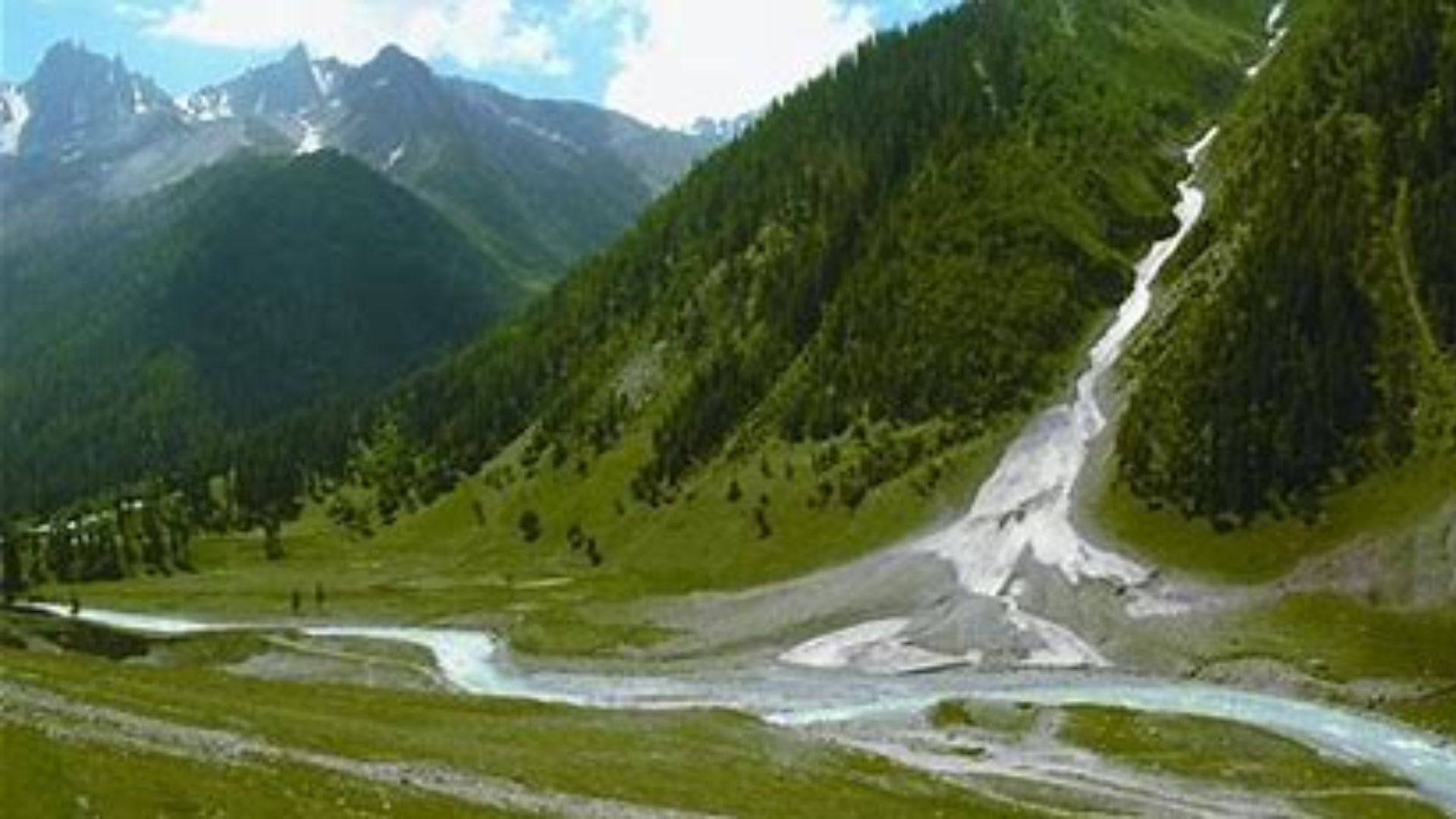
In the lap of Himalayas, the territory of Jammu and Kashmir, divided by the Line of Control (LoC), with one part occupied by Pakistan, presents a study in contrast that is too obvious for the world to ignore any longer.
One region has seen a spurt in investment and modernisation; the other remains a victim of systemic neglect and incompetence.
On one side of the Line of Control, is the Jammu and Kashmir where people-centric decisions and investments have reshaped infrastructure, institutions, and ultimately, lives. On the other is Pakistan-occupied Jammu and Kashmir (PoJK) and Gilgit-Baltistan, where even the provision of basic services remains uncertain and public discontent simmers.
Ever since 2019, when India revoked Article 370 and began pursuing broad-spectrum development efforts, the differences between the territories demarcated by LoC became ever-more pronounced than earlier.
India’s priorities in the region have revolved around connectivity, education and tourism,
Resources have been channelled into projects across areas, notably in districts like Srinagar, Baramulla, Kupwara, Kargil and Awantipora. A 14.2-kilometre tunnel at Zojila was built to boost all-weather access to Ladakh as well. Beyond that, new rail links have eased mobility and trade in the region.
A trend of young talent leaving the region or being reeled into folds of terrorism has been largely stymied. This is thanks, in no small part, to the education infrastructure, including extensions of premier institutions like IIT Jammu and NIT Srinagar, in the union territory.
Tourism figures reflect further positive developments. In 2024 alone, a record 1.8 million visitors arrived in the Kashmir Valley. Development initiatives, such as the Smart City programme in Srinagar and solar electrification in remote valleys have lent a hand to further advance the lifestyle in these areas.
Pakistan’s priorities have centred around the interests of the military establishment. The country, well-known for assigning much greater value to the land instead of the people, has focused on security interests in the regions under its occupation, offering limited improvements in living conditions.
The politically powerful Army has allocated resources to arming the region to its teeth, sidelining civilian infrastructure development for military installations.
Funding has gone to terrorist groups like LeT and JeM instead of people’s welfare.
In these territories, economic indicators remain grim. People in Gilgit-Baltistan and PoJK wrestle with frequent power outages, water scarcity, and sometimes even food security issues. In Skardu, residents face power cuts lasting up to 18 hours daily. Infrastructure development has lagged behind, despite announcements of support through Chinese investment under the China-Pakistan Economic Corridor (CPEC). Why the funding does not trickle down is anybody’s guess.
The harsh reality on the ground does not pose an obstacle for lofty official claims of economic revival. These often centre around large projects like the Diamer-Bhasha Dam. Local communities, however, have protested against displacement and the absence of compensation.
Reports suggest that mineral wealth extracted from Gilgit-Baltistan contributes little to the welfare of the people residing there.
This is the case throughout the occupied territories. Suppression of civil liberties, including the right to expression of dissent, increasingly shape the daily life in Pakistan-occupied regions. Teachers and public servants describe a culture of fear, where voicing discontent can attract surveillance or even arrest.
Then there is the 13th Amendment to the PoJK constitution. Passed in 2018, it formalised these curbs by limiting freedom of expression and narrowing space for political participation. For younger residents, particularly students and early-career professionals, the restrictions are breeding a growing sense of abandonment. They have been left on their own.
Civil servants and union workers staged protests in Muzaffarabad in mid-2025, citing low pay and lack of administrative reform. These expressions of dissatisfaction received limited response from Islamabad.
Meanwhile, Gilgit-Baltistan remains without a clear constitutional identity. Lacking meaningful representation in Pakistan’s federal structure, the region’s population continues to call for political clarity and greater local governance. Security forces have frequently been accused of targeting activists under vague pretexts, dampening hopes of reform.
The difference between the care and consideration for the lives of ordinary people, and the competence of the two administrations in these areas, are also evident through disatser management responses.
During the 2005 earthquake in Pakistan, there were major delays in evacuation and reconstruction, causing a great deal of hardship. It prompted criticism from survivors and observers alike. The contrast was evident in comparisons across the Line of Control, where, following similar events, India’s coordinated relief operations saved the lives of several locals.
India’s developmental model has been underpinned by substantial budgetary allocations toward infrastructure, education and digital governance. The government has consistently increased capital expenditure in Jammu and Kashmir, aiming to integrate the region into national economic circuits and improve delivery through strengthened public-sector institutions. In Kashmir, educational opportunities, improved transport and renewable energy projects have helped reshape the region’s socio-economic landscape. Initiatives have created local employment and boosted confidence among residents.
Pakistan’s focus, by comparison, has remained concentrated on strategic interests. CPEC-linked ventures and military deployments continue to dominate the agenda in PoJK and Gilgit-Baltistan. Islamabad’s developmental promises are often tied to geopolitical considerations, rather than public welfare objectives. Residents remain sceptical of official rhetoric.
The contrasting paths of the two Kashmirs show the divergence between India and Pakistan. While India has emphasised infrastructure, integration and holistic institutional growth, Pakistan’s approach has been shaped by securitisation and tactical management of its occupied territories, limiting long-term developmental impact. On one side, governance and economic integration have spurred growth and mobility. On the other, administrative neglect and political suppression have limited progress. For those living in PoJK and Gilgit-Baltistan, aspirations remain tethered to a system that has yet to offer clear direction or lasting inclusion.
