Afghanistan ends trade dependence on Pakistan, accuses Islamabad of undermining peace and interfering in Taliban-led diplomacy.
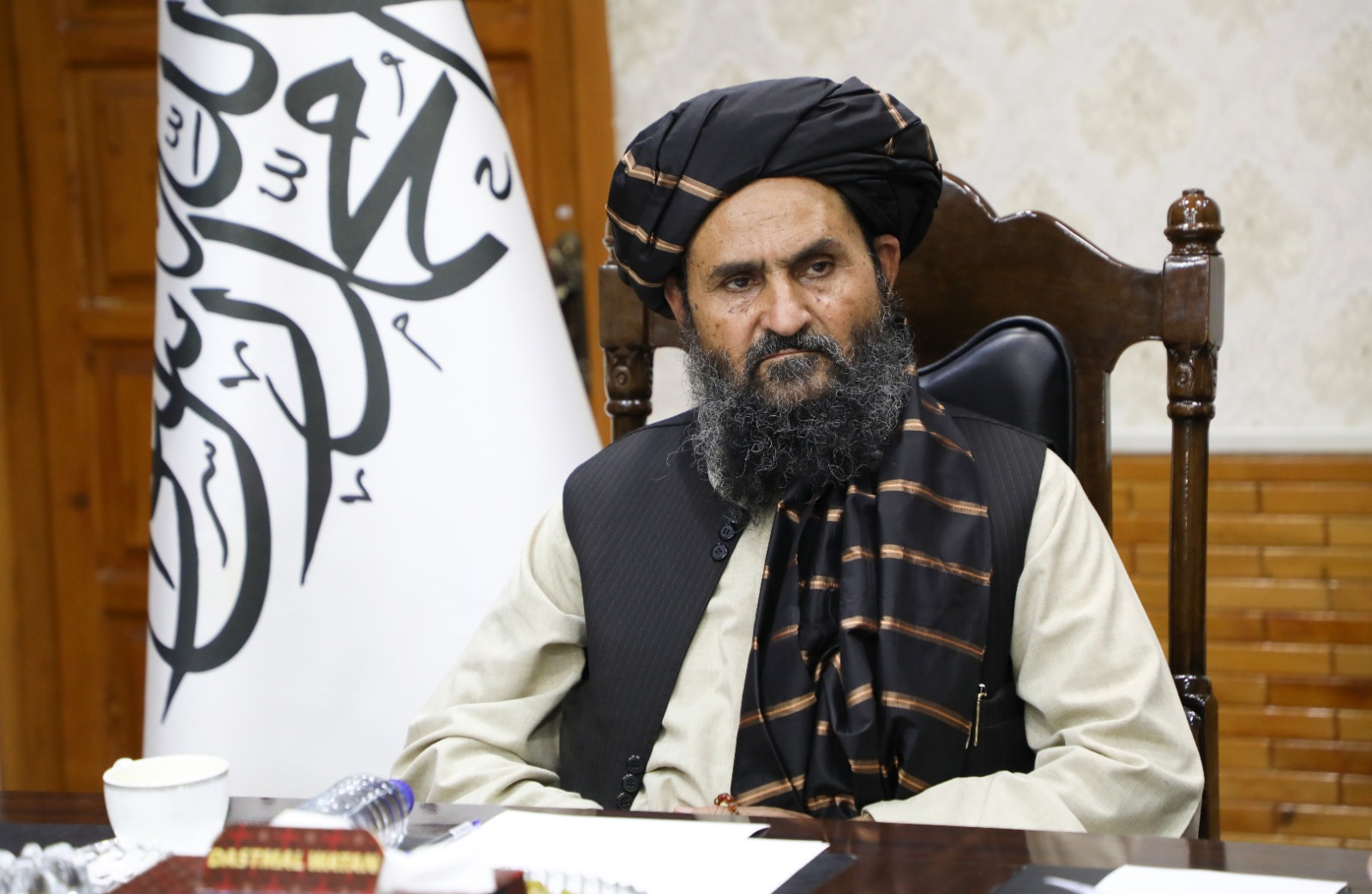
Deputy PM Mullah Baradar addresses Kabul business leaders, urging Afghanistan to end economic reliance on Pakistan (Photo: File)
New Delhi: Afghanistan’s leadership is drawing a new redline- economic, political, and psychological- between Kabul and Islamabad.
In one of his strongest policy statements to date, Deputy Prime Minister for Economic Affairs Mullah Abdul Ghani Baradar urged Afghan traders to end decades of dependence on Pakistan, saying the country must “chart its own trade destiny.”
The remarks, delivered this week to business leaders in Kabul, signal a deliberate move to reclaim economic autonomy and redirect commerce through new corridors across Central Asia, Iran, and India.
“For too long, our markets have suffered from unequal access and unreliable partners,” Baradar said. “Those who continue to rely on Pakistan do so at their own risk.”
The message was plain: the Islamic Emirate will no longer intervene on behalf of traders who face hurdles in Pakistan. A three-month grace period was announced for companies to close or settle existing accounts.
Baradar reserved particular criticism for the health-care sector’s dependence on Pakistani pharmaceuticals, calling the import of low-grade medicines a “national loss” that drains hundreds of millions of dollars each year. He urged Afghan firms to switch to alternative suppliers “without delay.”
Behind the rhetoric lies a wider plan. Afghan officials say the country’s geographic position-connecting South, Central, and West Asia-is an asset, not a vulnerability. Investments in transport links through Iran’s Chabahar and Bandar Abbas ports, and in overland routes to Uzbekistan and Turkmenistan, are already under way.
Even as the economic team maps new routes, Kabul’s political leadership has aired its disappointment over Pakistan’s handling of recent peace efforts.
Rahmatullah Najib, Deputy Interior Minister and head of the second round of negotiations with Islamabad, disclosed that talks broke down when Pakistan demanded a religious decree (fatwa) from the Taliban’s Supreme Leader against the Tehrik-e-Taliban Pakistan (TTP).
Najib called the demand “impossible and inappropriate,” noting that such rulings fall solely within the authority of Darul Ifta, Afghanistan’s official body for Islamic jurisprudence. “Pakistan wanted a fatwa, not a resolution,” he said. “They ask us to host those they themselves label as terrorists. That is not diplomacy — that is confusion.”
According to Najib, nearly 98 percent of previous understandings between the TTP and Islamabad had been reached before Pakistan’s political turnover — the removal of Lt. Gen. Faiz Hameed and Imran Khan’s government — stalled the process.
Kabul's "defiance" however is unlikely to be met by a silence from the military leaders in Islamabad, who for a long time, have portrayed that Afghanistan is its play area and the Taliban its loyal follower.
