
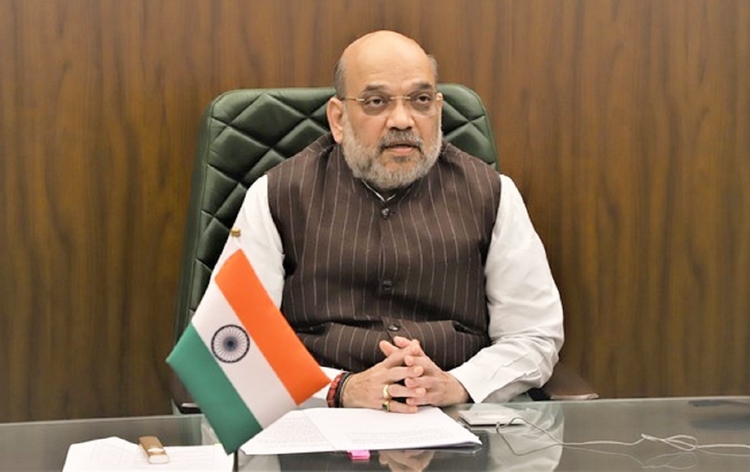
NEW DELHI: Union Home Minister Amit Shah has firmly established himself as the principal decision-maker within the Bharatiya Janata Party, centralising key organisational and administrative choices after securing firm backing from Prime Minister Narendra Modi, according to internal inputs from senior party functionaries.
The complete consolidation has become visible through a series of recent signalling events in Madhya Pradesh and Haryana, where the central leadership moved decisively to end speculation over the political future of incumbent chief ministers. In Madhya Pradesh, CM Mohan Yadav, who had been facing persistent rumours of removal, received an emphatic endorsement when Shah publicly praised his performance and made it clear that Yadav would continue in office. The message was intended to neutralise factional manoeuvring inside the state unit and to communicate that the issue was settled at the highest level.
A similar pattern played out in Haryana. Chief Minister Nayab Singh Saini had been encountering resistance from senior state leaders who questioned his leadership. In response, Shah and Modi closed ranks behind Saini, indicating that he was here to stay and that any internal campaign against him would not be tolerated. Party sources said the fulsome praise of Saini by Shah has come as a clear message to dissident elements in the party, including union ministers, to fall in line.
Both Saini and Yadav are viewed as selections made jointly by Modi and Shah, with Shah acting as the operational architect of these appointments. By reinforcing them through overt praise and strict enforcement, Shah has reduced ambiguity over authority within state organisations. Functionaries say the BJP organisational reshuffle expected in the coming weeks under newly elected party president Nitin Nabin is likely to deepen this model.
The party is preparing to induct younger and more organisationally loyal figures as state presidents and office-bearers, favouring new names over traditional heavyweights. Sources within the BJP describe this as Shah creating a wide team of political commanders whose tenure and advancement are clearly linked to the central leadership axis. The approach is aimed at strengthening the second and third rung leadership and ensuring predictable coordination between the party organisation and the government in the coming years, in the runup to 2027 Uttar Pradesh elections followed by the 2029 General elections.
This generational transition has also triggered apprehension among several senior Union ministers, particularly those advanced in age, who fear a shrinking long-term role. The ongoing shift in Delhi has sidelined individuals who were earlier perceived as hostile to Shah, with rivals gradually removed from influential positions over the past few months. Sources within the party said that the centralisation has ensured smoother working relationships between the organisation and the administration by lowering internal negotiation costs. The pattern suggests that Shah now exercises dominant influence over internal party decisions including appointments of state presidents and major administrative selections, while continuing to operate under the explicit confidence of Prime Minister Modi.




