Nicolas Maduro’s long spiritual link with Indian guru Sathya Sai Baba resurfaces as the former Venezuelan leader faces trial, raising questions of faith and power.
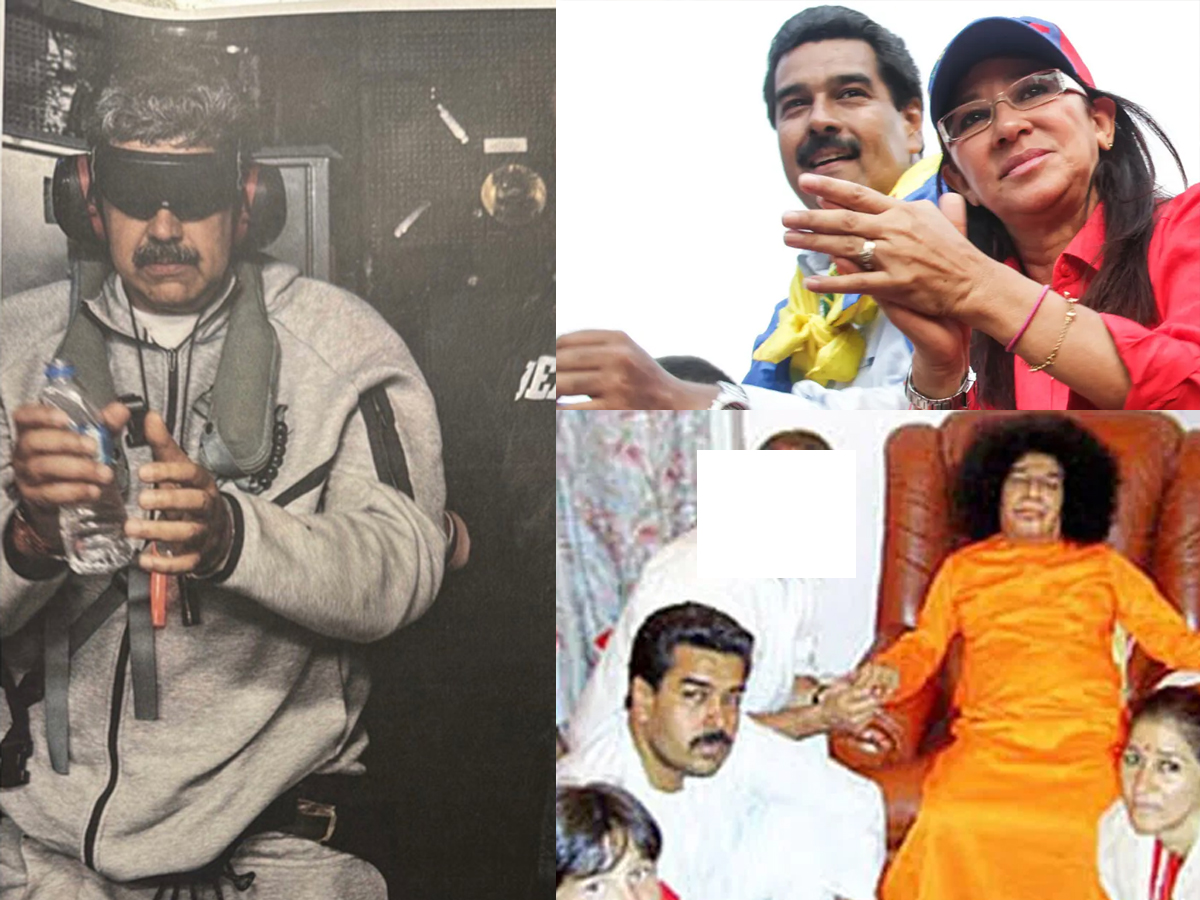
`That bond, rooted in devotion to Indian spiritual leader Sathya Sai Baba, followed him from the corridors of diplomacy to the highest office in Venezuela and remained visible even at the height of his power.
As the world focuses on the dramatic fall of Venezuela’s long-time strongman, an unexpected chapter from Nicolas Maduro’s past has returned to the spotlight. Long before global sanctions, political crackdowns, and criminal charges, Maduro shared a quiet spiritual connection with India.
`That bond, rooted in devotion to Indian spiritual leader Sathya Sai Baba, followed him from the corridors of diplomacy to the highest office in Venezuela and remained visible even at the height of his power.
In 2005, years before becoming President, Nicolas Maduro traveled to India in a deeply personal capacity. At the time, he served as Venezuela’s Foreign Minister. He arrived not for state talks, but for spiritual guidance.
Maduro and his wife, Cilia Flores, visited Puttaparthi in Andhra Pradesh. They entered the Prasanthi Nilayam ashram, the spiritual center of Sathya Sai Baba. Reports say the couple received a private audience with the guru. Rare images from that visit show Maduro seated on the floor in a traditional Indian posture, listening attentively in silence.
After Maduro rose to power, his spiritual beliefs did not fade into the background. Visitors to the Miraflores Palace often noticed a striking detail inside his private office.
Among portraits of Simón Bolívar and Hugo Chávez, Maduro placed a large framed photograph of Sathya Sai Baba in a prominent position. For over a decade, decisions shaping Venezuela’s future unfolded under the image of a guru known for preaching peace, compassion, and selfless service.
The spiritual connection reportedly began with Cilia Flores. Known widely as the “Iron Lady” of the regime, she was said to be a devoted follower of Sai Baba long before Maduro embraced the teachings.
During moments of political crisis, including coup attempts and mass protests, Flores reportedly turned to Sai Baba’s teachings on destiny and patience to guide Maduro. The devotion became a shared family belief system that remained strong even as international accusations against the regime intensified.
When Sathya Sai Baba passed away in April 2011, Venezuela took a step that surprised many observers. Under Maduro’s influence as Foreign Minister, the National Assembly passed an official condolence resolution.
The country declared a day of national mourning and formally recognized the guru’s “spiritual contribution to humanity.” No other Latin American nation issued such a tribute, highlighting the depth of the connection.
Just two months ago, on November 23, 2025, Maduro again broke from political messaging to honor Sai Baba’s centenary. He released an official statement describing the guru as a “being of light.”
“I always remember him when we met... May the wisdom of this great teacher continue to enlighten us.”
It became one of his last public statements unrelated to politics before the collapse of his regime.
Under Maduro’s rule, Sathya Sai organisations operated freely in Venezuela, even as many foreign NGOs faced expulsion. Sai Baba centers ran schools and the Institute of Human Values, expanding their reach across the country.
Venezuela now hosts one of the largest Sai Baba devotee communities in Latin America, with roots dating back to 1974.
The most striking element of this story lies in its contradiction. Sathya Sai Baba’s teachings rest on Sathya (Truth), Dharma (Righteousness), and Ahimsa (Non-Violence).
Maduro now faces serious charges related to violence, repression, and narco-terrorism. As legal proceedings unfold, many are questioning whether the former devotee of “Truth” will finally embrace it, or whether spirituality merely served as a symbolic shield during years of unchecked power.
