
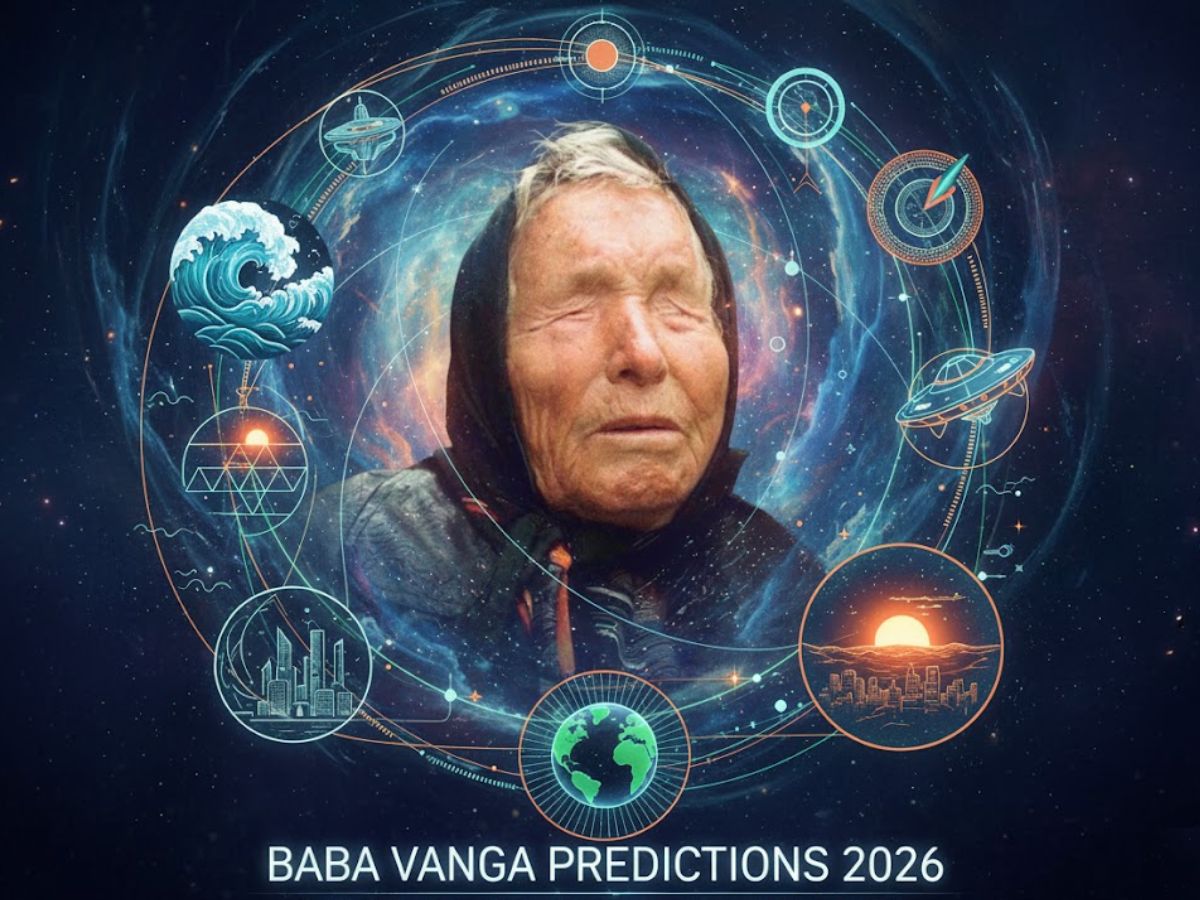
As 2026 approaches, the name of the late Bulgarian mystic Baba Vanga is trending again, fueled by a new wave of alarming and specific predictions circulating online. These viral claims, which range from purported alien encounter to AI dominance and geopolitical turmoil, present a dramatic picture of the upcoming year, but they are based on contemporary interpretations rather than verified prophesies.
This annual resurgence highlights a enduring public fascination with prophecy, yet a closer examination reveals a complex web of folklore, retroactive attribution, and contemporary anxieties projected onto the mystic’s vague, decades-old statements.
Who Was Baba Vanga and Why Do Her Predictions Trend?
Vangeliya Pandeva Dimitrova (1911–1996), better known as Baba Vanga, was a blind Bulgarian mystic frequently referred to as the “Nostradamus of the Balkans.” She gained global fame for her purported ability to foresee major world events.
Supporters claim she predicted events such as the Chernobyl nuclear disaster, the September 11 attacks, and the collapse of the Soviet Union—claims that continue to fuel her mystique decades after her death. According to reports, her notoriety attracted prominent guests, such as former Soviet leader Leonid Brezhnev.
Baba Vanga Predictions 2026
The current wave of 2026 forecasts blends traditional apocalyptic tropes with cutting-edge scientific headlines.
Will 2026 See Global Conflicts Across Europe and Asia?
One of the most persistent claims linked to Baba Vanga’s 2026 predictions involves long global conflicts, particularly in Europe and Asia.
Rather than a single world war, viral interpretations suggest:
- Political fragmentation in Europe
- Rising military tensions reshaping global alliances
- Geopolitical instability affecting Taiwan, the South China Sea, and the India–China border
Although no particular events or timelines are mentioned, online narratives portray these changes as indicators of a changing global order.
Aliens in 2026? The 3I/ATLAS Theory Explained
Among the most dramatic claims is the idea that humanity could encounter extraterrestrial life in 2026. The Asteroid Terrestrial-impact Last Alert System (ATLAS) telescope in Chile discovered 3I/ATLAS, an interstellar object, on July 1, 2025, and this theory has become more popular.
What is known about 3I/ATLAS:
- It follows a hyperbolic orbit, confirming it originated outside our solar system
- Astronomers classify it as an interstellar object, not a spacecraft
- Without supporting data, some widely shared postings hypothesize that it might enter Earth’s atmosphere in November 2026.
These claims remain firmly in the realm of online speculation.
Will Artificial Intelligence ‘Dominate Humankind’ in 2026?
Another widely shared interpretation suggests that technology will evolve beyond human control.
Although Baba Vanga never specifically addressed artificial intelligence, contemporary interpretations link her cautions to:
- Automation replacing large sections of the workforce
- Overdependence on machines
- Ethical frameworks failing to keep pace with innovation
This prediction has gained traction amid rapid advancements in AI and automation, making it one of the most resonant claims online.
Natural Disasters and Climate Change: A Chilling Parallel?
Viral stories claim that in 2026, Baba Vanga is expected to trigger earthquakes, floods, tsunamis, and extreme heat waves.
Believers say these warnings reflect present-day scientific worries about climate change, but there is no verifiable evidence linking her to specific climate forecasts for the year.
- A Powerful Russian Leader: What Do the Claims Say?
- Another online rumor is that in 2026, a Russian leader will become a major player in the world.
- Social media users frequently connect this interpretation to Russian President Vladimir Putin, pointing to his global influence. However, these links are speculative and not based on any documented statements from Baba Vanga.
The viral predictions for 2026 say less about what lies ahead and more about current concerns—technology, the environment, and global power shifts. Despite Baba Vanga’s enduring legend, they remain a cultural reflection rather than a reliable guide.




