
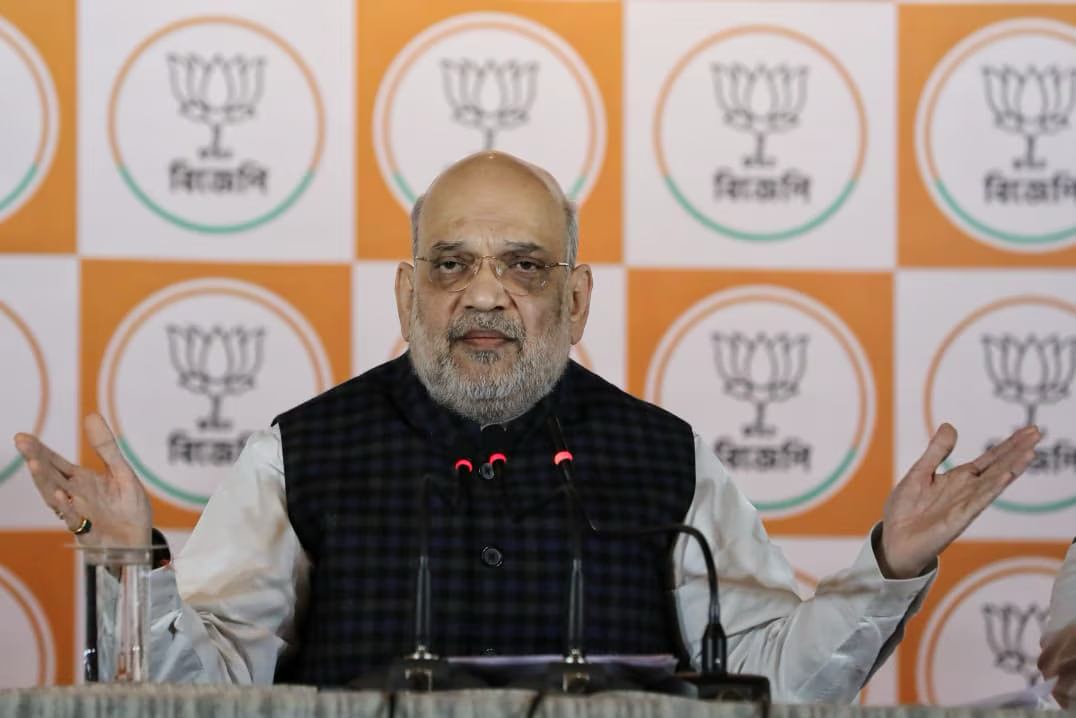
KOLKATA: In a significant push ahead of the 2026 West Bengal Assembly elections, Union Home Minister Amit Shah’s recent three-day visit to the state appears to have galvanized the Bharatiya Janata Party’s (BJP) Bengal unit, fostering a sense of unity among its leaders after months of reported internal discord. Shah, known for his strategic acumen in electoral battles, convened a series of high-level meetings in Kolkata, urging party cadres to set aside differences and focus on grassroots mobilization.
The gatherings, held on December 30 and 31, included key figures such as state president Samik Bhattacharya, Leader of the Opposition Suvendu Adhikari, Union Minister Sukanta Majumdar, and former state president Dilip Ghosh, signalling a collective leadership approach to challenge the ruling Trinamool Congress (TMC).
Shah’s intervention comes at a critical juncture for the BJP in West Bengal. The party, which saw its Lok Sabha seats drop from 18 in 2019 to 12 in 2024, has been grappling with internal factionalism, particularly between veteran leaders and newer entrants. Ghosh, a firebrand politician who played a pivotal role in expanding the BJP’s footprint in the state from just three Assembly seats in 2016 to 77 in 2021—had been notably absent from major party events earlier in 2025, fuelling speculation of rifts with the current leadership. His inclusion in Shah’s core group discussions marks a deliberate effort to bridge these gaps, with party insiders describing it as a “return” to the forefront.
During a closed-door meeting at a Salt Lake hotel on December 31, Shah addressed BJP MPs, MLAs, former representatives, and even defeated candidates from the 2024 Lok Sabha polls. He outlined a rigorous action plan, instructing leaders to spend at least four days a week in their constituencies, conduct five to six street-corner meetings daily, and engage in door-to-door voter outreach. “Leaders must prove their worth to be considered for party tickets,” a senior party leader quoted Shah as saying, emphasizing performance over the next two months as a key criterion for nominations. This directive aims to strengthen booth-level organization, with Shah deploying vistaraks—full-time party workers—for intensive mobilization.
The meetings also highlighted the party’s narrative against the TMC, focusing on issues like alleged corruption, infiltration from Bangladesh, and demographic changes in border areas. Shah urged workers to highlight these concerns, particularly in Kolkata, where he set a target of winning 20 out of 28 Assembly seats. He assured the Matua community—Hindu refugees from Bangladesh—of support under the Citizenship Amendment Act (CAA), addressing reports of names being deleted from electoral rolls. “Matuas have no reason to fear: BJP will accommodate all religiously persecuted refugees in India,” Shah stated during one interaction.
Party leaders expressed optimism post-meetings, attributing the renewed vigour to Shah’s “prod”. Suvendu Adhikari, who welcomed Shah at the airport and participated in multiple sessions, told reporters: “Everyone is energised. We will win. There will be true change in power in 2026”. Adhikari, a former TMC minister who defected to the BJP in 2020 and defeated Chief Minister Mamata Banerjee in Nandigram in 2021, has been a vocal critic of the state government. His social media post welcoming Shah described the visit as igniting “a fresh wave of enthusiasm among karyakartas (workers)”.
Samik Bhattacharya, the current state president and Rajya Sabha MP, echoed this sentiment. As the party’s organizational head, he has been tasked with coordinating the grassroots drive. In a recent post, Bhattacharya referenced a prior meeting with Shah on demographic changes in West Bengal, underscoring the party’s focus on border security. Sukanta Majumdar, now a Union Minister of State for Education and Development of North Eastern Region, and a former state chief, emphasized the collective effort: “Shah asked us to focus on polls and work hard to form the Government,” said BJP leader Sishir Bajoria, reflecting the broader mood.
Dilip Ghosh’s re-emergence is perhaps the most telling sign of consolidation. Once sidelined amid rumours of discord—exacerbated by his meeting with Banerjee in May 2025—Ghosh was invited to share his experiences. “I had been invited to share my experiences and I listened to the Union Home Minister. I cannot say much but you will see an active Dilip Ghosh in the 2026 elections,” he told the media. In a series of posts, Ghosh praised Shah’s role in strengthening the party’s foundation in Bengal, noting, “Under his guidance & leadership, we have strengthened the party”. Party sources highlight Ghosh’s popularity in regions like Medinipur, where he is being positioned to bolster the BJP’s presence.
This united front contrasts with earlier perceptions of division. Analysts point out that the BJP’s 2021 Assembly performance, while impressive, was marred by post-poll violence and internal blame games after the 2024 setback. Shah’s visit, insiders say, was designed to “bridge the gap between the old and the new state party leadership”. BJP MP Rupa Ganguly remarked, “Shah has motivated us all… all of us will work hard to get 2/3rd majority”. Veteran leader Swapan Dasgupta added: “Best opportunity for BJP as TMC is in a vulnerable situation”. However, the TMC has dismissed these developments as desperate measures.




