Punjab reels under floods as BBMB chief’s conflicting remarks raise accountability questions.
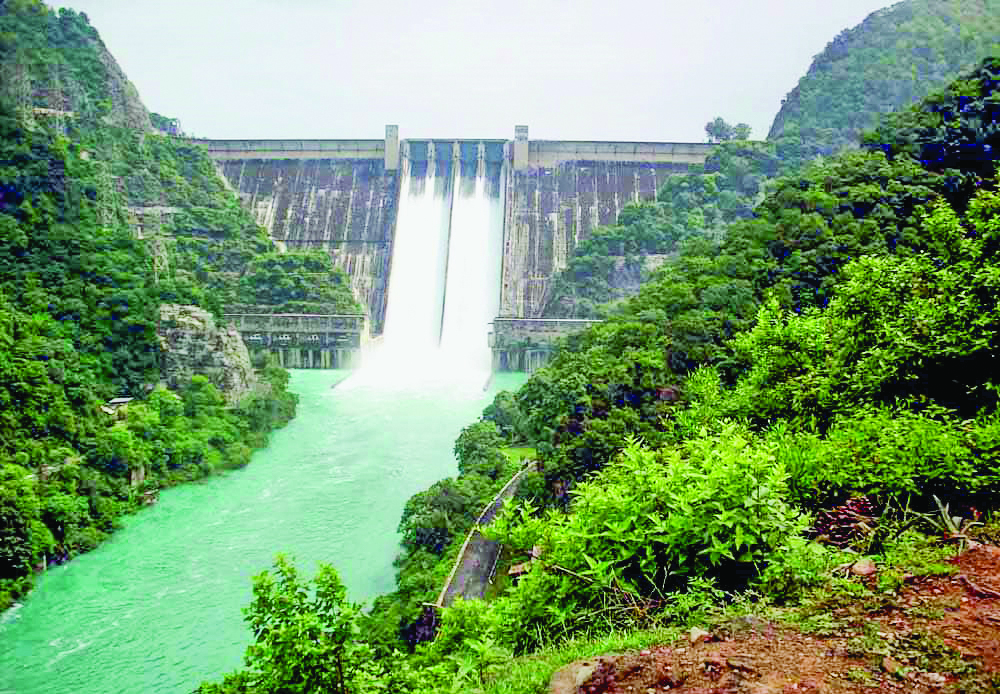
Chandigarh: Inflows into Bhakra Dam fell to 62,481 cusecs on Saturday, lowering the water level to 1,678.14 feet — about two feet below its peak storage of 1,680 feet. BBMB officials said the dam would continue to release nearly 70,000 cusecs until the level drops to 1,677 feet, creating a cushion in case of fresh September rain. Out of the outflow, about 55,000 cusecs has been released into the Sutlej basin and 15,000 cusecs into the Nangal and Anandpur Sahib hydel canals.
Yet, villages in the Bela belt of Ropar district remain marooned, with relief work continuing by the administration and volunteers. Pong Dam, however, is still critical at 1,394.67 feet — over four feet above its permissible level of 1,390 feet — with inflows of 98,418 cusecs and outflows of 99,673 cusecs. Officials said these high releases would persist until the level is brought down to safe limits, keeping thousands along the Beas river in Punjab and Himachal on edge.
Even as dam figures dominate the ground reality, Bhakra Beas Management Board (BBMB) Chairman Manoj Tripathi’s recent statements have fuelled a wider debate. Asked if the situation could have been better managed had the BBMB accepted its technical team’s April suggestion to lower water levels and release water to Haryana, Tripathi conceded, “Yes, we may have had some cushion in the current situation.” The admission hinted that timely action could have eased pressure, while also shifting accountability by implying Punjab had been conservative about releases. On the Punjab government’s claim that he was “locked” during the Nangal protest and prevented from releasing water, Tripathi outrightly dismissed the charge. “No one locked me. I was in my guest room. No one can control or stop us. It is us — the Management Board — who releases water,” he asserted, directly contradicting the state’s version.
Tripathi also rebutted Punjab’s claim of withheld payments, clarifying, “No one has stopped our payments. Punjab has 39 percent share in BBMB and is a fourth partner state,” challenging the state’s assertion that it holds 60 percent share. On the contentious issue of CISF deployment at BBMB, he drew a comparison that raised eyebrows: “CISF has been deputed here since 2021. The Punjab government had no objection in 2022, in 2023, or in 2024, but suddenly there is a problem in 2025 — why? CISF is also deployed in the Secretariat and other institutions of national importance,” he asserted.
While Tripathi maintained there was “no immediate danger” and predicted rainfall could reduce in the next few days, his remarks — conceding cushion could have been created earlier, denying being obstructed at Nangal, and countering Punjab’s financial and security claims — have only sharpened questions about the BBMB’s role in the crisis.
On the ground, Punjab continues to suffer: the Sutlej and Beas rivers have inundated vast tracts, with breaches like the one at Sasrali embankment near Ludhiana East putting nearly 15 villages at risk. Crops are ruined, homes swept away, and thousands displaced to relief camps, even as the army, NDRF, and volunteers work round the clock.
As the dams strain under pressure and villages remain submerged, Tripathi’s paradoxical answers have added another layer of uncertainty — leaving residents and political leaders alike asking whether timely releases in April could have averted the scale of devastation Punjab faces today.
