Post election recriminations between Congress and RJD deepen uncertainty over Bihar opposition alliance.
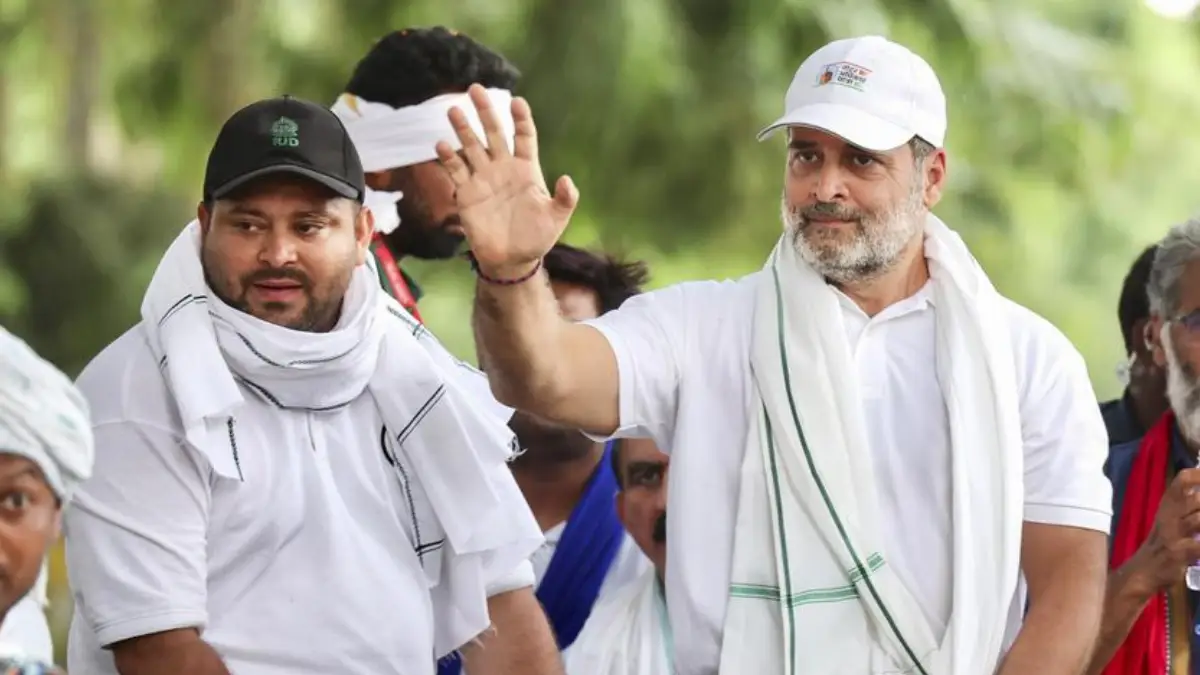
Post-poll tensions: Congress and RJD leaders clash over alliance strategy and seat-sharing, deepening uncertainty within Bihar’s Mahagathbandhan (Photo: X)
NEW DELHI: The opposition Mahagathbandhan in Bihar is witnessing fresh turbulence in the aftermath of its Assembly election defeat, as senior leaders of alliance partners—the Congress and the Rashtriya Janata Dal (RJD)—have publicly traded sharp remarks, casting doubts over the alliance's future.
Sources within the coalition told The Sunday Guardian that internal differences, which first surfaced during the election campaign, have deepened since the results were declared. What was once confined to closed-door discussions has now erupted into the open, with leaders from both parties labelling each other a "burden" and signalling the possibility of a political recalibration.
Earlier this week, senior Congress leader Shakeel Ahmed termed the party's partnership with the RJD a "loss-making arrangement," arguing that remaining in the Grand Alliance would further erode the Congress's electoral prospects in Bihar. He said the alliance has been reduced to a formality and no longer offers tangible benefits to the Congress, either at the ballot box or in terms of organisational growth. Ahmed also expressed concern over the Congress's diminished role within the alliance, alleging that the RJD has sidelined the party in key electoral decision-making. Urging the Congress leadership to reassess its Bihar strategy, he maintained that the alliance has failed to strengthen the party's grassroots presence in the state.
The comments triggered a strong rebuttal from the RJD. Party spokesperson Mrityunjay Tiwari responded by accusing the Congress of damaging the RJD's electoral prospects and becoming a liability for the alliance. He even hinted at a possible split in the Mahagathbandhan if the Congress does not undertake serious introspection and organisational reform. Tiwari said the Congress must examine its declining support base, asserting that its electoral gains in Bihar were largely driven by the RJD's strength. Referring to the 2020 Assembly elections, he noted that the Congress contested 70 seats but won only 19, arguing that a stronger showing by the party could have enabled the alliance to form the government. Dismissing the Congress's seat-sharing demands, Tiwari warned that persistent infighting and what he described as unrealistic expectations could further weaken the opposition bloc. He also cautioned that unless the Congress focuses on rebuilding its organisation and curbs such public statements, it risks sliding into political irrelevance in Bihar.
A political analyst told the publication that the public war of words has cast serious doubt on the future of the Mahagathbandhan, particularly at a time when the opposition is still reeling from its electoral setback. The analyst added that a break between the Congress and the RJD could also undermine the Congress's prospects of forging alliances in other poll-bound states. Citing examples of Assam, West Bengal and Uttar Pradesh, the analyst noted that the Congress is currently dependent on regional partners to counter the BJP.
In West Bengal, the Congress remains allied with Left parties, while the ruling Trinamool Congress—despite being a key constituent of the INDIA bloc—has consistently chosen to contest elections independently and is expected to do so again. Similarly, in Assam, the Congress aligned with Left and regional parties in a bid to unseat the BJP, while in Uttar Pradesh it forged an alliance with the Samajwadi Party led by Akhilesh Yadav. In this context, the analyst said it is crucial for the Congress to maintain cohesion with its alliance partners to ensure better performance in the forthcoming Assembly elections.
