Central question for policymakers is no longer whether Bihar can maintain administrative stability but if it can build a modern industrial economy.
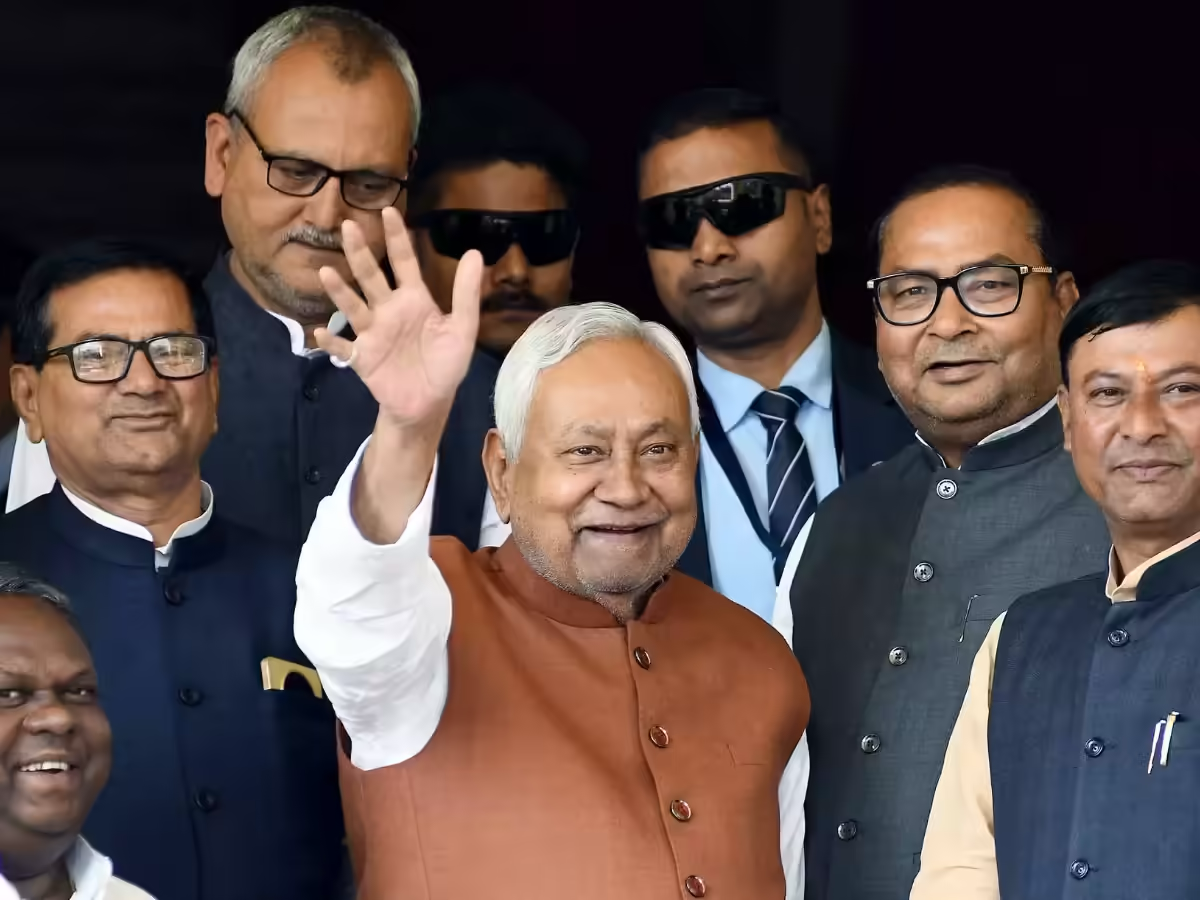
Bharatiya Janata Party’s decision to move Chief Minister Nitish Kumar to the Rajya Sabha
NEW DELHI: The Bharatiya Janata Party’s decision to move Chief Minister Nitish Kumar to the Rajya Sabha and install its own chief minister marks the end of a governance phase that began in 2005. The shift reflects a calculation that while Kumar stabilised Bihar after years of administrative decline, the state’s economic structure has not fundamentally changed and requires a different leadership approach, somebody who is attuned to changing times and new challenges.
Bihar’s economic indicators illustrate the problem clearly.
The state remains one of the poorest in India. According to recent estimates from the Bihar Economic Survey, the per capita income of the state was about Rs 66,528 in 2023-24 at current prices, rising to around Rs 76,490 in 2024-25 (advance estimate). Even after this increase, Bihar’s income levels remain far below the national average, which is estimated at over Rs 1,90,000 per person. Among major Indian states, Bihar continues to rank at or near the bottom in per capita income thereby severely impacting India’s overall growth story.
The secondary sector, which includes manufacturing, construction and utilities, accounts for about 26-27 percent of Bihar’s gross state domestic product in 2024-25, up from lower levels a decade earlier. However much of this increase has been driven by construction and public infrastructure spending rather than manufacturing expansion.
Manufacturing itself remains limited. Estimates place manufacturing value added at roughly 10-12 percent of Bihar’s GSDP, significantly below the levels seen in states that have undergone rapid industrial transformation.
Factory data reinforces the point. According to the Annual Survey of Industries, Bihar accounts for less than 2 percent of India’s factories and industrial output, despite having roughly 8-9 percent of the country’s population.
Employment patterns reveal the same structural imbalance. Around 43-46 percent of Bihar’s workforce remains dependent on agriculture, compared with roughly 42 percent at the national level. Formal manufacturing employment remains small and the state continues to send millions of migrant workers to industrial states such as Maharashtra, Gujarat, Punjab and Tamil Nadu.
Urbanisation is another indicator of limited economic diversification. Bihar’s urban population is estimated at around 11-16 percent, depending on projection methods, the lowest among major Indian states and far below the national average of roughly 31-35 percent. Industrial growth typically correlates with urban expansion, something Bihar has not yet experienced at scale, despite the almost twenty years tenure of Kumar.
Despite these structural weaknesses, Bihar’s overall economic growth has improved but not on the scale it ideally should have. The state’s gross state domestic product is estimated at around Rs 9.9 lakh crore in 2024-25, with growth of roughly 13 percent at current prices.
However, much of this expansion has been driven by public spending, construction activity and consumption rather than large scale private industrial investment.
These numbers highlight the limits of the governance model that dominated the state for nearly two decades.
“We have been blaming the jungle Raj of Lalu and his family (for Bihar’s economic condition) ever since we came to power. However, it cannot be used as an excuse for Bihar’s backwardness perpetually since it is us who have been leading the state for over a decade now. Replacing Nitish is as much a practical step to improve the state’s governance as much as it is political,” a senior BJP functionary said.
When Nitish Kumar first became chief minister in 2005, Bihar faced a very different challenge. The priority then was restoring governance after years of administrative breakdown. His government focused on rebuilding roads, improving law and order, expanding welfare programmes and strengthening basic state capacity. Those changes had measurable effects. Road construction expanded rapidly across the state. Public welfare programmes reached wider sections of the population. School enrolment increased through schemes such as the bicycle programme for girls. Crime indicators improved during the early phase of his tenure. Bihar’s economic growth rate rose during the late 2000s as infrastructure spending and public investment increased.
However, the growth model that followed remained largely administrative and consumption-driven rather than industrial.
The new Chief Minister, who will be from the BJP, will inherit, among other things, an outstanding public debt that is projected at Rs 3,38,554 crore (approximately Rs 3.39 lakh crore), which works out to about 29.68% of the state’s projected Gross State Domestic Product (GSDP) of Rs 13,09,155 crore. If we add other liabilities (such as public account items like provident funds), the total debt/liabilities are estimated at Rs 4,46,236 crore, or about 34.08% of GSDP.
This gap between governance improvement and economic transformation has become central to the BJP’s political argument.
Prime Minister Narendra Modi has repeatedly framed Bihar’s development as central to the economic rise of eastern India. In several speeches before and during the election campaign last year, He had argued that a developed India cannot emerge unless eastern states such as Bihar undergo rapid economic transformation.
During the inauguration of major infrastructure projects in the state, PM Modi said that Bihar must become a major engine of growth for eastern India and that large scale investments in infrastructure, logistics and industry would drive that transformation.
The central government has already tried to position Bihar within that framework. Infrastructure projects worth more than Rs 7,000 crore have been launched in sectors such as roads and connectivity, while broader development initiatives exceeding Rs 12,000 crore have been announced in sectors including health, energy and transport.
The BJP’s election commitments for Bihar also emphasise structural economic change. The party promised one crore employment opportunities through industrial expansion, development of manufacturing clusters, logistics corridors and tourism infrastructure. The manifesto emphasises industrial parks, skill development programmes for youth and stronger integration of Bihar into national freight and logistics networks.
“Economic transformation typically unfolds over long time horizons. Building industrial ecosystems requires land aggregation, investor outreach, logistics integration, infrastructure expansion and policy continuity over multiple electoral cycles and for this we need someone who is relatively younger and knows what is happening in the world,” the leader quoted above said. States that have successfully industrialised have generally experienced long periods of leadership continuity focused heavily on economic policy.
That context explains why the BJP’s transition strategy emphasises installing a younger chief minister once Nitish Kumar moves to the Rajya Sabha.
“A younger leader offers a longer political runway for reforms that may take ten to fifteen years to fully materialise. Industrial corridors, logistics parks and manufacturing clusters cannot be built within a single electoral cycle,” a senior journalist based in Patna explained.
Administrative intensity is another factor.
“The present bureaucracy in Bihar is led by a group of few, loyal to Nitish, who have developed a comfort zone and have no desire to bring in large investment programmes that require continuous engagement with investors, bureaucracies and central government agencies. With the reset that will happen once a new CM takes over, it is expected that a new push will happen as far as private investment in the state is concerned,” the journalist added.
While Nitish Kumar’s governments restored governance capacity after a period of institutional decline and improved the state’s basic infrastructure and social indicators, the state now faces a different challenge.
The central question for the policymakers in Delhi is no longer whether Bihar can maintain administrative stability but whether it can build a modern industrial economy capable of generating large scale employment within the state itself.
For the BJP leadership, the shift to a younger chief minister represents an attempt to begin a second phase of Bihar’s development cycle. The first phase focused on restoring governance and infrastructure. The next phase aims to transform the state’s economic structure and create sustained industrial growth.
