Prohibition policy and economic reforms will shape Bihar’s next political chapter.
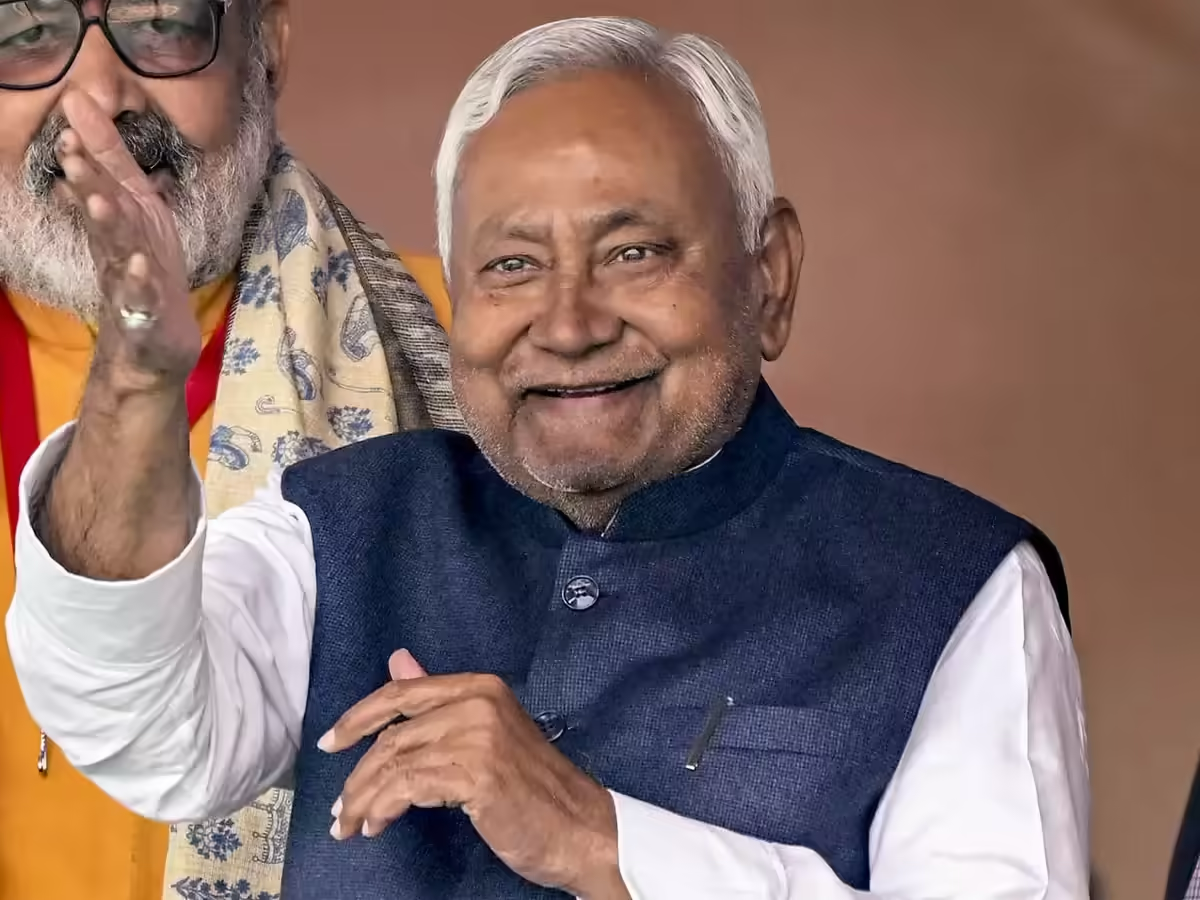
Nitish Kumar
NEW DELHI: After nearly two decades in power, if Nitish Kumar moves toward a larger role in national politics, the central question is not political instability in Bihar but the challenges the state will face in the coming years. Politically, the alliance between his party, Janata Dal (United), and the Bharatiya Janata Party appears stable. His relationship with Prime Minister Narendra Modi and Home Minister Amit Shah has strengthened through policy cooperation and political coordination, making any immediate crisis in the state government unlikely.
The more important issues for Bihar lie in governance and policy. The state must decide whether to continue or modify its prohibition policy while maintaining economic growth and implementing welfare programmes without allowing corruption to rise. Crime control often dominates political debates, but such problems exist across many Indian states. No country can maintain police surveillance in every neighbourhood. However, when political leadership is perceived as honest, corruption and abuse within the administrative system can be reduced. This perception of personal integrity has often contributed to the political success of both Nitish Kumar and Narendra Modi.
Even if Nitish Kumar devotes greater attention to national politics, his influence in Bihar is unlikely to fade. Indian politics has seen many leaders—such as Modi, Sharad Pawar and Chaudhary Charan Singh—who rose to national prominence while continuing to dominate politics in their home states.
THE PROHIBITION EXPERIMENT
The prohibition policy introduced in Bihar in April 2016 has become one of the most debated social policies in India in the past decade. The ban was not designed only to stop alcohol sales but to address deeper social problems such as domestic violence, poverty and family instability. Public sentiment, particularly among women, played a major role in shaping the policy. During the 2015 Bihar Assembly elections, many women in rural areas complained that alcohol consumption was destroying household finances and increasing domestic violence. Responding to this demand, the government enacted the Bihar Prohibition and Excise Act, 2016, banning the manufacture, sale, storage, transport and consumption of alcohol in the state.
The government argued that the social damage caused by alcohol was far greater than the tax revenue generated from liquor sales. The strongest support for prohibition came from women’s groups. In many villages, women reported that their husbands were no longer returning home intoxicated, family incomes were being saved and domestic disputes had declined. Self-help groups also supported the policy and helped spread awareness.
For many working-class families, money earlier spent on alcohol began to be used for children’s education, household needs and small savings. Liquor shops disappeared from villages and towns, and public drinking declined significantly. Politically, prohibition strengthened Nitish Kumar’s support among women voters, who have become a decisive electoral group in Bihar.
ECONOMIC AND ADMINISTRATIVE CHALLENGES
Despite its social benefits, prohibition has created significant economic and administrative challenges. Before the ban, the Bihar government earned around Rs 4,000–Rs 5,000 crore annually from liquor taxes. After prohibition, this revenue largely vanished, forcing the state to depend more on other taxes and central support.
Illegal liquor smuggling has also become a major challenge. Bihar shares borders with Uttar Pradesh, Jharkhand and West Bengal, where alcohol is legally sold. Smuggling networks operate along these borders, supplying liquor to the state. In many cases, expensive illegal alcohol is consumed by wealthy groups, including some who publicly criticise prohibition.
Tragic incidents involving toxic liquor have also occurred. One widely discussed case in 2022 involved the deaths of dozens of people after consuming spurious alcohol. Although such tragedies occur in other states as well, these incidents intensified the debate about whether prohibition can be effectively enforced.
The law also led to a large number of arrests. Thousands of cases reached the courts, increasing pressure on the judicial system and overcrowding prisons. Critics argued that poor labourers and minor offenders were often punished while organised smuggling networks continued to operate. The government later amended the law to soften penalties for first-time offenders and to focus enforcement on large illegal networks.
LESSONS FROM OTHER STATES
Prohibition has been attempted in several Indian states with mixed results. Gujarat remains the most prominent example where prohibition has existed for decades. In contrast, Haryana introduced prohibition in 1996 under Chief Minister Bansi Lal but withdrew it within two years because of revenue losses and widespread smuggling.
Other states such as Andhra Pradesh and Tamil Nadu also experimented with prohibition but later modified or removed the policy. Even states like Nagaland and Mizoram have faced difficulties enforcing similar bans due to illegal trade. These experiences show that prohibition requires strong social support, administrative capacity and economic balance to succeed.
BIHAR’S ECONOMIC TRANSFORMATION
Apart from prohibition, Bihar’s economic transformation remains a major part of Nitish Kumar’s legacy. When he first became chief minister in 2005, the state was widely regarded as one of India’s most underdeveloped regions, marked by weak infrastructure, limited industrial activity and large-scale migration.
The government focused on improving infrastructure, governance and public services. Thousands of kilometres of roads and bridges were constructed, improving connectivity between villages and cities and boosting local trade. Electricity supply also improved significantly, helping small businesses and rural enterprises.
Although large industries remain limited, the government introduced policies to encourage investment through tax incentives and infrastructure support. Bihar’s economy continues to rely heavily on agriculture, so the state promoted agro-based industries such as food processing and dairy. Cooperative institutions like Sudha Dairy have played a major role in strengthening the dairy sector and providing income to farmers.
Small and medium enterprises have also been encouraged through financial assistance programmes for young entrepreneurs. As a result, thousands of small businesses have emerged, creating local employment opportunities.
THE ROAD AHEAD
Over the past three decades, Bihar’s politics has largely revolved around two leadership eras: the period associated with Lalu Prasad Yadav and the later phase under Nitish Kumar. Critics often describe the earlier period as marked by administrative weakness and law-and-order challenges, while the Nitish era has focused on governance reforms and development initiatives.
After nearly twenty years of leadership under Nitish Kumar, Bihar now faces a critical policy test. The real challenge for the state’s future leadership will be balancing social reforms such as prohibition with economic expansion, institutional stability and sustained development.
