Bihar campaign success elevates Dharmendra Pradhan’s profile within BJP leadership circles.
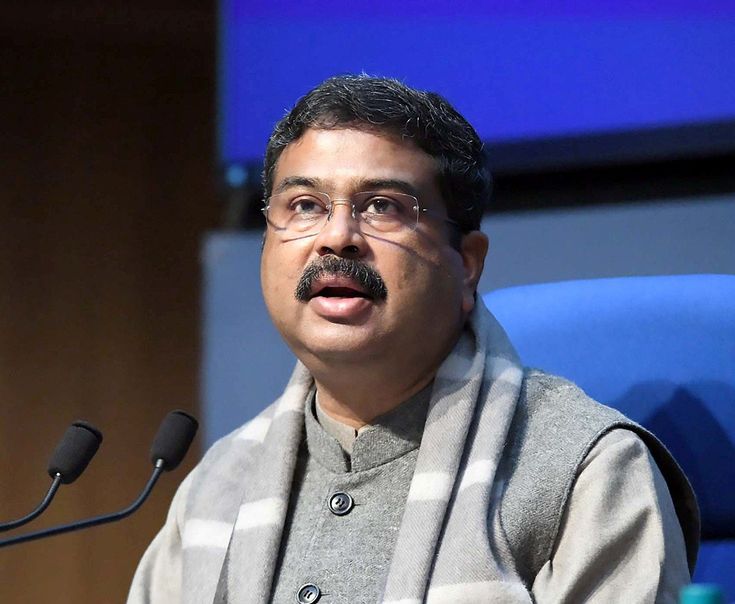
Union Minister Dharmendra Pradhan addressing party workers in Bihar, following the NDA’s decisive Assembly election victory (Photo: File)
NEW DELHI: Union minister Dharmendra Pradhan's stewardship of the NDA's Bihar campaign has emerged as one of the most consequential political stories within the BJP this year, not just for the victory it delivered but for the questions it has triggered inside the party's top ranks.
The sweep in Bihar has now sparked a new debate both in Patna and Delhi whether Pradhan's performance positions him as a contender to replace J.P. Nadda as the next national president of the BJP.
Within the party, electoral success in a politically complex state carries significant weight, and Pradhan's campaign style grounded, inclusive, organisationally sharp has placed him in the conversation in a way that cannot be dismissed as speculation.
His appointment as Bihar election in-charge last September was initially read through the familiar lens of caste arithmetic, with many assuming the party had chosen him largely because of his OBC identity. But the way he ran the campaign and the sweep that followed made it evident that his success had far less to do with symbolism and far more to do with his instinctive understanding of people, organisation and the state's political grammar.
Pradhan arrived in Bihar with a familiarity most central leaders lack. His decade of intermittent work in the state since his Rajya Sabha tenure had given him an intimate sense of its districts, factions and caste undercurrents. Unlike some of his predecessors, he did not attempt to overhaul the system or experiment for effect. He strengthened what already worked for the BJP, fixed weak points quietly and shaped a campaign rooted in political realism rather than flashy innovation.
His biggest imprint came in candidate selection, where he relied not on spreadsheets or factional lobbying but on his reading of people. Many of the candidates who eventually got tickets were not even expecting to be considered, but Pradhan sensed they were stronger fits for their constituencies than the more obvious choices. A significant number of these surprise picks went on to produce decisive victories.
He ran the campaign with an accessibility that stood out in a party where gatekeeping has increasingly become the norm. MLAs, booth workers, district leaders and even habitual critics found him easy to reach, and his channels of communication stayed open far beyond formal meetings. He also sought feedback from people outside the BJP journalists, community figures, old acquaintances and local observers he trusted to be blunt. This unfiltered flow of information gave him a far more accurate read of the ground than the curated reports that often travel upwards in the BJP's hierarchy.
This rise, however, has also exposed the quieter tensions in the party. Several senior BJP leaders had privately hoped that Bihar would produce a more modest outcome, as a sweeping mandate under Pradhan's command would inevitably enhance his political capital and complicate their own ambitions. Their concerns have only sharpened after the NDA's strong performance.
Pradhan's work in Bihar has given him a national stature that did not exist at this scale before the election, and the idea of him taking over the organisation is being discussed more seriously than some in the leadership would prefer. Whether he ultimately replaces Nadda will depend on timing and the leadership's internal calculations, but what is clear is that Bihar has altered Pradhan's trajectory.
