Bihar’s historic election outcome reveals deep voter shift, rejecting outdated caste politics
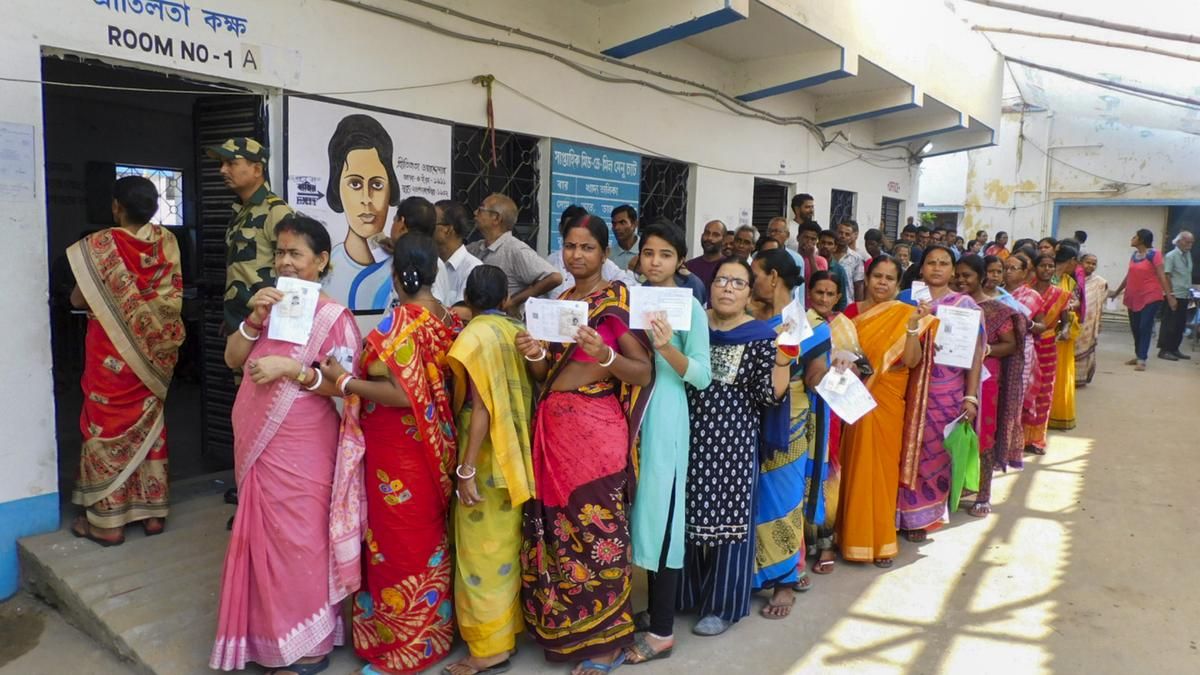
Voters in Bihar engage at polling stations during the 2025 Assembly elections, reflecting a shift from caste to development-focused priorities (Photo: File)
NEW DELHI: The proclamation of a new revolution dismantling caste-based politics in Bihar marks a defining moment in India's democratic evolution. Five decades after Loknayak Jayaprakash Narayan called for "Total Revolution" from the soil of Bihar, Prime Minister Narendra Modi has succeeded in transforming the corrupt caste anchored power structures that dominated the state's political landscape. Significantly, the defeat of Lalu Yadav's entrenched Yadav-Muslim vote bank and the collapse of the Congress assumption that Dalit-Muslim voters could be treated as captive constituents reflect a far-reaching shift with long-term national implications. The Bihar Assembly election has offered a clear signal that caste and communal politics have limits and that identity-driven mobilisations are no longer the invincible force they were once assumed to be.
The defeat of the Mahagathbandhan underlines the fact that traditional equations and inherited vote banks cannot succeed without a modern, growth-oriented agenda. Even the fortress of the communist-Maoist parties has crumbled. Naxal-affected regions have turned away from violence, signalling the collapse of an old ideological order.
A new generation of voters, aspiring for social transformation and demanding better governance, has brought Bihar to a pivotal crossroads. Political actors who align themselves with this evolving consciousness will shape the future more effectively. The electorate has accepted Modi's doctrine of "sabka saath, sabka vikas". In the combined 25 years of Modi's national leadership and 20 years of Nitish Kumar's governance in Bihar, neither leader has faced a personal corruption charge—a point that reinforces the electorate's preference for honest, development-oriented leadership over criminalised or transactional politics.
Bihar's social structure has long been portrayed as uniquely complex. As per the 2023 caste survey, Extremely Backward Classes constitute nearly 36% of the state's population. Backward Classes, Scheduled Castes, and upper castes each hold a sizeable demographic presence. Consequently, caste divisions traditionally served as the primary axis on which political strategies and vote-bank calculations were crafted.
However, recent years have seen the electorate shift toward issues beyond the old caste formula. Younger voters, particularly first-time voters, have begun prioritising development, employment, and transparent governance. The significance of this shift is profound: caste arithmetic alone is no longer sufficient to secure electoral victory.
The once formidable MY (Muslim-Yadav) vote bank, historically the core of Lalu Yadav's political dominance and amounting to roughly 30%, proved ineffective in 2025. Tejashwi Yadav failed to expand his outreach into other OBC segments. Internal conflicts within the alliance and disputes over seat-sharing further weakened the coalition. The Mahagathbandhan lacked a unified political message; it could not present a coherent narrative to voters, exposing a major strategic flaw. Leadership instability within the alliance was evident. Disagreements between the RJD and the Congress over the chief ministerial face and an absence of coordinated strategy were publicly visible. Although Tejashwi Yadav attempted a combative campaign, it failed to resonate across the broader electorate because his political messaging lacked consistency. The alliance suffered from "friendly fights" as candidates from the RJD, Congress, VIP and others contested against each other on several seats.
The organisational machinery of the Mahagathbandhan was far weaker than that of the Modi-Shah-Nitish coalition. Poor booth management, weak local-level coordination, and unresolved internal disputes dampened their electoral performance. In several instances, the Congress selected unsuitable candidates, ignoring local dynamics and angering critical voter groups.
Young voters, particularly those concerned with employment, economic prospects and development-centric agendas, increasingly recognised the limitations of caste-based politics. The BJP-JDU alliance offered a clearer agenda focused on development, governance and law-and-order, which resonated with large sections of the electorate. Conversely, the Mahagathbandhan's message was clouded: caste aligned strategies overshadowed substantive development commitments. This "new political consciousness" weakened the power of caste symbols in multiple regions.
Communal politics, often used as a polarising tool in Bihar, proved less decisive in 2025. The RJD continued to rely on its assumption of Muslim support, yet the Muslim electorate sought broader assurances, social justice, economic opportunities, and poverty alleviation. The Mahagathbandhan remained confined to identity-based appeals. Meanwhile, the BJP and RSS emphasised inclusive development. Seat-sharing friction and inadequate booth-level execution further harmed the opposition alliance. Leadership ambiguity, ideological contradictions and an inability to reform candidate selection created uncertainty among voters. In contrast, the NDA executed a focused, development-oriented campaign backed by a deeply entrenched organisational structure.
The 2025 Bihar election has therefore become a watershed moment: traditional caste-based and identity politics have become insufficient. Voters prioritised employment, youth aspirations, economic inclusion and women's empowerment more than ever before. Electorates no longer accept political appeals based solely on caste. They now demand accountability, competent governance, and sustainable development.
The Mahagathbandhan's greatest lesson is clear—merely repeating old caste equations and relying on legacy vote banks is no longer enough. The alliance must overhaul its strategy, rebuild its booth-level organisation, prioritise local candidates, adopt genuine development-centric messaging and clarify its leadership vision. It must also craft a specific agenda for young and first-time voters, instead of depending on outdated caste formulas.
Among Left parties, CPI-ML (Liberation) was the most significant ally of the opposition. After securing 12 out of 19 seats in 2020, it fielded 20 candidates this time. The communist parties collectively fielded 33 candidates but managed to win only three, indicating their virtual eradication from Bihar's political landscape. Meanwhile, Rahul Gandhi's continued leadership failures have placed the alliance's future direction in jeopardy.
