
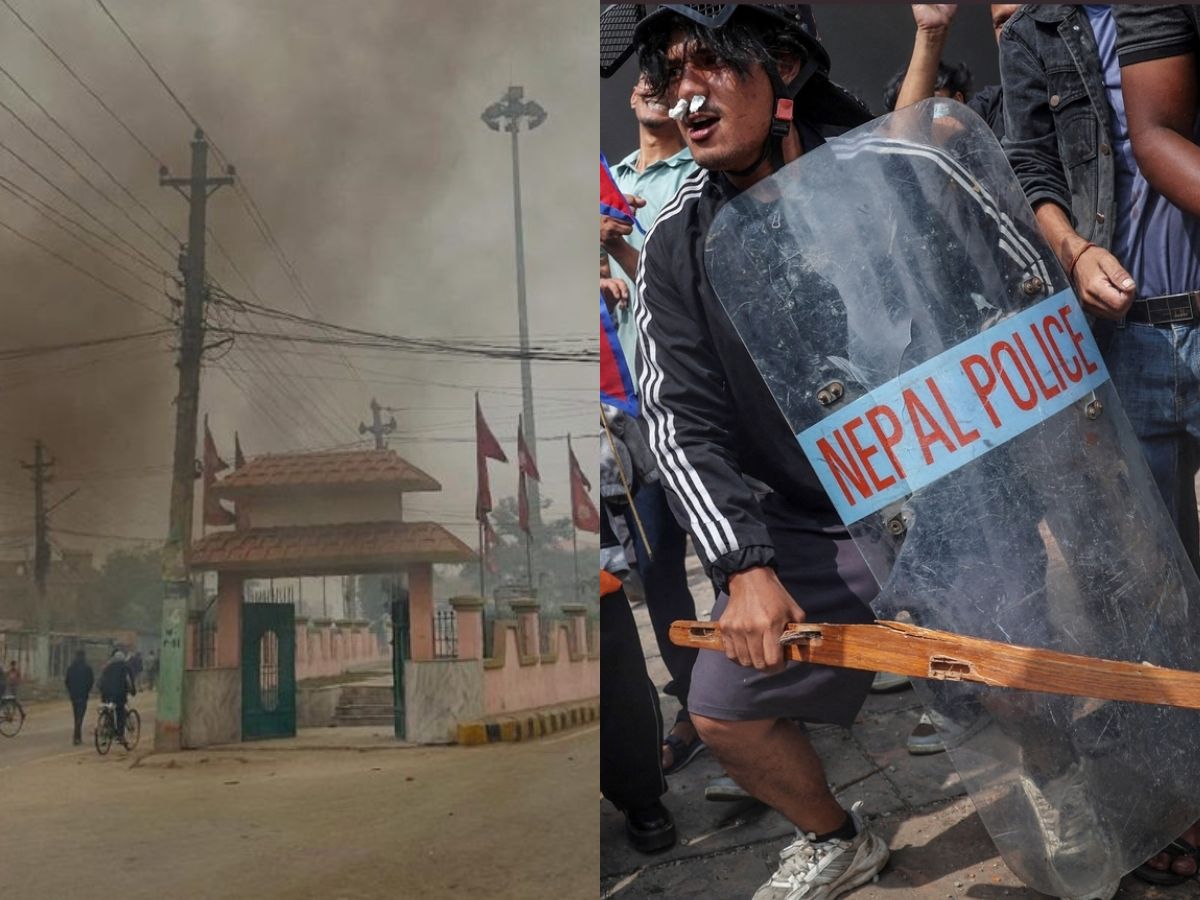
A single TikTok video was enough to push Birgunj, a busy border town in Nepal, into days of unrest and a full curfew. What began as online content shared by 2 local youths, Haider Ansari and Amanat Ansari, quickly moved beyond screens, triggering religious sensitivities, street protests, and security concerns. In Birgunj, a viral TikTok video sparked tensions that authorities struggled to contain, forcing strict measures to restore order and prevent further violence.
Birgunj Protest: What Happened in Nepal?
Tensions in Birgunj began after a TikTok video posted by two local youths made remarks that were perceived as offensive to religious groups. The video was shared and circulated widely, leading to anger and protests among residents.
What started in Kamala Municipality in Dhanusha district soon spread to Birgunj, where protesters took to the streets. Protest turned volatile as crowds burned tyres and clashed with security forces, prompting authorities to impose curfew and prohibitory orders to prevent further violence.
Birgunj Protest: How TikTok Flared Religious Tensions?
TikTok played a central role in escalating tensions in Birgunj because the video in question spread rapidly and reached a wide audience in a short time. The clip, uploaded by two youths, allegedly contained remarks that locals felt were disrespectful to religious beliefs. As the video circulated across TikTok and other social media platforms, emotions intensified, and reactions shifted from online outrage to street-level protests.
The speed and reach of TikTok meant that content was viewed, shared, and discussed far faster than authorities could respond, allowing misinformation, anger, and communal sensitivities to spiral out of control. What began as a single social media post quickly turned into a flashpoint for wider religious and communal unrest, ultimately forcing the administration to step in with strict curfew measures to control the situation.
How is TikTok Involved in the Birgunj Protest?
The unrest began when two Muslim youths, identified as Haider Ansari and Amanat Ansari, posted a video on TikTok that locals claimed contained remarks insulting to some religious communities. These comments quickly became a flashpoint for communal tension in both Dhanusha and Parsa districts.
Locals were so aggrieved by the content that they handed the youths over to the police, saying the video threatened communal harmony. Soon after, a mosque was vandalised in the Kamala area, an act that deepened anger and brought more people into the streets in protest.
The rapid spread of the video on social platforms like TikTok highlighted how fast content can inflame strong emotions and turn local disputes into wider unrest.
Birgunj Protest: What Sparked the Tension in Nepal?
The unrest began after a video posted on TikTok by two local youths reportedly contained remarks that locals felt hurt religious sentiments. The incident initially unfolded in Kamala Municipality of Dhanusha district, where locals handed the youths over to the police, claiming the content could disrupt communal harmony.
Following the social media controversy, a mosque was reportedly vandalized in the area, further inflaming tensions. Protesters then took to the streets in both Janakpur and Birgunj, burning tyres and chanting slogans. Police in Birgunj had to resort to tear gas to disperse crowds when protests turned violent, including stone-pelting and damage to police property.
Birgunj Protest: Why Was the Curfew Imposed in Birgunj?
The curfew was imposed after religious tensions flared over a TikTok video that allegedly hurt religious sentiments. The controversy began in Dhanusha district, where two youths uploaded the video. Locals objected to the content and handed the youths over to the police.
The situation worsened after a mosque was vandalised in Kamala Municipality. Protests quickly spread to Birgunj, with demonstrators from different groups taking to the streets. Tyres were burned, slogans were raised, and clashes broke out in several areas.
Despite prohibitory orders, rival protests continued, forcing police to use tear gas in some locations. With tensions rising and public safety at risk, the local administration imposed a curfew to prevent further violence and maintain law and order.




