
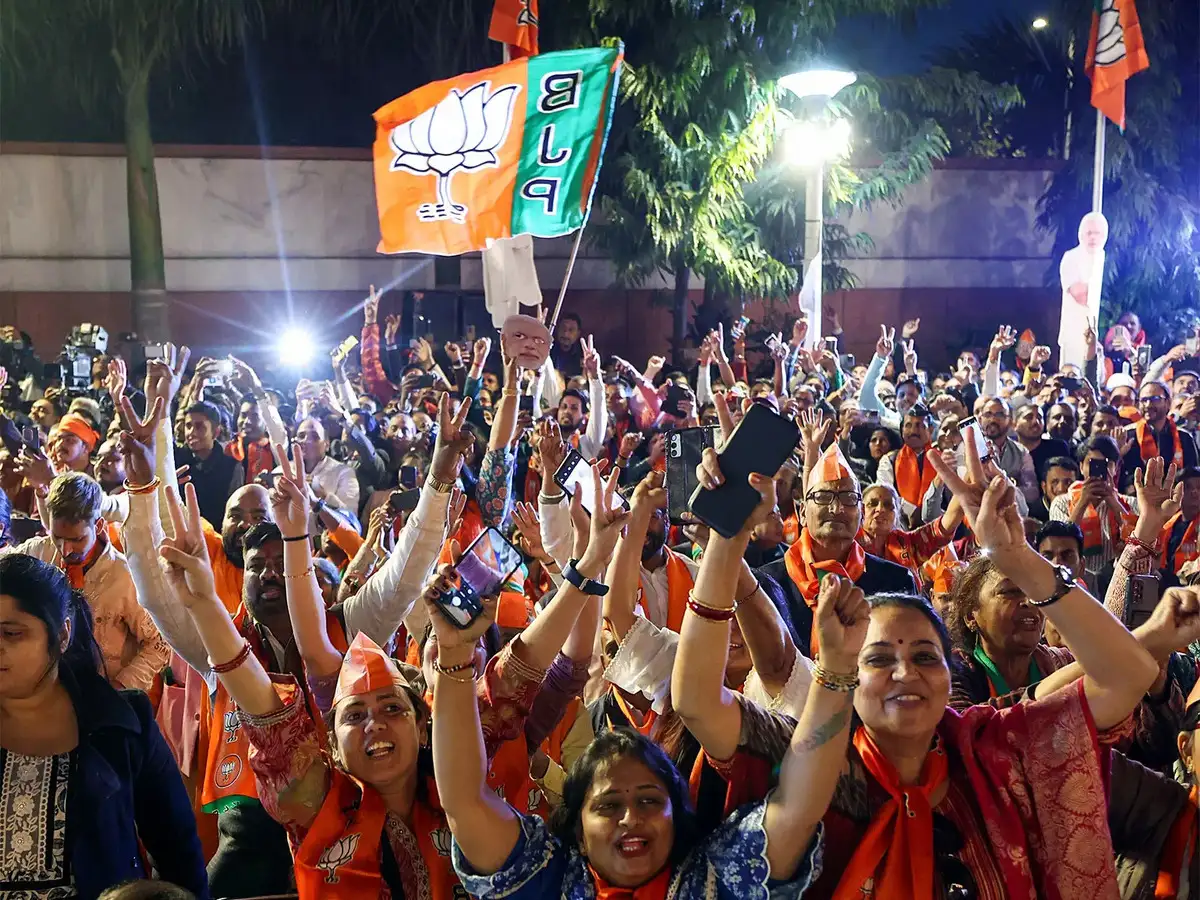
NEW DELHI: As Assam moves towards what is expected to be one of its most closely contested Assembly elections, political parties across the spectrum are recalibrating alliance strategies and refining candidate selection. The emphasis is on balancing anti-incumbency concerns with rewarding leaders who have demonstrated strong grassroots performance.
The ruling Bharatiya Janata Party (BJP) is preparing for a significant overhaul of its candidate list in the state. Party sources indicate that the leadership is considering a generational shift, similar to the approach adopted during the Bihar Assembly elections, where younger leaders were promoted to refresh the party’s image and energise its base.
With Nitin Gadkari, the youngest-ever BJP national president, heading the organisation, the party is expected to implement comparable measures in Assam. Sources told The Sunday Guardian that several sitting MLAs may be denied tickets—particularly those whose performance has not met expectations. A senior leader suggested that nearly 30 MLAs could be replaced ahead of the polls.
The selection process is reportedly guided by detailed internal performance reviews and constituency-level feedback, aimed at mitigating anti-incumbency and countering opposition criticism. The BJP is likely to release its candidate list later than other major parties as it continues to evaluate electoral data and ground reports. In addition to introducing new faces, the party may also field a few leaders who joined the saffron camp shortly before the elections, signalling both strategic expansion and organisational renewal.
On the other hand, the Congress has intensified its preparations for the Assam Assembly elections, with senior leader Priyanka Gandhi Vadra taking a direct role in shaping the party’s strategy. Her visit signals deeper involvement from the central leadership as the polls draw closer.
Priyanka Gandhi is heading the screening committee responsible for shortlisting candidates. The panel is reviewing applications, assessing winnability, and factoring in social and regional equations before finalising names. She is also meeting district and state leaders to gather feedback on local issues and organisational strength.
Party sources say the focus is on selecting candidates with strong grassroots appeal and clean public images, supported by data-driven assessments and inputs from party wings.
Her presence is viewed as an effort to boost cadre morale, ensure unity and sharpen the party’s counter-narrative against the BJP. The Congress is also working to expand outreach among youth, women, tea garden workers and minority communities, while improving coordination between the state unit and central leadership ahead of the high-stakes contest. Meanwhile, the Election Commission of India is expected to announce the schedule for the Assam Assembly elections soon. Earlier this week, the Commission’s full bench met representatives of recognised political parties in Guwahati to review preparedness and gather suggestions. During the consultations, most parties recommended that the elections be conducted in a single phase or, at most, two phases. They also urged the Commission to ensure that polling concludes before Bohag Bihu, the most significant festival in Assam.




