
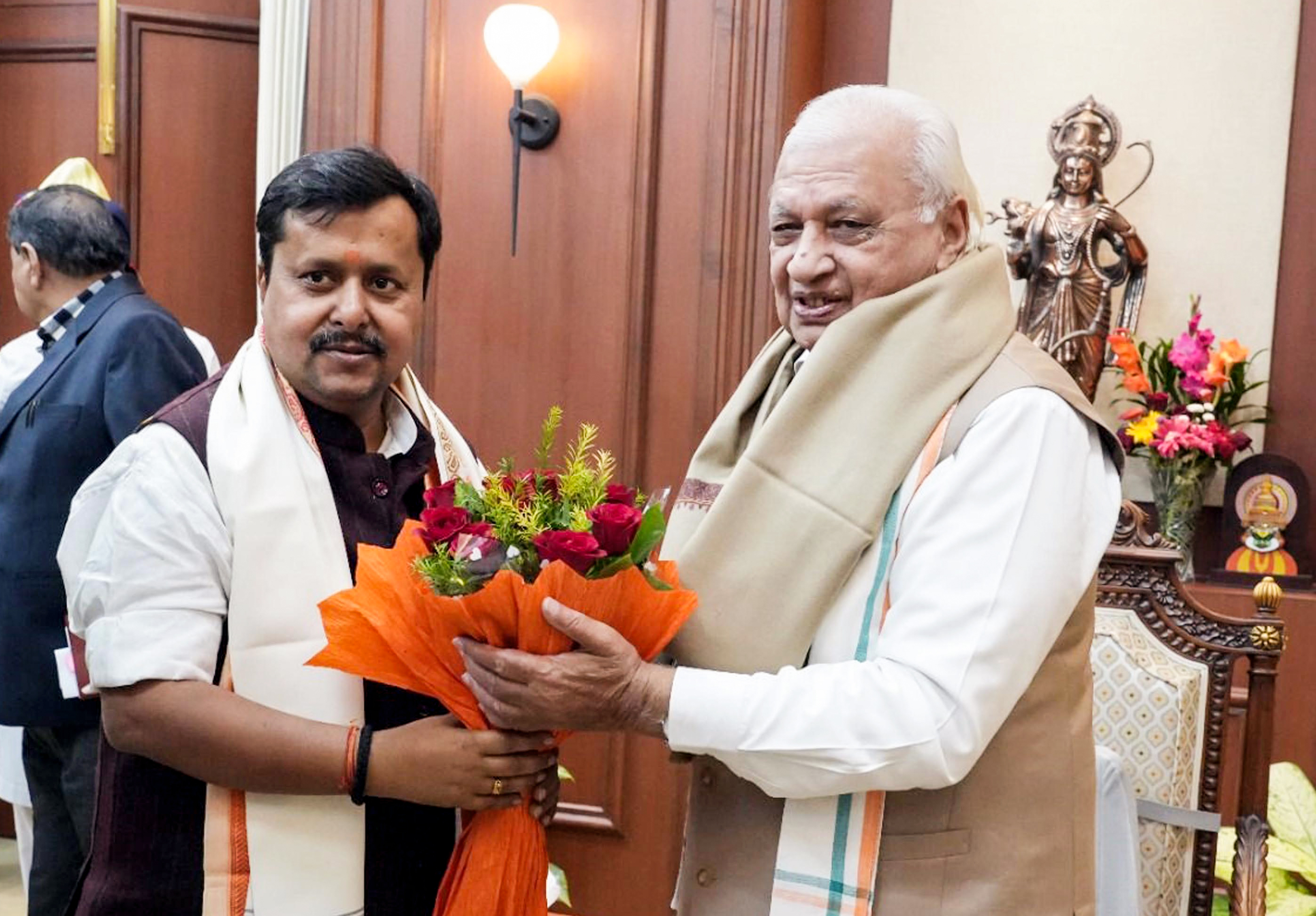
NEW DELHI: The Bharatiya Janata Party is preparing for a far-reaching organisational overhaul under its national working president Nitin Nabin, with a new team of office-bearers expected to take shape after he formally assumes charge as full-time party president from JP Nadda next month. Nabin, appointed working president by the party’s parliamentary board on 14 December, is expected to become full-time president in January 2026, with formal endorsement at the party’s National Council meeting in April, following the same transition model adopted during Nadda’s elevation in 2019.
A large-scale reshuffle of the central organisation is expected either ahead of the West Bengal Assembly elections or, more likely, after the polls. The new team is expected to remain in place through the 2029 Lok Sabha elections, making the exercise central to the BJP’s medium-term political strategy. As The Sunday Guardian had earlier reported, Nabin’s elevation itself was not the result of recommendation or lobbying, but followed a structured and systematic evaluation of organisational performance, political utility and long-term suitability.
Party insiders said the same framework will guide the selection of his team. Prospective office-bearers will be assessed on demonstrable utility shown in the past as well as expected performance in future electoral and organisational roles. The emphasis will be on operational effectiveness, execution capability and political adaptability rather than visibility or factional weight. “Big” or established names, sources said, will not find a place in the structure by default and will be subject to the same performance-based scrutiny as others.
A key focus of the reshuffle will be generational transition. At 45, Nabin is among the youngest leaders to occupy the party’s top organisational position, signalling a shift away from the long-standing dominance of much older leaders at the central level. The new team is expected to draw heavily from leaders in the 35 to 50 age bracket, many of whom are being positioned as the party’s organisational backbone for the next electoral cycle.
Nabin’s extensive experience in the Bharatiya Janata Yuva Morcha is seen as central to this approach. During his years in the youth wing, he worked closely with leaders across states, giving him first-hand exposure to their working styles, strengths and limitations. This, sources said, has given him a granular understanding of mid-career leaders who are now being evaluated for national-level responsibilities. Several leaders in this cohort are closely tracking the process, hoping to secure roles in the new organisational setup.
While Prime Minister Narendra Modi and Home Minister Amit Shah will continue to provide strategic direction and ideological guidance, party sources emphasised that the final composition of the team will be Nabin’s call. The approach reflects the BJP’s preference at this stage for disciplined, results-oriented organisers rather than high-profile political figures. It is also expected that Nabin will become a part of the Rajya Sabha next year. As the BJP looks beyond immediate electoral contests to the 2029 Lok Sabha elections, the team built by Nitin Nabin will play a decisive role in shaping the party’s organisational strength and political direction over the coming years.




