Amit Shah backs seasoned leaders to mend divisions and strengthen BJP’s West Bengal election push.
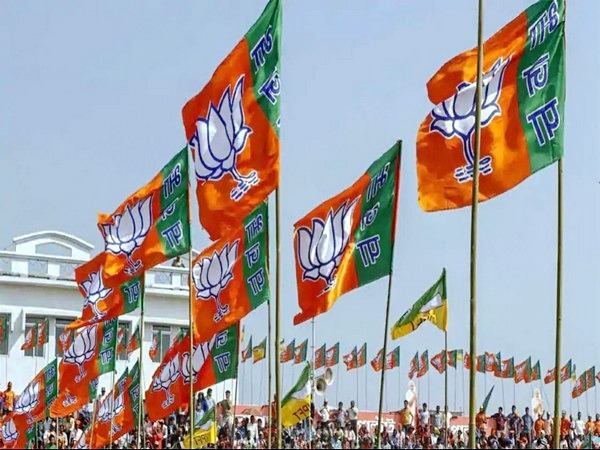
BJP revives West Bengal strategy with veteran leaders at the helm, aiming to heal divisions and strengthen the party before the 2026 polls (Photo: File)
NEW DELHI: The Bharatiya Janata Party (BJP) is signaling a return to its organisational fundamentals in West Bengal by placing renewed faith in veteran leaders with proven grassroots reach and organisational expertise as it gears up for the decisive 2026 Assembly elections. The central leadership’s renewed reliance on seasoned Bengal leaders—including state BJP president Shamik Bhattacharya, former state president Dilip Ghosh, and Rahul Sinha—marks a strategic recalibration aimed at repairing and consolidating the party’s divided state unit.
Union Home Minister Amit Shah, along with other senior organisational functionaries, has identified West Bengal as a key political battleground ahead of the 2026 polls. Securing victory in the state has assumed heightened importance for the BJP, which is keen to avoid a fourth successive Assembly defeat at the hands of the Mamata Banerjee-led Trinamool Congress (TMC).
The strategic significance accorded to Bengal is underscored by the unusually high number of visits by top leaders in recent weeks. Over the past month, Prime Minister Narendra Modi, Home Minister Amit Shah, several Union Ministers, and RSS chief Mohan Bhagwat have all toured the state to formulate a comprehensive roadmap for the forthcoming Assembly elections, expected to take place in mid May–June, following the Assam Assembly polls.
This time, Amit Shah has assumed direct oversight of the party’s Bengal operations. Earlier this week, the Home Minister concluded an extensive tour of the state, during which he launched on-ground preparations for the electoral campaign. Shah met senior party leaders and issued clear instructions to intensify grassroots engagement and rebuild the party’s connect with the people of Bengal.
In a significant development, Shah also held meetings with former BJP vice-president and ex-state president Dilip Ghosh, who had been marginalised for nearly eight months. Under the revised strategy, Ghosh has been entrusted with a key role in restoring organisational unity, drawing on his long-standing experience in managing party structures and synchronising organisational work with electoral objectives.
Once the undisputed face of the BJP in West Bengal, Ghosh had maintained a subdued profile amid ongoing factionalism within the state unit. His political influence diminished after he was removed as state party chief in 2021, following the BJP’s unsuccessful bid to unseat the TMC. Despite this, Ghosh continues to be regarded as the most effective and successful state president the BJP has had in Bengal.
A veteran RSS functionary, Ghosh was handpicked by the BJP’s central leadership to head the Bengal unit in 2015. During his tenure, the party witnessed a dramatic expansion, rising from a marginal presence with just three Assembly seats to winning more than 70 seats, and achieving a landmark victory by securing 18 seats in the 2019 Lok Sabha elections.
Sources within the BJP suggest that the party is now in the process of assembling a core leadership group that will include Dilip Ghosh, state BJP chief Shamik Bhattacharya, former state presidents Sukanta Majumdar, and Leader of the Opposition in the Assembly, Suvendu Adhikari. This group is expected to lead both the organisational restructuring and the electoral campaign in the run-up to the Assembly polls.
According to party insiders, Amit Shah has directed Ghosh to work in close coordination with Shamik Bhattacharya and play a pivotal role in bringing together all factions within the state unit ahead of the elections. A source told The Sunday Guardian that the lack of influential senior and mass leaders at the organisational level prompted the central leadership to bring Ghosh back into an active role, given his ability to maintain organisational balance while mobilising the party effectively on the ground.
Political observers who closely monitor Bengal’s political dynamics view the BJP’s latest move as a calculated effort to heal internal rifts within the state unit. Following Dilip Ghosh’s exit from the state president’s post, the party reportedly fractured into multiple power centres, resulting in organisational instability. This disunity is widely seen as a major factor behind the BJP’s disappointing performance in the 2024 Lok Sabha elections, when its tally dropped to 12 seats from 18 in 2019.
He added, as the BJP fine-tunes its strategy in West Bengal and leans once again on leaders who were instrumental in building the party from scratch in the state, the months ahead are likely to be decisive in determining whether this renewed organisational focus can convert into tangible electoral gains in one of the party’s toughest political terrains.
