
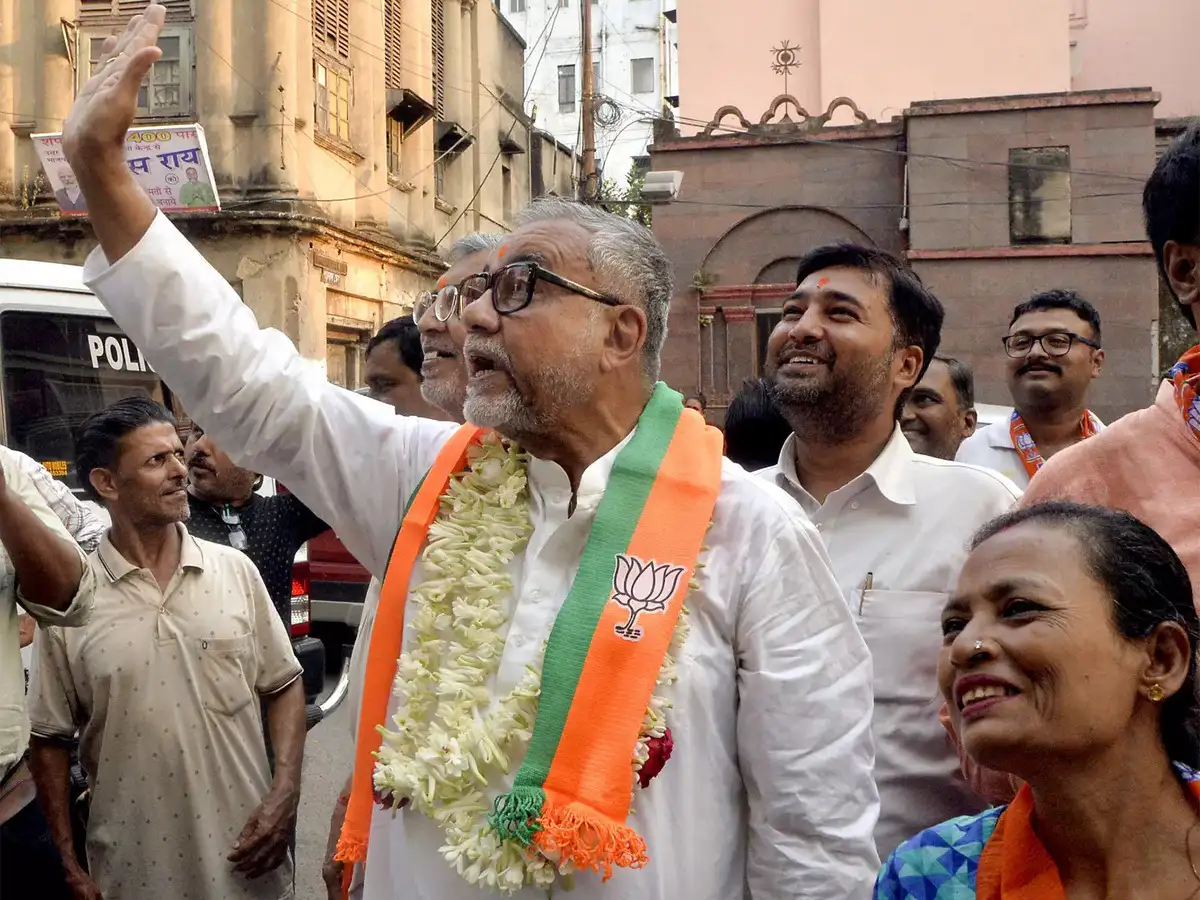
NEW DELHI: The West Bengal unit of the Bharatiya Janata Party (BJP) has moved away from traditional podium-centric polities and launched an intensive grassroots campaign ahead of the forthcoming Assembly elections, drawing from the booth-level and mohalla-level mobilisation model long associated with the ruling All India Trinamool Congress (TMC). The strategy reflects the BJP’s attempt to fortify its organisational structure in a state where the TMC maintains a strong ground network.
Party sources said BJP leaders and MLAs have been directed to intensify voter engagement at the booth and mohalla levels, with each legislator tasked to cover at least five booths daily and interact directly with residents. The booth coordination drive is scheduled to conclude by February 25. Leaders have also been instructed to maintain contact with beneficiaries of Central government schemes and strengthen links with grassroots workers.
Kanthi MP Soumendu Adhikari told The Sunday Guardian that with the Madhyamik examinations underway and Higher Secondary exams approaching, the party would prioritise door-to-door outreach and direct interactions. Given restrictions on the use of loudspeakers during the examination period, he said the “silent phase” should be utilised for planning and consolidating booth-level engagement.
According to party insiders, BJP MPs have also been advised to highlight what they describe as shortcomings of the Government of West Bengal at the grassroots. They have been encouraged to organise zone-wise campaigns targeting the administration led by Chief Minister Mamata Banerjee, focusing on local issues. Feedback from MPs will be reviewed regularly in the run-up to the elections.
A key strategy meeting was recently held at the Delhi residence of Union Minister and BJP MP Sukanta Majumdar. The session was attended by BJP MPs from both Houses of Parliament representing West Bengal, along with party national president Nitin Nabin. Leaders were urged to move beyond speech-centric politics and prioritise direct voter contact. They were also asked to highlight Central welfare schemes that the BJP claims have not been effectively implemented in the state.
On the ground, BJP MPs have reiterated allegations that the Mamata Banerjee government has denied citizens benefits under several centrally sponsored schemes. They argue that tribal and minority communities have been disproportionately affected and contend that West Bengal has yet to implement the Ayushman Bharat-Pradhan Mantri Jan Arogya Yojana.
MP Adhikari further alleged that farmers have suffered financial losses due to the state’s decision not to adopt initiatives such as the Pradhan Mantri Fasal Bima Yojana (PMFBY). He also claimed that several railway projects remain stalled because of delays in land allocation by the state government. Additionally, he asserted that state-run schemes such as “Banglar Bari” and “Swasthya Sathi” mirror Central programmes while being presented as independent initiatives.
Political observers view the BJP’s renewed focus on grassroots mobilisation as a critical juncture for the party in West Bengal. After winning 77 of 294 seats in the 2021 Assembly elections and emerging as the principal opposition, the BJP now faces the challenge of translating local grievances—particularly over unemployment and welfare delivery—into measurable electoral gains.
As part of its preparations, the party has invited public suggestions for its forthcoming “Sankalpa Patra” (manifesto). Inputs gathered from booth-level interaction are expected to be compiled by the end of the month, as the BJP seeks to position itself as a credible alternative in a state long dominated by the TMC.




