In an effort to counter anti-incumbency, the party is considering withholding tickets from several sitting MLAs along with a minister whose performance in the previous term was rated poorly.
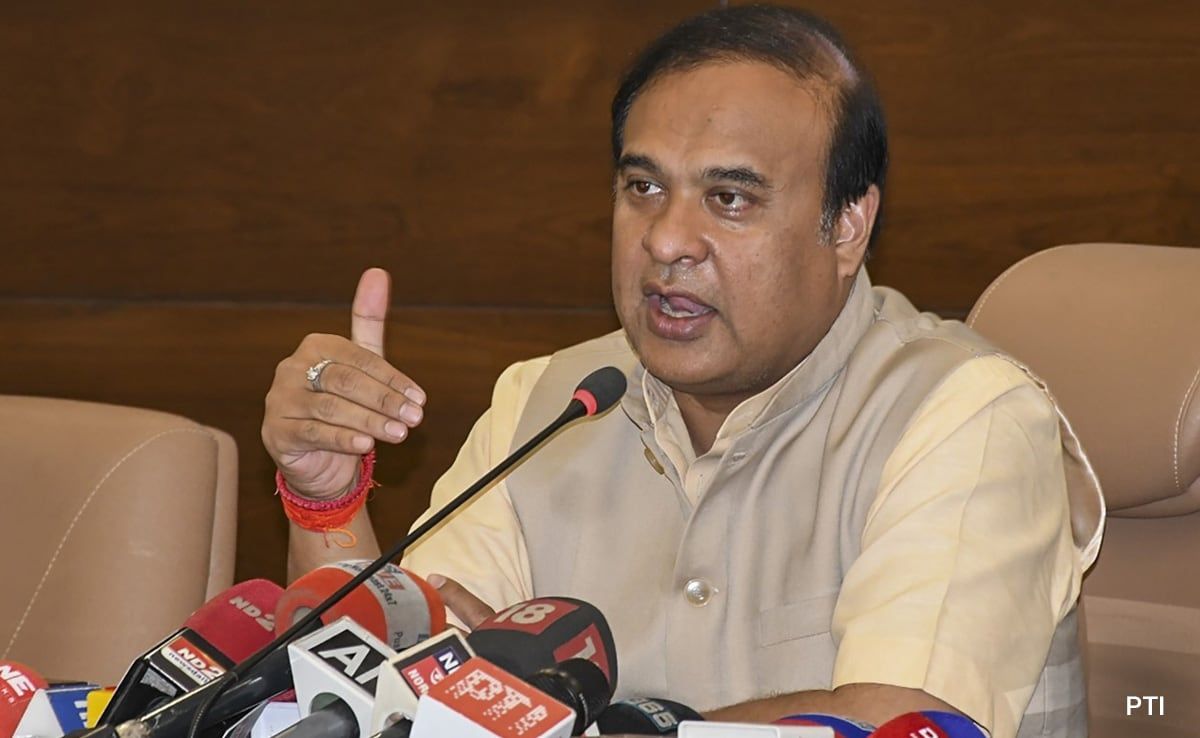
Chief Minister Himanta Biswa Sarma leads BJP's Assam election strategy, focusing on youth, women candidates, and grassroots mobilisation ahead of 2026 polls (Photo: File)
NEW DELHI: Following its sweeping victory in the Bihar Assembly elections, the Bharatiya Janata Party (BJP) has shifted its focus to Assam, where elections are slated for mid-March to April 2026. Under Chief Minister Himanta Biswa Sarma's leadership, the party has begun implementing an early, high-intensity election blueprint centred on strengthening its organisation, promoting young and female candidates, and tackling demographic challenges in key regions.
Even with three to four months left before the polls, the BJP has already entered full campaign mode as it aims for a historic third consecutive term. The BJP-led NDA, which currently holds 84 seats, has set its sights on crossing the 100-seat mark in the upcoming Assembly elections.
Together with its allies, the BJP plans to campaign on major development and welfare-driven themes ranging from expanding healthcare infrastructure with AIIMS and 18 medical colleges, recruiting over 50,000 teachers, and constructing 10,000 schools, to providing nutritional support for 2.7 million families through the Orunodoi scheme. The party will also highlight work on flood control, anti-drug initiatives, the semiconductor plant, and youth-oriented startup and digital programs. Issues of identity and security will also remain prominent in the campaign narrative.
In an effort to counter anti-incumbency, the party is considering withholding tickets from several sitting MLAs along with a minister—whose performance in the previous term was rated poorly. Many of these candidates are expected to be replaced by younger leaders and women, especially in the 10-15 newly carved constituencies. This approach mirrors the candidate selection pattern seen during the Bodoland Territorial Council polls in 2005.
The BJP-NDA has already conducted multiple internal surveys pointing to areas vulnerable to anti-incumbency. Senior leaders including Union Home Minister Amit Shah and BJP national president J.P. Nadda have reviewed these findings and firmed up crucial strategic decisions for the upcoming elections.
To enhance grassroots mobilisation, the party has been working in close coordination with booth-level workers through a seven-phase organisational plan launched in June 2025. The establishment of an 18-member core committee led by B.L. Santosh in Guwahati has further bolstered rural outreach and on-ground coordination.
Additionally, in November 2025, Chief Minister Sarma set up the BJP's State Election Management Committee, which he personally heads. The committee is overseeing booth level preparations, survey analysis, and campaign execution. Sarma is expected to foreground his administration's achievements such as assistance to 2.7 million women via Orunodoi, the creation of 18 medical colleges, flood-control initiatives, and the semiconductor manufacturing project—as central pillars of the campaign.
The BJP is also poised to foreground the "Tribal vs. Muslim" narrative. In November 2025, Sarma stated, "Miyan votes unitedly, our votes are scattered. Unite and apply pressure". The party is likely to intensify its messaging on illegal immigration, NRC, and the Citizenship Amendment Act (CAA).
Constituencies like Samaguri and Karimganj, which are Muslim-majority areas, are high on the BJP's target list, especially after securing 65% of minority votes in recent by-elections. After the 2022 delimitation exercise, Assam's 126 Assembly seats saw significant demographic changes. The NDA now holds a distinct advantage in 103 seats dominated by Hindu Assamese voters. The number of Muslim-majority seats has reduced from 30 to 23 benefiting the BJP-NDA but these 23 seats remain challenging due to strong opposition presence. The party has also pinpointed six weak constituencies where strengthening efforts are underway.
A political analyst told The Sunday Guardian that despite the NDA's confidence, it must address multiple challenges, including the 23 Muslim-majority seats, anti-incumbency pockets, and ally related pressure in Bodoland. A potential consolidation among Congress, AIUDF and Raijor Dal, along with the training of 29,000 Booth-Level Agents and ongoing voter list scrutiny, could complicate the NDA's prospects. The analyst added that Himanta Biswa Sarma remains the BJP's chief strategist and leading face for 2026.
