
SRINAGAR: In an unexpected political twist, the Bharatiya Janata Party (BJP) secured a shock victory in Jammu and Kashmir’s Rajya Sabha elections, capitalizing on cross-voting and disputed ballots that disrupted the opposition’s calculations. The result has sent ripples through the Union Territory’s political circles, exposing cracks within the anti-BJP alliance and prompting official scrutiny into alleged procedural lapses.
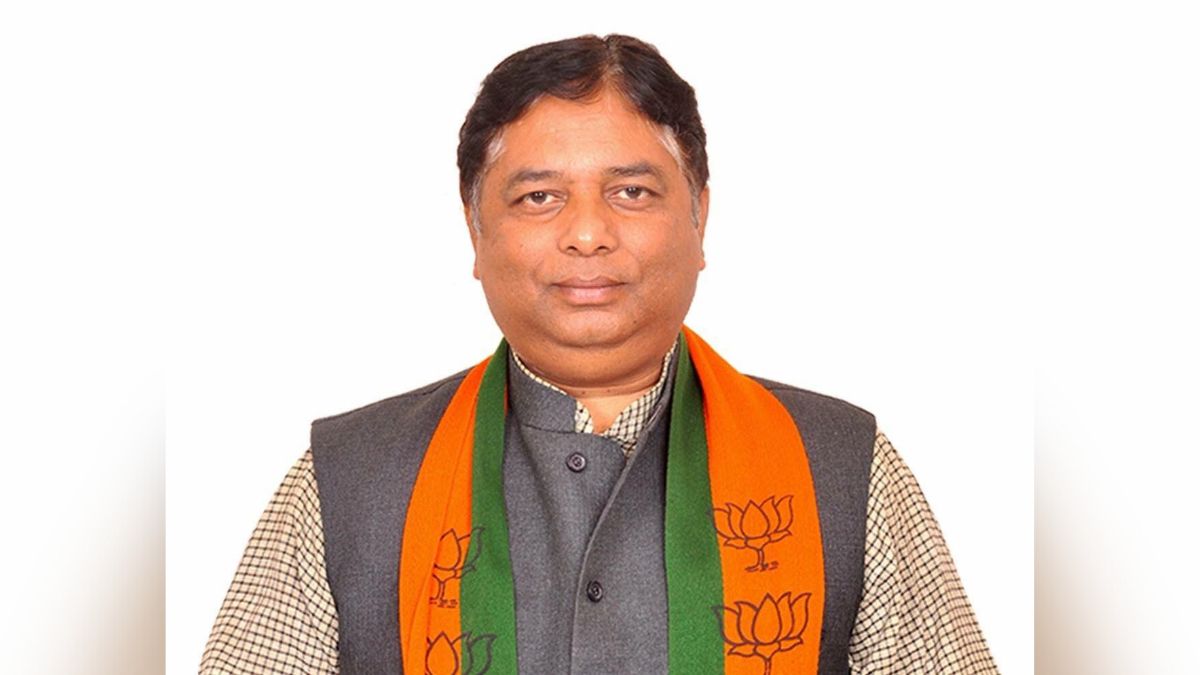
BJP’s Sat Pal Sharma clinched a Rajya Sabha seat with 32 votes, surpassing the party’s strength in the Legislative Assembly by four votes a clear indication that legislators from outside the BJP fold switched allegiances during the secret ballot.
The National Conference (NC)-led alliance, which included the Congress, Peoples Democratic Party (PDP), CPI(M), and several independents, had expected to claim both of the remaining seats comfortably. However, their nominee Imran Nabi Dar managed to secure only 21 votes, seven fewer than the alliance’s projected count.
Preliminary investigations point to deliberate ballot cancellations and potential manipulation. Officials confirmed that at least two votes were intentionally voided, and one was declared invalid due to “extra markings.” These anomalies are believed to have altered the outcome in BJP’s favor.
Sources within the alliance claim the PDP’s failure to appoint polling agents for several of its MLAs opened the door to irregularities. Congress MLA Nizamuddin Bhat, who acted as the party’s chief polling agent, admitted he had to “verify his own ballot,” a move now under procedural review.
The setback has sparked intense infighting within the opposition bloc. NC leaders are demanding internal probes and disciplinary action against suspected defectors. “This betrayal will not go unpunished,” a senior NC functionary said, hinting at suspensions once identities of cross-voters are verified.
The PDP, meanwhile, faces criticism for its organizational lapses and inconsistent voting behavior. Party insiders concede that confusion among MLAs over candidate preferences may have contributed to the BJP’s surprise gain.
For the BJP, which has long struggled to break through Kashmir’s political barriers, the victory carries deep symbolic weight. Analysts say the party’s performance signals growing inroads into regional politics, particularly in a post-reorganization Jammu and Kashmir.
Despite the turmoil, Choudhary Muhammad Ramzan, Sajad Kichloo, and Gurwinder Singh Oberoi (Shammi Oberoi) of the NC were elected alongside BJP’s Sat Pal Sharma. The contest, marked by controversy and intrigue, underscored the shifting dynamics of the region’s political landscape.




