Budget Session sees unprecedented disruptions as PM and LoP absent; BJP and Congress claim political gains amid protests and alliance calculations.
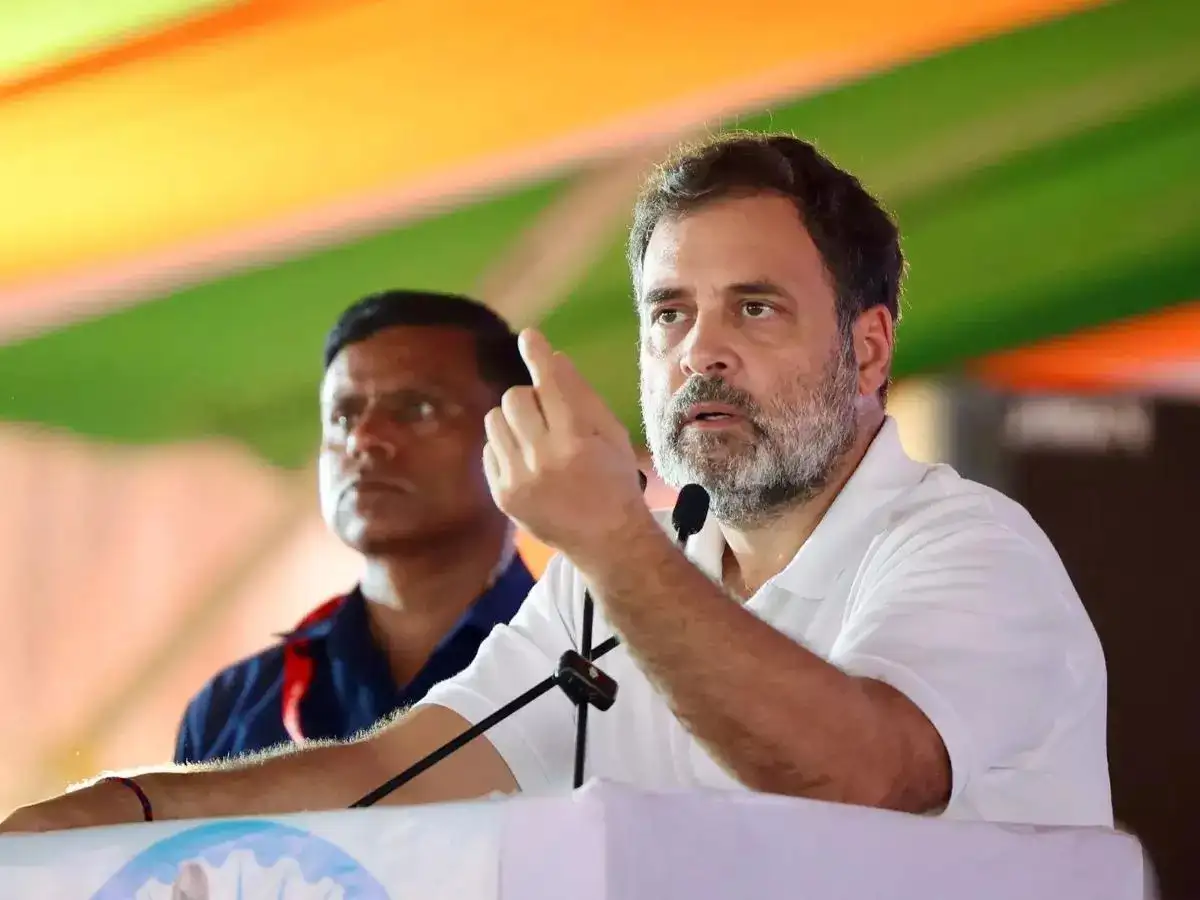
Rahul Gandhi leads opposition protests in Parliament while PM Modi delivers a Rajya Sabha speech amid session disruptions and heightened political tension (Photo: X)
New Delhi: The past week of the Budget Session witnessed several unprecedented events. For the first time in the history of Parliament, neither the Prime Minister nor the Leader of the Opposition could speak on the motion of thanks to the President’s address. On June 10, 2004, the motion of thanks was passed without the Prime Minister’s speech, but at that time the BJP had prevented the PM from speaking. However, this was the first instance when both the principal leaders of the House were unable to speak.
It was also the first time that, as the House was about to begin its proceedings, women MPs from the opposition went near the Prime Minister’s seat and began protesting and chanting slogans. The House proceedings were adjourned until the next day without the Prime Minister even entering the House. The reason given by the Speaker the following day also went down in history. The Speaker informed the House that he had received information that some members might reach the Prime Minister’s seat and, therefore, had advised the PM not to come to the House. All this happened for the first time in the history of Parliament.
There was widespread speculation about the Prime Minister’s absence from the Lok Sabha. Some experts believe this was part of the BJP’s strategy, because the very next day Prime Minister Narendra Modi began his speech in the Rajya Sabha amid uproar. The opposition, however, later staged a walkout to register its protest.
The strategy came into sharper focus as the Prime Minister attacked the Congress party in the Rajya Sabha, accusing it of being anti-Constitution, anti-women and anti-tribal. After these developments, all political parties began calculating who had gained and who had lost. The opposition’s strategy appeared to be to demonstrate unity and strength by disrupting Lok Sabha proceedings, a goal in which it was largely successful.
Under the leadership of opposition leader Rahul Gandhi, leaders of all major parties supported the Congress’s stance. Rahul Gandhi sought to raise questions about the China border in Parliament, citing General Naravane’s unpublished book. The government argued that a book which had not yet been published could not be discussed in the House. This led to a confrontation, during which some young MPs approached the Speaker’s chair and threw papers at him. As a result, eight MPs were suspended for the remainder of the Budget Session.
The Congress and the opposition continued to attract headlines by staging protests outside Parliament. Rahul Gandhi remained in focus throughout the week. However, during this period, Rahul Gandhi referred to Union Minister of State Ravneet Bittu as a traitor, providing the BJP with an opportunity to counter-attack. It was then the turn of the BJP and the government.
Keeping the Punjab elections in mind, the BJP made every effort to portray the Congress as anti-Sikh. Prime Minister Modi, in his 97-minute speech in the Rajya Sabha, launched a scathing attack on the Congress, not only branding it anti-Sikh but also linking his remarks to poll-bound states. In effect, the BJP left no stone unturned in settling scores, retaliating in the Rajya Sabha for the week-long disruptions in the Lok Sabha.
Both the opposition and the ruling party appeared satisfied that they had gained something. However, the real question now is whether the opposition’s unity will hold in the coming week. So far, indications suggest that the opposition will allow the House to function. This is because the parties that stood with the Congress now want to raise issues related to their respective states in Parliament. They have also conveyed to the Congress that there is little point in pursuing the issue of General Naravane’s book further.
Discussion on the Budget is likely to begin in the Lok Sabha from Monday. The Congress and the opposition may raise questions about the deals signed with the US during the Budget discussions. Agriculture Minister Shivraj Singh Chouhan has said that no agreement has been reached on agricultural matters, and the opposition may seek to corner the government on how such a claim can be made when the terms of the agreement have not been made public. Questions are also being raised over whether India has opened its doors to the US in the agricultural sector.
The upcoming session is expected to be equally eventful. Maintaining the unity of the INDIA alliance will be a challenge for the Congress, as elections in five states are due to be announced during the Budget Session. In Kerala, Puducherry and West Bengal, the Congress will be in direct competition with its INDIA alliance partners. In Assam, it will face the BJP, while in Tamil Nadu it will contest in alliance with the DMK.
The Trinamool Congress and the Left parties are currently supporting the Congress in Parliament, but they will confront the Congress on the streets. The Budget Session will thus play a key role in shaping the direction of future politics in the country. The Samajwadi Party is openly backing the Congress for now, but what happens next remains uncertain, with elections in Uttar Pradesh due in 11 months. The Congress’s performance in these five states will determine the future of these alliances.
