State government served a notice to former CM Rabri Devi, directing her to vacate the 10 Circular Road residence.
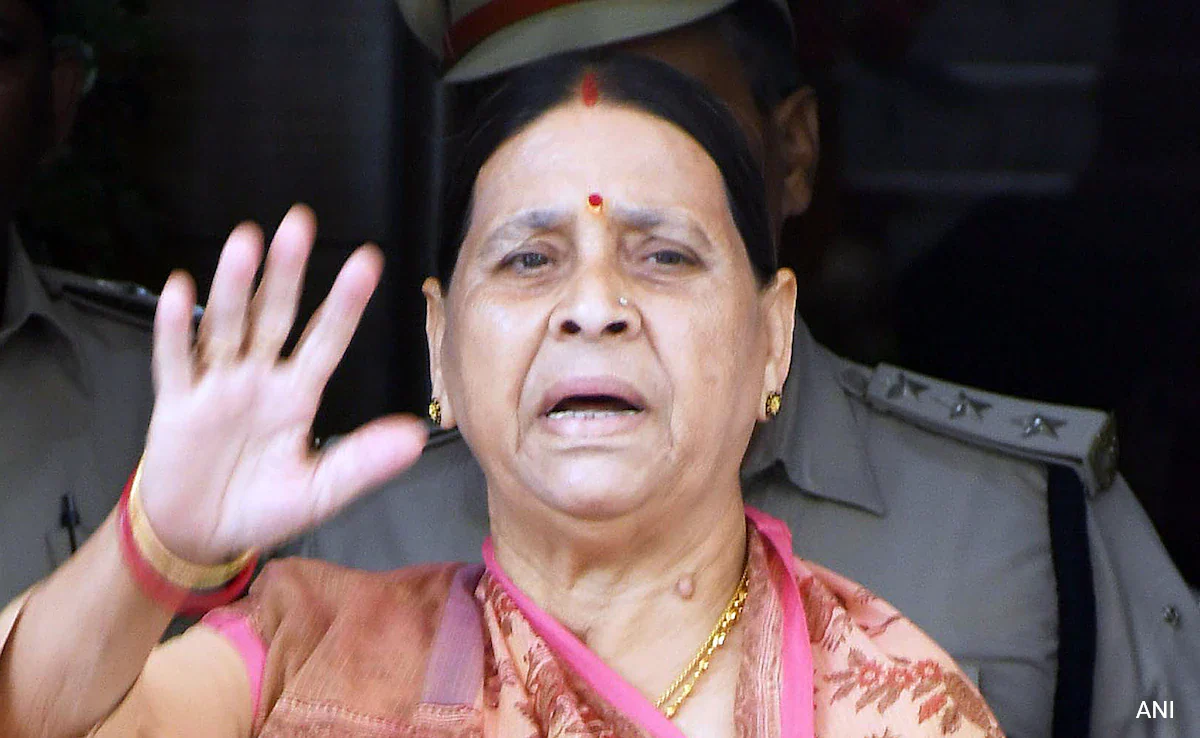
Rabri Devi’s 10 Circular Road residence becomes the center of a fierce political dispute between the NDA and the RJD (Photo: File)
NEW DELHI: A government bungalow has suddenly emerged as the newest flash point in Bihar's political arena, heightening friction between the newly sworn-in NDA government and the opposition Rashtriya Janata Dal (RJD). The dispute began after the state government served a notice to former Chief Minister Rabri Devi, directing her to vacate the 10 Circular Road residence and shift to the newly allotted bungalow at 39 Hardinge Road. The RJD has strongly objected to the decision, accusing the government of abusing its authority barely days after assuming office. With both camps refusing to yield ground, the matter appears headed toward a courtroom showdown, where a final ruling may decide whether Rabri Devi must leave the housing complex.
The controversy comes amid a larger political rupture between the ruling alliance and the RJD, surfacing almost immediately after the new government was formed. Although Chief Minister Nitish Kumar has long been associated with consensus-based politics, the dynamics this time have shifted sharply. With Nitish Kumar returning to power for the 10th time in partnership with the BJP-led NDA, the Bharatiya Janata Party has emerged considerably stronger in the state's power structure. In a political landscape where the BJP and RJD are historic adversaries, the realignment has only widened the gulf. As the BJP's clout expands—marked by Samrat Chaudhury's appointment as Home Minister—the RJD, now reduced to 25 MLAs (35 including allies), finds itself increasingly marginalised. Analysts suggest the BJP is strategically positioned to further curtail the RJD's influence, limiting its ability to pose any substantial challenge going forward.
For the RJD, the conflict extends beyond the reassignment of a government residence. Party leaders emphasise that 10 Circular Road has been a symbolic nerve centre for the organisation—a site from where many key political decisions have been shaped over the years. RJD's Bihar State President Mangani Lal Mandal has resolutely declared that Rabri Devi will not vacate the property under any condition. "Whatever happens, the bungalow will not be vacated," he said, accusing the government of targeting Lalu Prasad Yadav's family out of political hostility. He insisted that the move is rooted in vendetta politics rather than any genuine administrative necessity.
The NDA firmly rejects these claims. JDU national spokesperson Rajeev Ranjan told The Sunday Guardian that the administration is fully authorized to re-allocate official houses, including those occupied by former chief ministers. He cited the 2019 Patna High Court judgment issued after Tejashwi Prasad Yadav challenged a similar order in 2017. The court had clarified that former chief ministers or ex-ministers do not have a legal right to government accommodations. "How long will Lalu Prasad's family continue demanding government homes for themselves?" he asked, noting that Rabri Devi's current residence could be reassigned to a senior minister or even the Speaker.
Political pundits point out that this is not the first time such a dispute has surfaced. In 2005, when Nitish Kumar first assumed the chief ministership, he waited for Rabri Devi to vacate 1 Anne Marg, the official CM residence a move the RJD also resisted at the time. Many believe the present conflict reflects an old pattern, reignited under new political circumstances.
A political analyst closely observing Bihar's evolving political culture likened the current atmosphere to the volatile political phases once seen in Tamil Nadu. "Bihar politics is slowly becoming Tamil Nadu-ised, or it might reach that point soon," he told The Sunday Guardian. Recalling the eras of Jayalalithaa and Karunanidhi, he described how each change of power often triggered swift retaliatory actions, including raids and arrests. He further argued that the decline in political civility in Bihar has been visible for years, citing abuses directed at Prime Minister Narendra Modi's mother, derogatory comments about Nitish Kumar's health, and the opposition's open endorsement of such behaviour.
According to him, such trends have eroded whatever political decorum remained in the state. "After all this, expecting purity in Bihar politics seems unrealistic. More is yet to unfold just wait and watch. There isn't much else we can do," he remarked, pointing to a deepening cycle of hostility. He added, as the standoff grows, the dispute over the bungalow at 10 Circular Road has transcended beyond a matter of residence allotment. It has become a potent symbol of the escalating power struggle between the ruling NDA and the RJD. Whether this confrontation remains a symbolic clash or escalates into a larger political storm will become clearer in the days ahead.
