NEW DELHI: The Union Cabinet on Tuesday approved a range of major infrastructure and connectivity initiatives, including the extension of the Jal Jeevan Mission, the declaration of Madurai Airport as an international airport, and several new railway and highway projects aimed at improving connectivity and driving economic growth across different parts of the country.
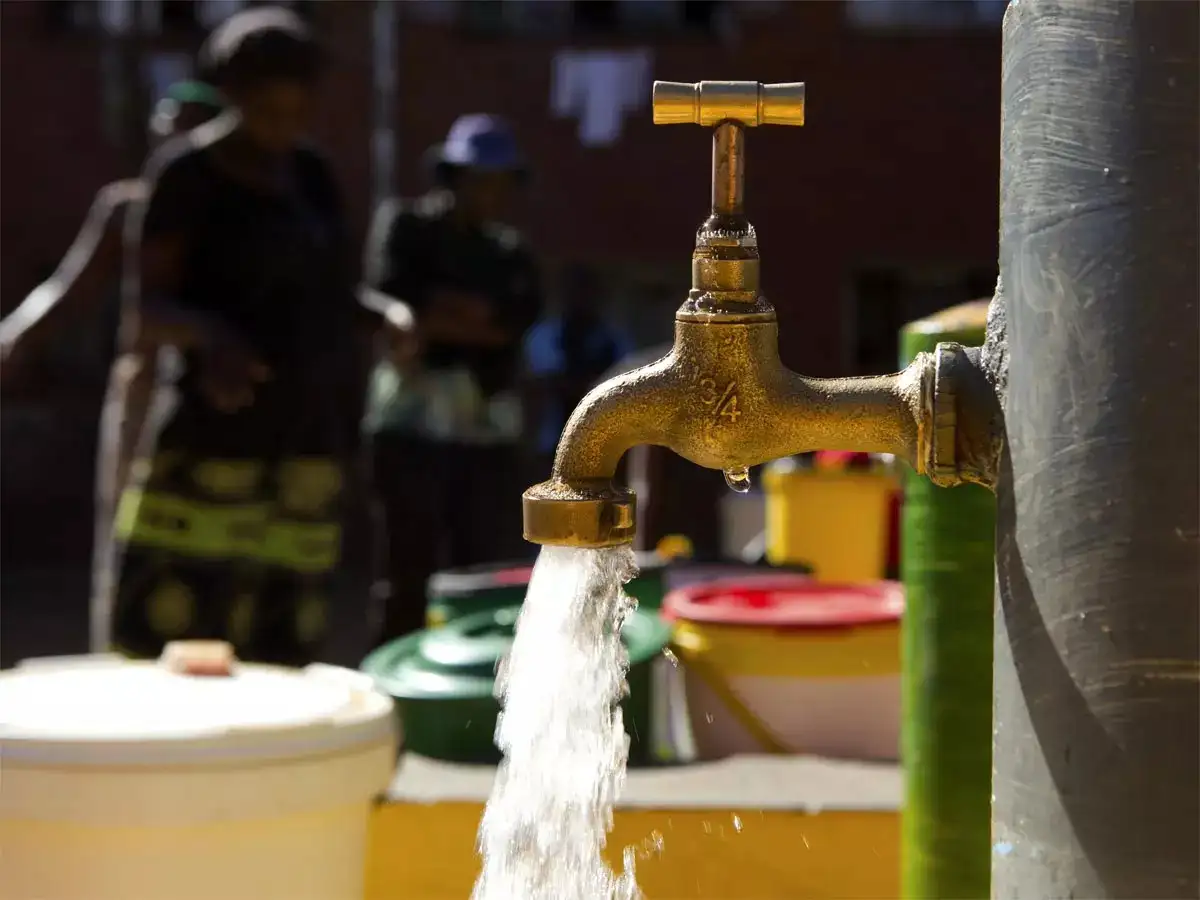
The Cabinet cleared the proposal to extend the Jal Jeevan Mission until December 2028. The programme, which was originally launched for the 2019–2024 period, focuses on providing functional household tap water connections to rural households across India.
So far, approximately 12.6 crore rural households have been provided tap water connections under the mission. With the extension, the government intends to shift the programme’s focus from primarily creating infrastructure to ensuring reliable and sustainable water service delivery. The total outlay for the scheme has also been increased to ₹8.7 lakh crore.
Under the revised framework, the Centre will sign separate Memorandums of Understanding (MoUs) with states within three months to facilitate structural reforms in water supply management. A national digital platform named “Sujalam Bharat” will also be introduced to enable digital mapping and monitoring of water supply assets.
The initiative will further strengthen water quality testing systems and surveillance mechanisms, while enhancing community participation.
Gram Panchayats and Village Water Sanitation Committees will be involved in the commissioning and formal handover of projects through a process known as “Jal Arpan.”
In another key decision, the Cabinet approved the proposal to declare Madurai Airport as an international airport. The airport already handles international flights to destinations such as Dubai, Abu Dhabi and Colombo, and several airlines have expressed interest in expanding services from the city.
The move is expected to improve connectivity to major pilgrimage centres including the Meenakshi Amman Temple, Koodal Azhagar Temple, Thirupparankundram Murugan Temple, Palamudhircholai Murugan Temple, and Rameswaram. It is also expected to support industrial expansion in sectors such as automobiles, rubber, chemicals and granite, while strengthening Madurai’s position as a regional hub for education and healthcare.
Among railway projects approved, the Cabinet sanctioned the construction of a fourth railway line between Santragachi and Kharagpur in West Bengal. The 111-km project, estimated to cost ₹2,905 crore, is scheduled for completion within five years. It forms part of the quadrupling of the Mumbai–Howrah and Howrah–Chennai high-density rail corridors. The project is expected to enhance connectivity to the Syama Prasad Mookerjee Port and the Haldia Dock Complex, while facilitating faster movement of both passenger and freight trains and supporting regional industrial clusters.
The Cabinet also approved another railway project involving the construction of a fourth line between Sainthia and Pakur, covering 81 km at an estimated cost of ₹1,569 crore. The route is an important segment of the Howrah–Guwahati and Howrah–Patna corridors. The project is expected to enable quicker transportation of coal to major thermal power plants located in Sagardighi, Bakreswar and Santhaldih, while also increasing freight capacity.
The Cabinet further approved the four-laning of the Badnawar–Petlawad–Thandla–Timarwani section of National Highway 752D, spanning 80.5 km and costing ₹3,839 crore. The project will act as a vital link connecting central India to the Delhi–Mumbai Expressway and the broader western trade corridor.
Additionally, the Cabinet cleared the construction of a 7.8-km elevated corridor connecting Noida International Airport (Jewar Airport) with the Delhi–Mumbai Expressway via Faridabad–Ballabhgarh–Sohnaspur. The revised project cost has been approved at ₹3,631 crore. The corridor will intersect with key transport networks such as the Eastern Peripheral Expressway, Yamuna Expressway, and the Dedicated Freight Corridor, significantly strengthening regional connectivity.
Official figures indicate that since June 2024, the government has approved infrastructure projects worth nearly ₹22 lakh crore across sectors including railways, highways, metro systems, airports, ports, power and housing. These approvals include 51 railway projects worth ₹1.84 lakh crore, 29 highway projects worth ₹2.47 lakh crore, and 10 metro projects valued at ₹1.31 lakh crore, along with investments in airports, ropeways, hydropower projects, smart cities and housing initiatives.
Officials stated that these projects are aimed at enhancing connectivity, lowering logistics costs, creating employment opportunities and accelerating economic growth across regions.
