
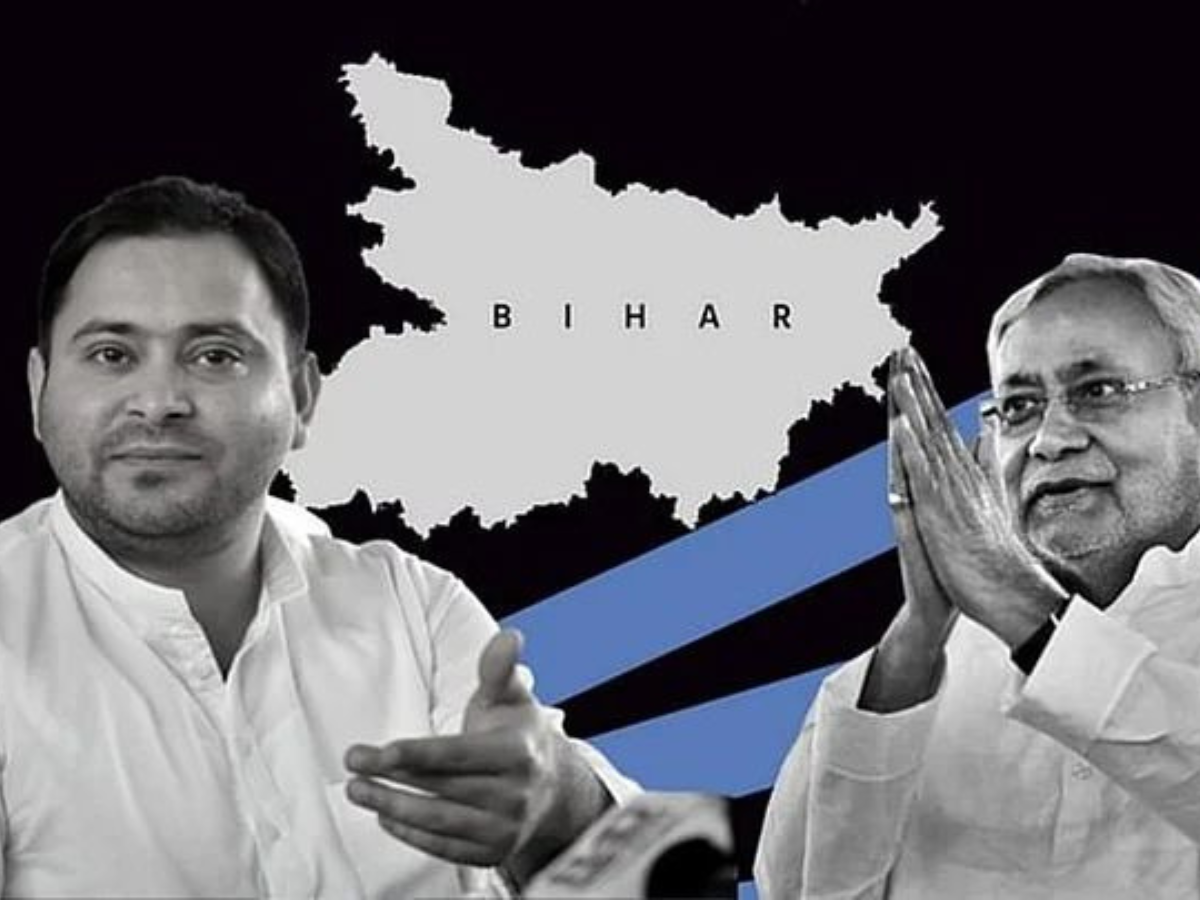
PATNA: The 2025 Bihar Assembly election is shaping up to be a contest without a wave an election where local equations, candidate profiles, and micro-alliances are determining outcomes seat by seat. Across party lines, the mood is unmistakable: this is not a state-wide battle of ideas or leaders, but a granular, constituency-level contest decided by the faces on the ground.
In both the National Democratic Alliance and Grand Alliance camps, voters appear to be judging individuals more than party symbols. The traditional pull of the kamal or the lantern has weakened, particularly where local figures command personal influence or long-standing social capital. The absence of a pan-Bihar wave for either of the alliances or a charismatic unifying figure has made this election one of the most decentralised in recent memory.
Party insiders acknowledge that in most constituencies, results will hinge on candidate selection, caste arithmetic, and personal credibility rather than party campaigns. The BJP’s strength lies in its organisation and booth-level machinery, but even that advantage depends on local acceptability. RJD candidates, too, are relying on their grassroots networks and caste cohesion more than the party’s larger narrative.
The moving parts in this election are simply too many.
Voters across several districts from Madhubani to Aurangabad describe the same pattern: they will vote on the basis of the faces, not necessarily the manifestos, which are yet to be released by either of the two alliances.
Many are treating this election as a referendum on individual accessibility, delivery, and community ties rather than ideology.
What stands out is the repetition in campaign rhetoric. From slogans to speeches, most parties are running on familiar lines. The same promises of jobs, roads, industries, and welfare that dominated the 2015 and 2020 elections have resurfaced almost unchanged. Allegations of corruption, dynasty, and “double-engine government” echo the same fault lines. Bihar’s political script, after three consecutive cycles, seems caught in a loop where each side repeats old talking points, only with new emphasis or new faces delivering them.
RJD leaders continue to invoke the legacy of social justice and Tejashwi Yadav’s promise of employment for youth, while the BJP highlights infrastructure, investment, and governance continuity under the NDA apart from the ‘jungle raj’ of Lalu-Rabri which ended twenty years ago.
In this election, around 14 lakh voters will be casting their votes for the first time- none of them were alive when the so-called ‘jungle-raj’ ended with the result of the October 2005 polls when JDU and BJP formed a government while winning 133 seats.
Chief Minister Nitish Kumar, long the face of the NDA (except during his brief return to the RJD-led alliance), appears a shadow of his former self. On the campaign stage, he reads his speeches haltingly, often appearing unsure of his own content and distracted in delivery a striking contrast to the composed, assertive speaker he once was. Earlier his speech would be discussed and dissected, now the crowd listens, nods, and moves on a sign of fatigue with familiar slogans. The only thing that is analysed is his hands movement.
Nitish Kumar’s presence continues to anchor the JDU, though his personal appeal has considerably narrowed. His governance record still holds weight among older and rural voters, but the emotional connection that once cut across caste and age brackets has thinned.
The only leader with a visible, community-wide pull remains is RJD’s Tejashwi Yadav, who commands strong loyalty among Yadav voters and younger sections of his base. His public meetings draw crowds, and his rhetoric connects, but even his influence remains largely confined to the Yadav-Muslim belt. Beyond that his name does not invoke any excitement or affection.
In the BJP’s camp, the campaign leans on Prime Minister Narendra Modi’s appeal and the party’s performance at the Centre, but the Modi factor is not translating into an across-the-board wave. Voters are now drawing a sharper distinction between Lok Sabha and Assembly elections, evaluating state contests on local issues rather than national sentiment.
The state leadership spread between several faces lacks a single figure capable of binding the campaign narrative.
The combined effect is a flattened political landscape no one towering figure, no single theme cutting across the state. Bihar’s politics, once defined by mass waves and polarising leaders, has settled into a quieter, fragmented rhythm.
Each constituency has its own contest, its own local script. Even within a single district, voting behaviour varies sharply from seat to seat depending on the candidate’s standing.
The speeches, promises, and accusations might sound familiar to anyone who watched the 2015 and 2020 campaigns. The lines have been rearranged, the audiences reshuffled, but the essence remains the same. With no wave to ride on, parties are relying on logistics and local alliances the small, ground-level networks that decide turnout and margin. Rebels, independents, and community influencers have gained relevance again, especially where contests are tight. Even minor shifts a mukhiya’s switch of loyalty, an unintentional insult to a community or a local dispute resolved too late could change outcomes in several seats.
Bihar’s 2025 election, then, is not being fought in the air but on the ground. The symbols are visible on posters, but inside polling booths, names may matter more. It is an election of candidates, not campaigns; of faces, not slogans.




