
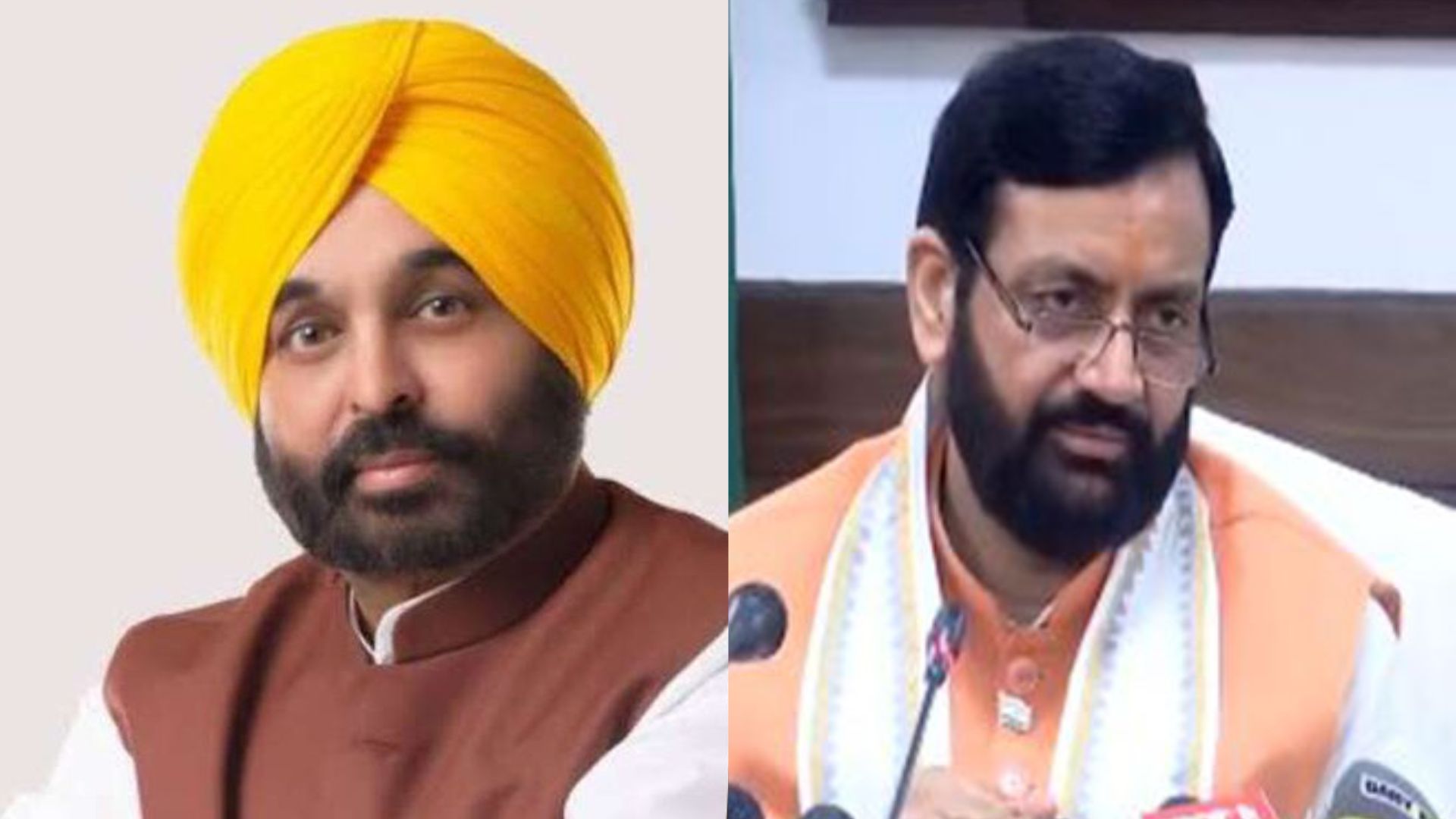
In an attempt to break the decades-long deadlock over the Sutlej-Yamuna Link (SYL) Canal, Union Jal Shakti Minister CR Patil will convene a meeting in the national capital on Tuesday with Punjab Chief Minister Bhagwant Mann and Haryana Chief Minister Nayab Singh Saini. This will mark the fifth formal discussion between the two leaders, ahead of a key Supreme Court hearing on the issue scheduled for August 13.
The last meeting on July 9, also led by Patil, ended on a conciliatory note, with both states expressing willingness to work towards an amicable settlement. However, the core disagreement — Punjab’s refusal to part with water — continues to stall progress.
The SYL Canal issue has been a major source of friction since the 1980s, reflecting deeper challenges in inter-state river water distribution. Despite repeated attempts at mediation by the Centre and legal directives, the matter remains unresolved.
The first round of talks under Supreme Court directions took place on August 18, 2020, when Capt Amarinder Singh was Punjab’s CM and Manohar Lal Khattar led Haryana. The dialogue resumed on October 14, 2022, in Chandigarh after the Aam Aadmi Party came to power in Punjab, and continued on January 4, 2023, in Delhi under former Union Minister Gajendra Singh Shekhawat.
Punjab Water Resources Minister Barinder Kumar Goyal reiterated the state’s firm position ahead of the latest talks, stating that Punjab is in no condition to share water. “Haryana is our neighbour, not our adversary. But how can we provide water when our own farming needs are unmet? The Centre has denied us additional supply and now expects us to share what we don’t have,” he said.
During the July 9 meeting, CM Mann had voiced grave concerns about Punjab’s water scarcity, highlighting severe depletion in groundwater and drying river resources. He had emphasized the need for more water to meet irrigation demands and argued that Punjab has no surplus to spare. He also proposed that, with the suspension of the Indus Waters Treaty, India should tap into western rivers — Indus, Jhelum, and Chenab — to supplement Punjab’s needs.
Mann suggested that around 23 million acre feet (MAF) of water from the Chenab could be diverted to Punjab and, eventually, to Haryana and even Madhya Pradesh. He termed the SYL issue a festering wound and said the dispute could be permanently resolved if Punjab received its share from the western rivers.
Minister Patil, sources said, acknowledged the proposal and indicated that feasibility studies on diverting water from the Indus tributaries might be initiated.
Meanwhile, Haryana CM Nayab Saini expressed hope that the issue would soon be resolved. “We had detailed discussions, and Punjab too has shown interest in a resolution. I believe the end of this long-standing dispute is in sight,” he said.
However, recent incidents have added to the tension. In May, a confrontation erupted over Punjab’s refusal to release excess water from the Bhakra dam to Haryana. The situation escalated when the chairperson of the Bhakra Beas Management Board (BBMB) was allegedly confined in a rest house at Nangal. The Centre had to step in, deploying CISF personnel at the dam — a move strongly opposed by Punjab, which insists its police force is capable of safeguarding the state’s water infrastructure.
As the matter returns to the Supreme Court next week, Tuesday’s meeting is seen as crucial. But with Punjab remaining firm on its stance and Haryana pressing for its share, a lasting resolution will depend on whether the Centre can mediate a deal that balances legal mandates with ground realities.




