
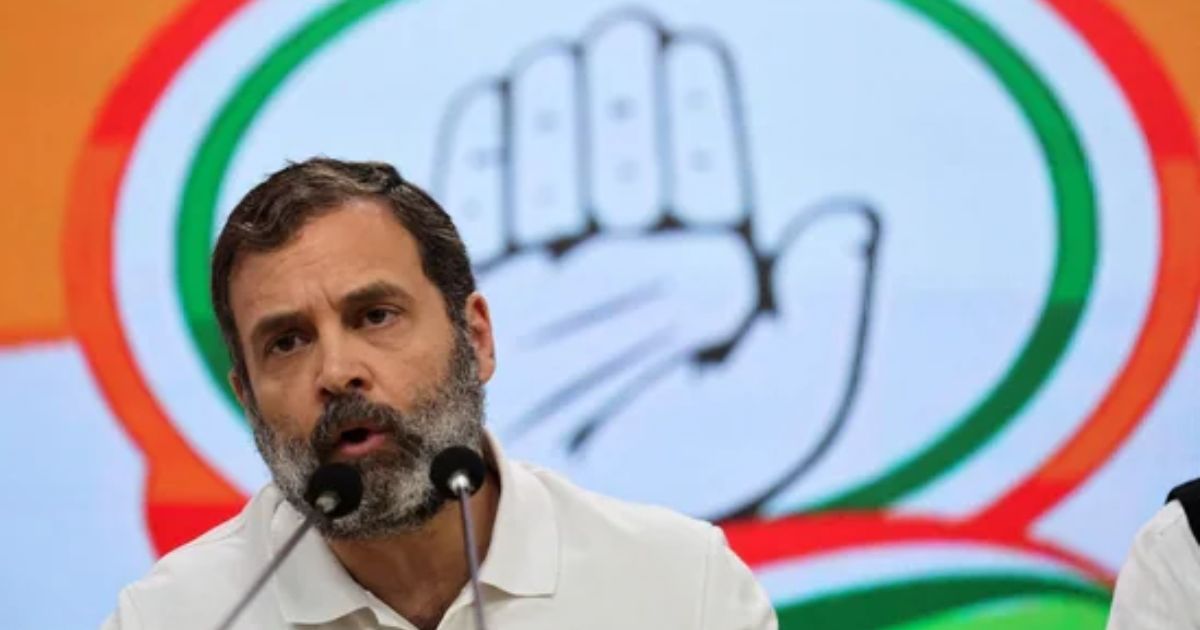
New Delhi: Cross-voting in the Vice Presidential election has put the unity of the India alliance in jeopardy. It now poses a significant challenge for Leader of Opposition in the Lok Sabha, Rahul Gandhi, to maintain cohesion within the coalition. While Congress claims to have secured all votes by emphasizing unity, the 15 instances of cross-voting in the alliance have raised serious questions.
Some votes from UBT’s Shiv Sena, Sharad Pawar’s NCP, and even Tamil Nadu’s DMK are reportedly under suspicion. Aam Aadmi Party MPs are also believed to have voted for the NDA candidate. Congress could not even manage the support of neutral parties like YSR Congress, BRS, and BJD, who have distanced themselves from the alliance, sending a direct message of non-support.
The Vice Presidential election proved advantageous for the NDA, as it strengthened their position while making inroads into opposition ranks. Neutral parties also extended their support, further complicating Congress’s strategy. Sources indicate that BJP’s next focus will be Bihar, where it is seeking weak links in the Congress alliance. The outcome of the Bihar election is expected to shape the future strategies of both BJP and Congress.
In Bihar, Congress remains heavily dependent on the RJD. If the alliance wins, RJD will claim the credit, leaving Congress sidelined. The party faces an internal crisis, as Rahul Gandhi relies on advisors whose ideological roots are largely leftist, not traditionally Congress. Senior experienced leaders are adopting a wait-and-watch approach.
There is no consensus within Congress on slogans like ‘Vote Chor Gaddi Chhod,’ yet Rahul remains firm on his decisions. This internal friction is expected to intensify post-Bihar elections. A potential breakup of the India alliance in Maharashtra seems likely before the Mumbai Municipal Corporation elections, with tensions beginning during the Vice Presidential poll.
Maintaining alliance cohesion will be increasingly difficult after Bihar, as elections loom in states such as Kerala, West Bengal, Tamil Nadu, and Assam. In Kerala, Congress faces stiff competition from left parties, with its organization weakened after consecutive defeats. Priyanka Gandhi, Wayanad MP, has become active, undertaking a ten-day tour to consolidate support and engage with the Muslim League.
In West Bengal, TMC leader and Chief Minister Mamata Banerjee is dissatisfied with Congress-left party cooperation. Rahul Gandhi has limited maneuvering space in both states. The party also depends on DMK in Tamil Nadu, while Assam presents further challenges. Overall, sustaining a united India alliance from Bihar to Assam will be arduous.
The SIR issue, which previously unified the opposition during the monsoon session, has largely fizzled. However, intensive voter list investigations under SIR are now being implemented nationwide, beginning in Bengal. Although SIR once united the opposition, its ability to maintain cohesion now appears doubtful.




