Chinese New Year 2026 begins February 17, marking the rare Fire Horse year shaped by lunar cycles, zodiac tradition and striking celestial events.
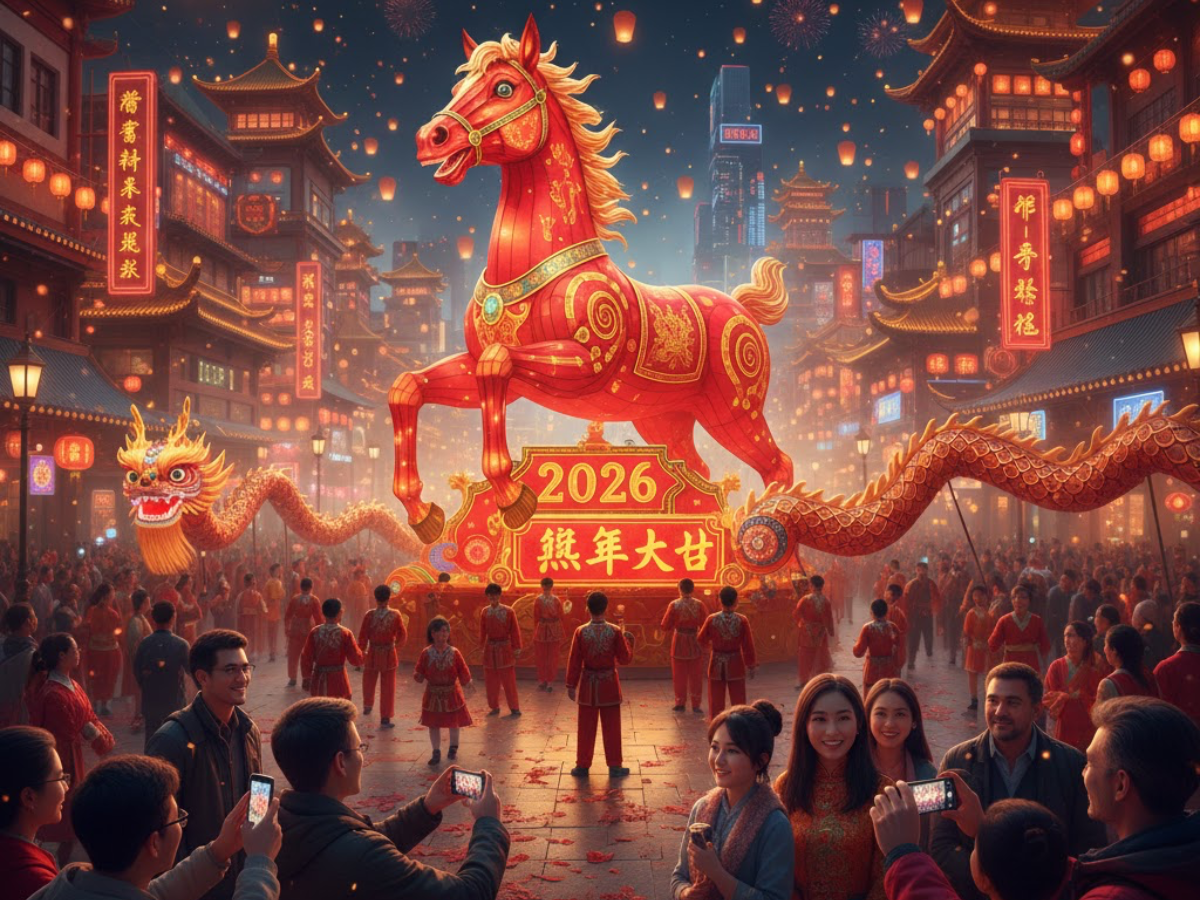
Red lanterns glow during Chinese New Year celebrations as the 2026 Fire Horse year begins under a rare lunar calendar alignment (Photo: File)
Chinese New Year 2026: Chinese New Year is a dynamic living tradition influenced by the moon, myths and observations of natural phenomena. In 2026, Chinese New Year attracts interest as it marks the beginning of the rare 'Year of Fire Horse' which comes only once every 60 years. There is more to Chinese Lunar New Year than just lighted lanterns eating bountiful meals together, fireworks and merriment as this Lunar Festival has significant that sets it apart from previous ones.
Chinese New Year in 2026 begins on February 17 with the New Moon, the celebration run for 16 days and. conclude on March 3 with the Lantern Festival. This final night traditionally marks reunion, hope and renewal with lanterns lighting streets and skies. In 2026, the Lantern Festival coincides with a total lunar eclipse, adding a rare astronomical moment to the cultural calendar. Across Asia and in global Chinese communities, the period triggers one of the world's largest annual travel movements as families return home.
Chinese New Year began over 3,000 years ago in ancient China as a seasonal festival linked to farming and the arrival of spring. Early communities marked the New Year with rituals to honour ancestors and pray for good harvests. The festival grew during the Han Dynasty, when the lunar calendar and the 12 zodiac animals were formalised. Legends like monster Nian shaped traditions such as fireworks, red decoration and loud celebrations.
The Chinese calendar is lunisolar meaning it is guided by bite the moon's phases and the sun's position. The New Year begins on the first New Moon between late January and mid-February. Each year is assigned an animal sign from a 12 year cycle and paired with one of five elements, creating a broader 60 year cycle. This structure explains why dates shift annually and why zodiac signs for those born early in the year depend on the exact lunar date not the western calendar.
After the Fire Horse in 2026, the zodiac moves forward with the Year of the Goat in 2027, followed by Monkey in 2028, Rooster in 2029, Dog in 2030 and Pig in 2031. In 2031, the cycle returns to the Rat where each animal carries symbolic traits that influence traditional beliefs about personality, compatibility and fortune. These ideas are continue to shape cultural practices from wedding planning to business decisions.
The Zodiac is not calculated using planet, Jupiter has long held symbolic importance where orbits take nearly 12 years, closely mirroring the zodiac cycle. Ancient observers associated Jupiter's movement with timekeeping and order weaving it into broader cosmological thinking. Today, this link is mostly symbolic but it adds a layer of meaning that connects Chinese traditions with wider astronomical rhythms.
The Fire Horse is known for intensity, momentum and transformation historically it has been viewed as a year of bold choices and rapid change. In 2026, this symbolism is amplified buy rare eclipse events and its return after six decades . For many, it represents a powerful turning point, blending tradition, astrology and cosmic spectacle into one highly anticipated Lunar New Year.
