Excerpts from former Army chief M M Naravane’s unpublished memoir, cited in Parliament, suggest deliberate delegation of operational authority during the 2020 Ladakh standoff with China, highlighting military judgment and deterrence without escalation, not political indecision.
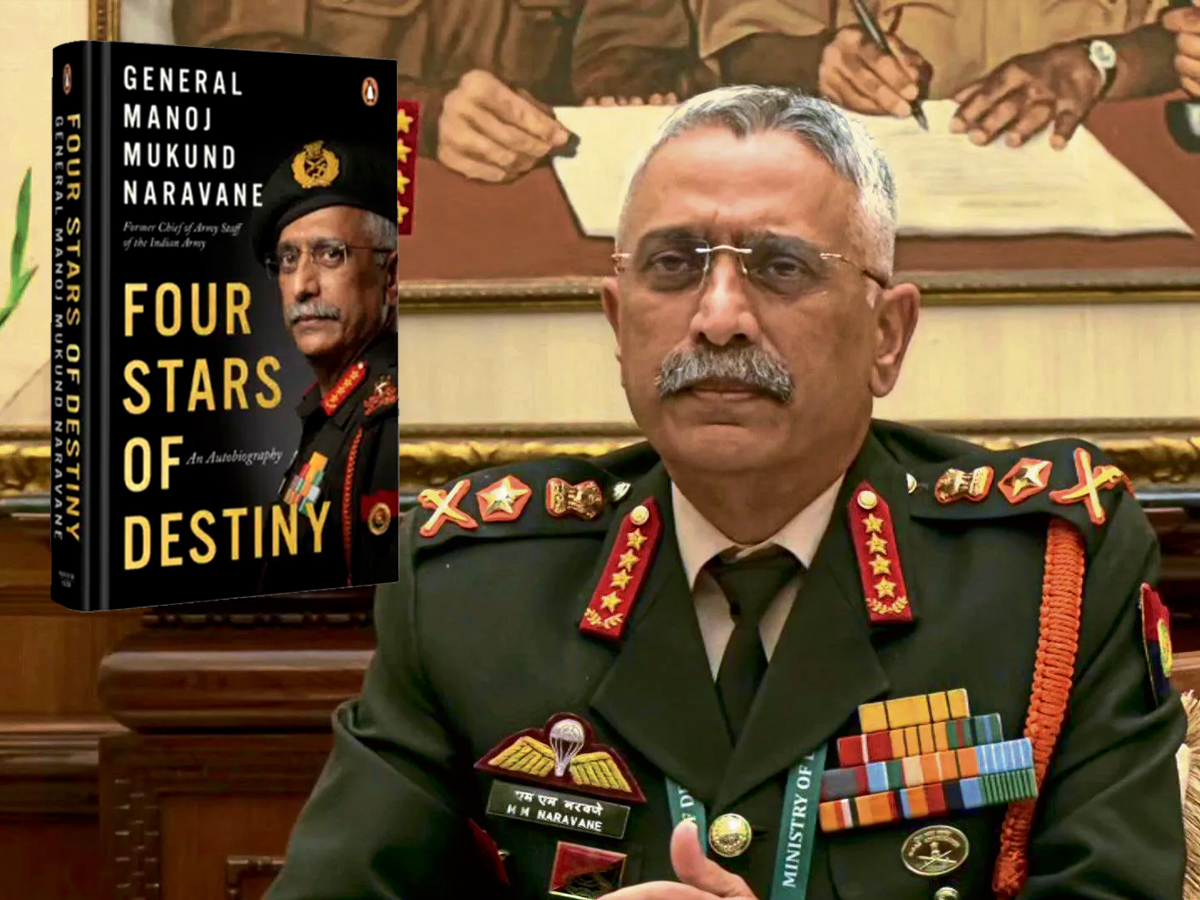
A close reading of the excerpts cited, however, points in a different direction and exposes an internal contradiction in the narrative being advanced. (File Photo)
New Delhi: An article published on Monday, citing excerpts from an unpublished memoir of former Army chief M M Naravane, was taken up by opposition leaders in Parliament to allege that India’s political leadership failed to take a call during a critical moment of the military standoff with China in eastern Ladakh during August 2020. The thrust of the claim is that as Chinese armour advanced, clear political direction from Delhi was absent, leaving military leadership in uncertainty.
A close reading of the excerpts cited, however, points in a different direction and exposes an internal contradiction in the narrative being advanced.
According to the passages quoted, Naravane assessed the operational situation himself, considered and rejected the option of ordering artillery fire to avoid escalation, and instead issued precise instructions to deploy Indian tanks forward in a deterrent posture without crossing the firing threshold.
The account records that these orders were executed immediately, the Chinese advance halted, and the situation stabilised soon thereafter, with talks resuming the following day. The episode, as described, ends not in drift or loss of control, but in deterrence without escalation.
Crucially, the same account records that Prime Minister Narendra Modi told the Army chief, “jo uchit samjho, woh karo”. That instruction reflects a conscious delegation of operational authority rather than indecision.
Read in full, the episode places the locus of decision-making squarely with the military commander at the decisive moment, consistent with established civil-military doctrine in which political leadership sets intent and constraints while professionals execute operations.
This approach is not exceptional. The Prime Minister is known for avoiding micromanagement of operational military matters, particularly during live confrontations, and for leaving tactical and operational decisions to subject-matter experts.
He has articulated this publicly on multiple occasions, including during Operation Sindoor, when he stated that he had conveyed to military leadership that they were free to decide how best to respond and avenge the Pahalgam killings. The political objective was defined. The means, timing, platforms, and tactics were left to the armed forces.
Expecting a prime minister to lay out operational details, such as which aircraft to deploy, which battalion to move forward, or which weapon system to employ, would amount to political intrusion into military command rather than effective civilian control.
Modern civil-military relations rest on political oversight and intent-setting, not on directing battlefield mechanics. By that standard, the instruction quoted in the memoir reflects delegation, not abdication.
Beyond the internal inconsistency of the claim, the timing of its publication has also drawn scrutiny. It has surfaced at a moment when India–China ties, which had sharply deteriorated after the 2020 Galwan clash, have begun showing signs of cautious normalization following prolonged military disengagement talks and sustained diplomatic engagement by both sides.
Reopening a sensitive crisis episode through selective excerpts from an unpublished memoir risks re-internationalising a chapter New Delhi has sought to treat as stabilised.
At a stage when diplomatic space is narrow and dependent on narrative discipline, reframing crisis management as political failure can raise the domestic political cost of engagement and constrain the government’s room for manoeuvre externally. The effect is to complicate efforts to strengthen ties without revisiting contested interpretations of decision-making during the 2020 standoff.
Serving and retired senior military officers and people familiar with security decision-making told this newspaper that the material cited does not substantiate the charge being advanced. They point out that the excerpts describe a political leadership that deliberately refrained from micromanagement, a military commander who exercised judgment at a moment of risk, and an outcome that avoided escalation while achieving deterrence.
