
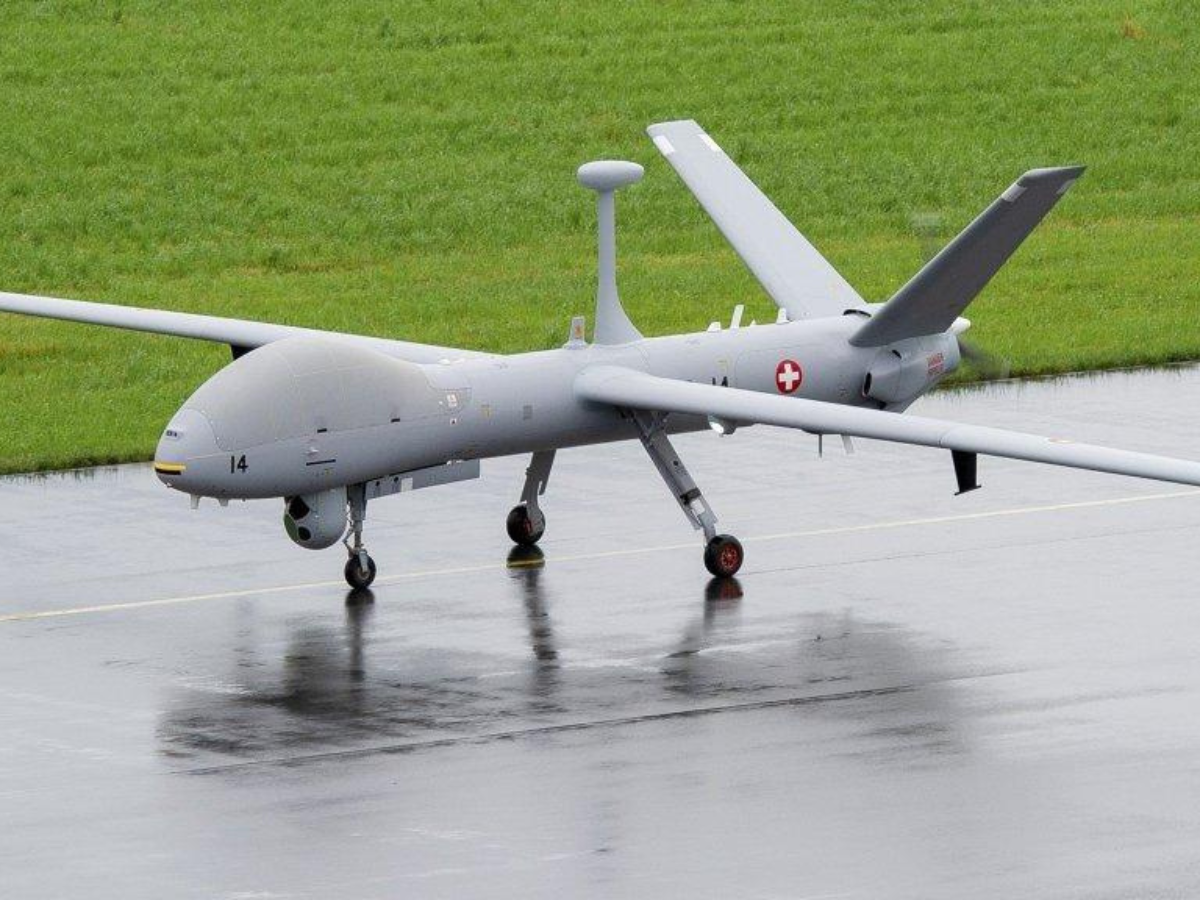
New Delhi: The contemporary battlefield is no longer confined by the traditional triad of land, sea, and air as separate realms of combat. It has evolved into a complex, multidimensional battlespace that integrates these domains vertically and horizontally, creating a seamless operational environment where air and ground elements are intricately fused. The zone where soldiers fight and die now spans horizontally over 70 to 80 kilometres in depth and vertically up to 10,000 feet or more, enveloped in a dense mesh of artillery, rockets, surveillance drones, loitering munitions, attack helicopters, and man-portable air defence systems (MANPADS).
Despite advances in technology and doctrine, the Indian military has yet to optimally address a critical vulnerability in this battlespace: the lack of tactical airspace control, which is devolved to surface commanders who directly lead troops in combat. The persistent centralisation of air assets has created operational bottlenecks, delayed responses, and fratricide risks, rooted in historical precedents that demand urgent reform. In today’s drone-saturated environment, the story is clear wherein the commander on the ground or at sea responsible for the fight must also command the skies immediately above.
There is a case in point for restructuring Indian command doctrines to empower surface commanders with tactical control of airspace. The concept arises from vivid lessons from India’s conflict history and compares Indian command arrangements to global military best practices in the United States, Russia, Israel, Pakistan, and China. The illuminated path leads decisively to integration, unity of command, and real-time responsiveness—a command imperative for victory in future conflicts.
Evolving Tactical Battlespace: A Vertical and Horizontal Battlefield
In the 21st century, the battlefield is no longer a flat expanse where ground troops engage enemies only on their level. Instead, it has expanded into an integrated volume that extends horizontally up to 80 kilometres and vertically over 10,000 feet. This battlespace is saturated with multiple overlapping layers of combat activities. Artillery shells traverse arcs through the airspace, rockets and missiles zip over great distances, loitering munitions hover ready to strike on command, drones conduct surveillance and deliver precision attacks, and attack helicopters inflict kinetic effects. Meanwhile, soldiers on the ground deploy man-portable air defence systems and coordinate fires in a tightly interwoven battle rhythm.
The sheer complexity and density of this battlespace defy slow, centralised decision-making. Tactical commanders must operate in fractions of seconds, synchronising direct fires, drone employment, and air defence across this spatial volume. The advent of drones and unmanned systems has further thickened the battlespace, blurring the lines that once separated air from ground operations. Now, tactical control of the skies is synonymous with controlling the fight itself.
Urgency Rooted in Historical Failures: The Price of Fragmented Command
The Indian military’s past offers stark illustrations of the tragic consequences when tactical airspace remains beyond the purview of surface commanders. The Kargil War of 1999 exemplifies this flaw. In the conflict’s initial phases, the lack of clear command integration between the Air Force and Army led to delays in air power deployment at the tactical level. Requests for close air support and air defence often had to be cleared through higher headquarters far removed physically and operationally from the battlefield’s fluid realities. This delay contributed to operational stagnation and higher casualty figures, a grim testament to the cost of rigid command boundaries.
Operation Sindoor, a more recent campaign, demonstrates how powerful the doctrine of surface command over tactical airspace can be. Despite well-publicised air strikes characterising the operation, seven out of nine key targets were neutralised by Army-controlled systems—emphasising that ultimate operational success hinged on the surface forces’ control over their immediate battlespace, including its aerial dimension. When land commanders exercised integrated control, they synchronised fires and manoeuvres in a rapid tempo unmatched by centralised command.
Beyond these high-profile cases, multiple classified and smaller-scale engagements reveal recurring patterns where air asset centralisation hindered operational agility. Delays in air clearance, failure to promptly counter hostile drone swarms, and fatal friendly fire incidents attest to an urgent structural failure requiring remedy.
Operational Necessity for Tactical Airspace Control by Surface Commanders
The battlefield of the future is one of high velocity and interconnectedness, where success depends on tactical commanders’ ability to orchestrate every element under their sphere instantaneously and decisively. Giving surface commanders authority over the immediate airspace yields tangible operational advantages:
- Enhanced Responsiveness: Local control eliminates dangerous delays in requesting fire support or air defence assets. Commanders can react autonomously to evolving threats, switching priorities in seconds.
- Unified Fire Coordination: Integrating artillery, drones, helicopters, and air defense under one command umbrella prevents fratricide and ensures complementary effects.
- Dynamic Risk Management: Tactical commanders best understand their current threat environment and can dynamically allocate resources to counter drone swarms, loitering munitions, or enemy air incursions.
- Precision Targeting and Rapid Exploitation: Commanders can swiftly cue drones or fires against fleeting targets, maximising operational tempo and exploiting battlefield opportunities.
In fast-moving drone-dominated fights, split-second decisions spell the difference between victory and catastrophe. The surface commander must wield command authority horizontally across the battlespace and vertically into the adjoining airspace, orchestrating a synchronised fight.
Global Military Practices Compared: Lessons from Other Nations
India’s current practice of significant air asset centralisation results in operational friction at the tactical level, a shortcoming starkly highlighted when compared to the command structures of other global powers:
- United States: The U.S. employs joint theatre command structures emphasising decentralisation, balanced with strategic oversight. Theatre commanders possess integrated control over ground and tactical air assets, enabling real-time decisions and rapid air-ground synchrony. Sophisticated communication networks facilitate seamless shared situational awareness, ensuring local commanders orchestrate strikes and defence dynamically.
- Russia: Russian military doctrine integrates combined arms under surface commanders who hold responsibility for airspace adjoining their operations. This layered command approach aligns drone operations, artillery fires, and organic air defence into cohesive battlespace management, minimising delay and maximising force multiplication.
- Israel: With frequent high-tempo conflicts, Israel’s military ensures field commanders have granular operational control over drone fleets, attack helicopters, and air defences. This high degree of integration permits immediate responses to fluid battlefield conditions and sustains dominant effects against asymmetric threats.
- Pakistan: Pakistan’s air command remains predominantly centralised, limiting ground commanders’ immediate control over airspace. This structural fragmentation risks operational disconnects, delayed target engagement, and reduced drone warfare effectiveness.
- China: The PLA’s theatre commands embody unified control models where surface commanders exercise command over corresponding airspace, integrating drone and loitering munitions deployment with ground manoeuvres. This ensures doctrinal cohesion and swift tactical responses crucial for modern joint operations.
The Imperative in the Drone Era: Integration Over Isolation
The advent of drones has obliterated the old compartmentalised boundaries dividing air and land warfare. Loitering munitions morph rapidly from surveillance to attack platforms, UAVs operate within mere meters of infantry formations, and precision targeting demands direct, fluid coordination. Siloing these assets in centralised commands risks surrendering battlefield initiative to the adversary.
Surface commanders must orchestrate drone employment, air defence and artillery fires as an integrated force package. This unity preserves momentum, mitigates fratricide, and optimises resource allocation in ways that centralised commands with their inherent delays and compartmentalisation cannot achieve.
Strategic Recommendations: The Path to Unified Command
Informed by operational realities and global best practices, India must urgently reform its command doctrine:
- Devolve Tactical Airspace Control: Empower surface commanders as the authoritative decision-makers over immediate airspace within their battlespace. This must be firmly codified in doctrine and operational charters.
- Delineate Roles Clearly: The Indian Air Force should focus primarily on strategic air defense, counter-air operations, and national-level strategic strike missions, leaving tactical airspace control and drone operations closely coupled with land and naval theatre commands.
- Capitalise on Networked Technologies: Investments in real-time data links, integrated command and control systems, and joint operations centres must be prioritised to enable swift, accurate information flow for surface commanders.
- Emphasise Integration Over Subordination: Doctrinal clarity must stress coordination under a single theatre commander without diminishing air power’s strategic significance. This unity of effort enhances combined arms warfare instead of bureaucratic subordination.
- Train for Joint Tactics and Command: Regular joint exercises focusing on tactical airspace integration, drone warfare, and fire coordination will prepare commanders for the demands of modern, multidomain combat.
Commanding the tactical skies locally is no longer optional; it is a strategic imperative embedded in the technological realities and operational demands of drone-centric combat. India must act decisively to seize this command imperative, ensuring its armed forces prevail with cohesion, speed, and determination in the skies above and the ground below.
Maj Gen. RPS Bhadauria (Retd) is the Additional Director General of the Centre for Land Warfare Studies (CLAWS), New Delhi, and was formerly the Director of the Centre for Strategic Studies & Simulation (CS3) at USI of India, having served in the Indian Army for 36 years.




