Dispute over special revision data intensifies accusations ahead of high-stakes Bengal elections.
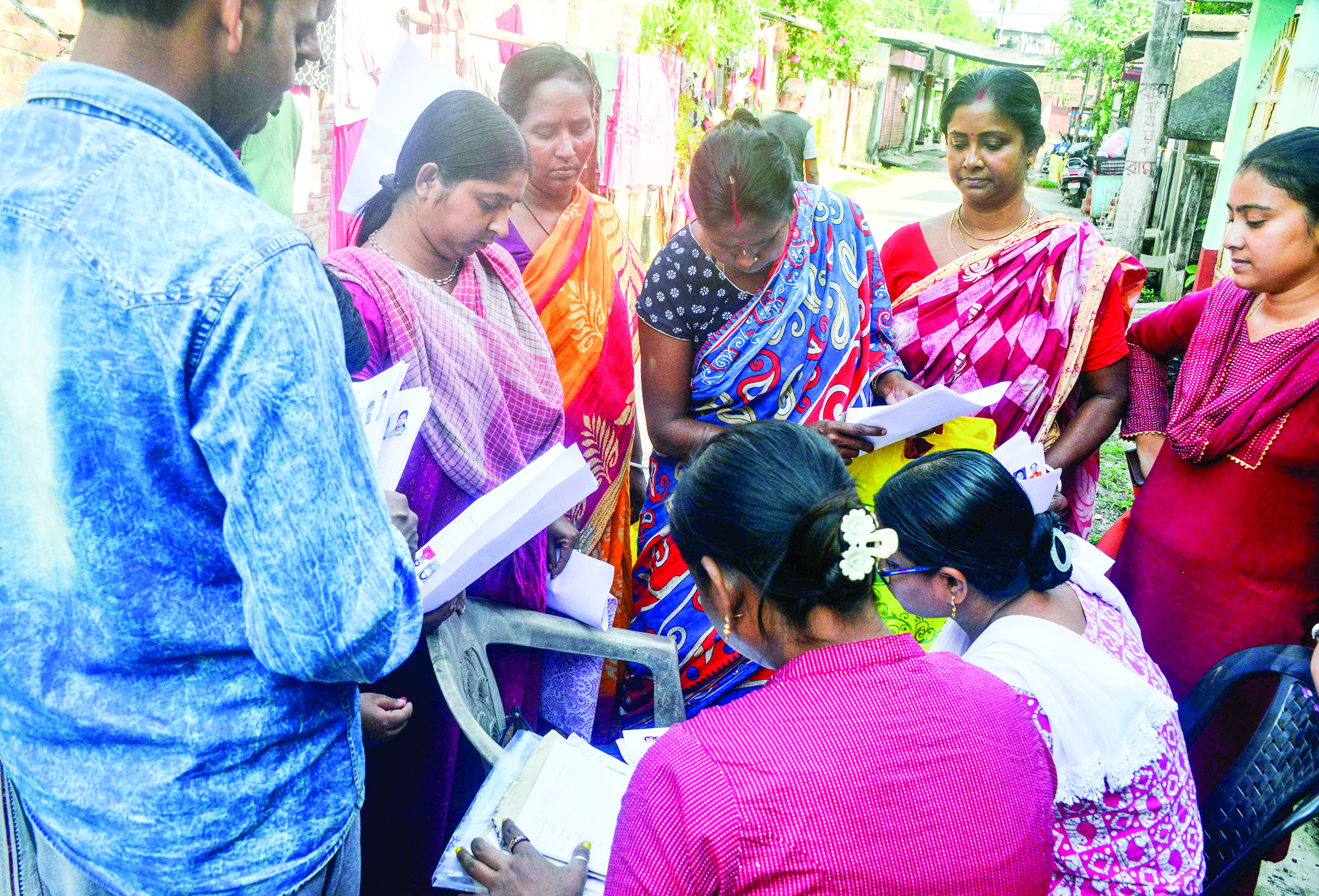
TMC and BJP spar over Special Intensive Revision of voter rolls in West Bengal, citing slow Kolkata growth and surging border district voters (Photo: File)
NEW DELHI: West Bengal has emerged as the latest political flash point for both the ruling Trinamool Congress and the Opposition led by the Bharatiya Janata Party. The two parties are locked in a bitter confrontation over the ongoing Special Intensive Revision (SIR) of electoral rolls, with each side levelling sharp allegations against the other. The TMC has accused the BJP of using the SIR process as a "backdoor NRC," alleging that the Election Commission is backing the saffron party's agenda. The BJP, on the other hand, claims that the TMC is resisting the SIR because it fears losing its so-called "fake voters," whose support it alleges helped the party gain power.
Significantly, sources within the Bengal BJP told The Sunday Guardian that the ongoing SIR exercise has thrown up a striking set of data: while West Bengal's overall voter count has registered an impressive 69% rise over the last 23 years, the increase in Kolkata has been barely 4.6%. In contrast, the total number of voters in the state has jumped from 4.5 crore in 2002 to 7.6 crore in 2025, reflecting a steep 69% surge. A comparative review of the electoral rolls prepared after the previous Special Intensive Revision in 2002 and the latest 2025 list highlights the stark difference between Kolkata and the rest of the state in the growth of the young population. The combined number of voters in the Kolkata North and Kolkata South Lok Sabha constituencies has risen by only 4.6% from 23,00,871 in 2002 to 24,07,145 in 2025.
Bengal BJP Secretary Umesh Rai told The Sunday Guardian that the figures underscore how, under TMC rule, "fake voters" have been encouraged in certain regions. He claimed that settling in the capital is difficult for outsiders because they are required to furnish identification at multiple levels, whereas in rural Bengal particularly in districts bordering Bangladesh people can allegedly settle far more easily. According to him, under the TMC administration, there is little to no scrutiny of identities in these areas.
On the other hand, TMC leader Sudip Raha, responding to the BJP's allegations, told The Sunday Guardian that the saffron party "only knows how to blame others for its own failures ." On the issue of infiltrators, he argued that the responsibility lies squarely with the BJP-led central government. "If they are talking about infiltration, then who is accountable? The BSF reports to the Union Home Ministry, not the state. If the BSF cannot prevent infiltrators from crossing the border, it is the failure of the Centre, not the TMC," he said. "The Home Minister is answerable for this, not us," Raha added.
Raha added that BJP leaders routinely accuse the TMC of failing to monitor voter rolls in border districts, but such claims, he said, were unrealistic. "They expect the TMC to check voter lists in bordering areas every single day. Is that even practical?" he asked. He further pointed out that most arrests involving suspected infiltrators are made by the state police. "Even today, our police arrested a person from Uttar Pradesh in Topsia who managed to enter Kolkata. What will the BJP say about that?". He also accused the BJP of being out of touch with Bengal's ethos. "The BJP is the real infiltrator in Bengal. They do not understand the state or its culture. They act like migratory birds who appear only during elections," Raha said, dismissing the BJP's accusations as "baseless and irresponsible".
Meanwhile, a source within the State Election Office told The Sunday Guardian that except for Kolkata, all neighbouring districts—North 24 Parganas, South 24 Parganas, Howrah and Hooghly—have reported substantially higher voter-growth rates. The source said voter numbers have grown by 83.3% in South 24 Parganas and 72.1% in North 24 Parganas since 2002. Howrah has recorded a rise of 57.1%, while Hooghly has seen a 50.1% increase in the same period.
Political analysts, however, interpret the trend differently. According to one political expert, factors such as an ageing population and limited residential expansion within Kolkata's core areas are contributing to the city's comparatively slow voter-growth rate. He attributed the disparity to sluggish population growth in the city and large-scale migration from Kolkata to adjoining suburbs, other Indian metros and even abroad. "Kolkata's population has remained largely stable over the years. In fact, in some localities, it has even declined. A significant number of residents have moved to peripheral zones like New Town, Rajarhat and parts of Howrah, where housing options are more affordable. This shift is clearly mirrored in the slow rise in the city's voter numbers," the analyst explained.
Moreover, After the Bihar poll results, attention has turned to West Bengal, where Assembly elections are due next year. As the state braves for a heated political contest, the blame game between the TMC and BJP has escalated. The SIR process has now become a significant point of dispute, with each side using the revised voter figures to reinforce its own political argument.
